
Crescent City vs. A Court of Thorns and Roses: Comparing Sarah J. Maas' Universes
Crescent City vs. A Court of Thorns and Roses

Sarah J. Maas is a name that has become synonymous with high-stakes fantasy, fierce heroines, and immersive world-building. Her books consistently top bestseller lists and have amassed a passionate global fanbase. Among her most celebrated series are Crescent City and A Court of Thorns and Roses (often abbreviated as ACOTAR). While both exist in the same larger multiverse and share thematic similarities, they diverge in tone, structure, and character development. In this article, we’ll explore the major differences and compelling similarities between the two series, offering insights into what makes each unique and captivating in its own right.
Setting and World-Building
The most striking difference between the Crescent City series and A Court of Thorns and Roses lies in their settings.
Crescent City takes place in a modern, urban-fantasy metropolis called Lunathion, also known as Crescent City. This world blends the technological advancements of a contemporary society—like phones, internet, and automated transportation—with magic, angels, shifters, and fae. This fusion of the magical and the modern creates a rich, complex backdrop that feels both familiar and fantastical. The setting is sprawling, layered, and politically charged, with different Houses of power vying for dominance.
In contrast, A Court of Thorns and Roses unfolds in the magical land of Prythian, a much more traditional fantasy realm filled with enchanted forests, courts of fae, ancient magic, and looming wars. Prythian is divided into multiple courts—Spring, Night, Autumn, and so on—each with its own cultural flair and political intrigue. The world is laced with ancient lore and a darker, more whimsical feel that aligns more closely with classic high fantasy.
Protagonists: Bryce Quinlan vs. Feyre Archeron
Bryce Quinlan, the central figure of the Crescent City series, is a half-human, half-fae party girl whose world is shattered after a brutal tragedy. Despite her seemingly shallow exterior, Bryce is deeply loyal, brave, and burdened by grief. Her story is one of uncovering conspiracies, fighting for justice, and navigating a city filled with danger and corruption. Bryce’s character arc is heavily influenced by trauma, loss, and the challenge of surviving in a world that often dismisses her worth.
Feyre Archeron from A Court of Thorns and Roses, on the other hand, begins her journey as a mortal hunter struggling to keep her family alive. Her life takes a dramatic turn when she’s brought to the fae lands as a consequence of a broken treaty. Feyre’s evolution is remarkable: she goes from a vulnerable human to one of the most powerful beings in Prythian. Her character journey is filled with love, betrayal, personal growth, and the fight against tyranny.
Both women are incredibly strong and undergo significant development, but their paths reflect the tone of their respective universes. Bryce's story is more urban, gritty, and political, whereas Feyre's is more epic, mythic, and romantic.
Themes and Tones
The Crescent City series explores themes of grief, trauma, and redemption in a fast-paced, urban fantasy setting. It also delves into friendship, justice, systemic oppression, and rebellion. The modern-day environment allows Maas to include contemporary issues such as police corruption, social stratification, and media manipulation, all wrapped in a magical context.
ACOTAR, while also dealing with trauma and healing, leans more heavily into themes of love, freedom, power, and the meaning of sacrifice. The tone of the series evolves drastically with each book—from a fae retelling of Beauty and the Beast in the first novel to political intrigue, revolution, and war in later installments.
Both series contain steamy romance, but the Crescent City books—particularly as the story progresses—tend to lean more into slow-burn and emotionally complex relationships, while ACOTAR delivers passionate, often tempestuous pairings that become central to the plot.
Plot Complexity and Pacing
Crescent City is structurally more complex. The first novel, House of Earth and Blood, reads almost like a murder mystery at times, with twists and turns that require close attention. The story arcs span a much broader political spectrum, incorporating inter-House dynamics, angelic hierarchies, and ancient prophecies.
With the release of crescent city book 3, titled House of Flame and Shadow, the series dives even deeper into its mythology and intensifies its stakes, further connecting the dots within the larger Maas multiverse. The book marks a turning point not only for Bryce but for the universe itself, as it hints at a more direct crossover with other Maas series, including ACOTAR.
On the other hand, ACOTAR starts with a simpler premise but escalates in complexity. The narrative transitions from personal romance and survival to court politics, wartime alliances, and magical warfare. Each book builds on the last, expanding the world and introducing new characters and conflicts.
Magic Systems and Lore
Maas crafts intricate magic systems for both series, though they function differently.
In Crescent City, magic is highly regulated, and power is often tied to one's species and House affiliation. There’s a strong emphasis on technology integrated with magic, which gives it a unique flavor among urban fantasy books. The system includes a broad range of magical creatures: angels, shifters, witches, and fae, all coexisting in a fragile political balance.
ACOTAR focuses more on innate magical abilities, especially among High Fae and other magical beings. Magic here is more fluid and ancient, often tied to the land and the courts. Feyre, for instance, gains powers from each court, making her an exceptionally formidable character.
Both series contain ancient beings, forgotten gods, and mythical forces, but Crescent City tends to layer these elements with science-fiction influences, while ACOTAR stays rooted in classic fantasy tropes.
Crossover Potential and the Maas Multiverse
One of the most thrilling aspects for longtime fans is the way Sarah J. Maas appears to be weaving her universes together. The multiverse theory hinted at in Crescent City book 3 has caused an explosion of fan speculation and excitement. Without diving into spoilers, it’s safe to say that fans of both series should keep their eyes open for crossover elements that promise an epic culmination of storylines.
This crossover potential elevates the crescent city series beyond a standalone saga and places it at the heart of something much larger. It rewards loyal readers with Easter eggs, parallel themes, and possibly—eventually—interconnected plots across her series.
Conclusion: Which Series Is for You?
Choosing between Crescent City and A Court of Thorns and Roses is ultimately a matter of personal taste. If you're drawn to gritty urban fantasy with modern aesthetics, intricate conspiracies, and emotionally resonant friendships, the crescent city series might be your ideal pick. If you prefer sweeping romance, classic fae lore, and epic battles against dark forces, then ACOTAR will likely capture your heart.
Both series showcase Sarah J. Maas at her finest: crafting powerful heroines, rich worlds, and stories that linger long after the final page. Whether you're new to her writing or a seasoned fan, diving into either universe is a thrilling ride—but for those who follow both, the rewards are even greater.
About the Creator
Novelstory
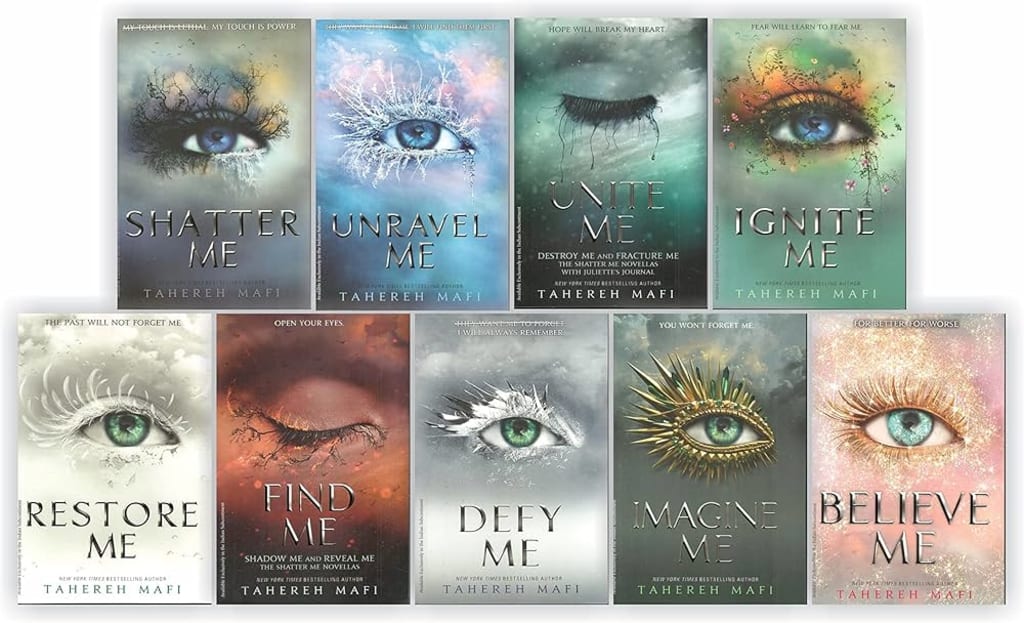
Discover the complete Shatter Me series order by Tahereh Mafi, including all books and novellas in the Shatter Me trilogy. Get detailed summaries and learn the order of Shatter Me books with our thorough guide to the Mafi Shatter Me series.
Keep reading
More stories from Novelstory and writers in BookClub and other communities.
The Evolution of Bryce Quinlan: A Character Study from Book 1 to Book 2
When House of Earth and Blood, the first installment in the Sarah J. Maas Crescent City series, was released, readers were introduced to a heroine unlike any seen before in Maas's fantasy universe. Bryce Quinlan, a half-Fae party girl with a hidden depth, captivated fans with her fierce loyalty, vulnerability, and unapologetic personality. As the Crescent City novels continued with House of Sky and Breath, Bryce's character underwent significant transformation—becoming not just a survivor but a true leader in her own right.
By Novelstory9 months ago in BookClub
My New Book is Finally Here
My poetry collection Beautiful and Brutal Things is done. It's actually done and finally published over 270 pages. Over a year of my life went into this book. More than a year, really. Long days at my computer, sometimes seven days a week because I couldn't stop even when I probably should have. Then two months of editing that felt harder than the writing itself. But it's finished, and I'm still standing, and the book is real.
By Tim Carmichael3 days ago in BookClub
Stars, Scandals & Sirens
Welcome to The Chapter Café, where every story unfolds like the pages of a gripping novel—and today’s menu is anything but ordinary. We’re serving up a bold blend of true crime and celebrity biographies, a literary tasting that pairs red-carpet glamour with the grit of real-life investigations.
By Kristen Barenthaler5 days ago in BookClub




Comments
There are no comments for this story
Be the first to respond and start the conversation.