
Chasing Mars: The Elon Musk Odyssey"
A Journey Beyond Earth, Limits, and Expectations"

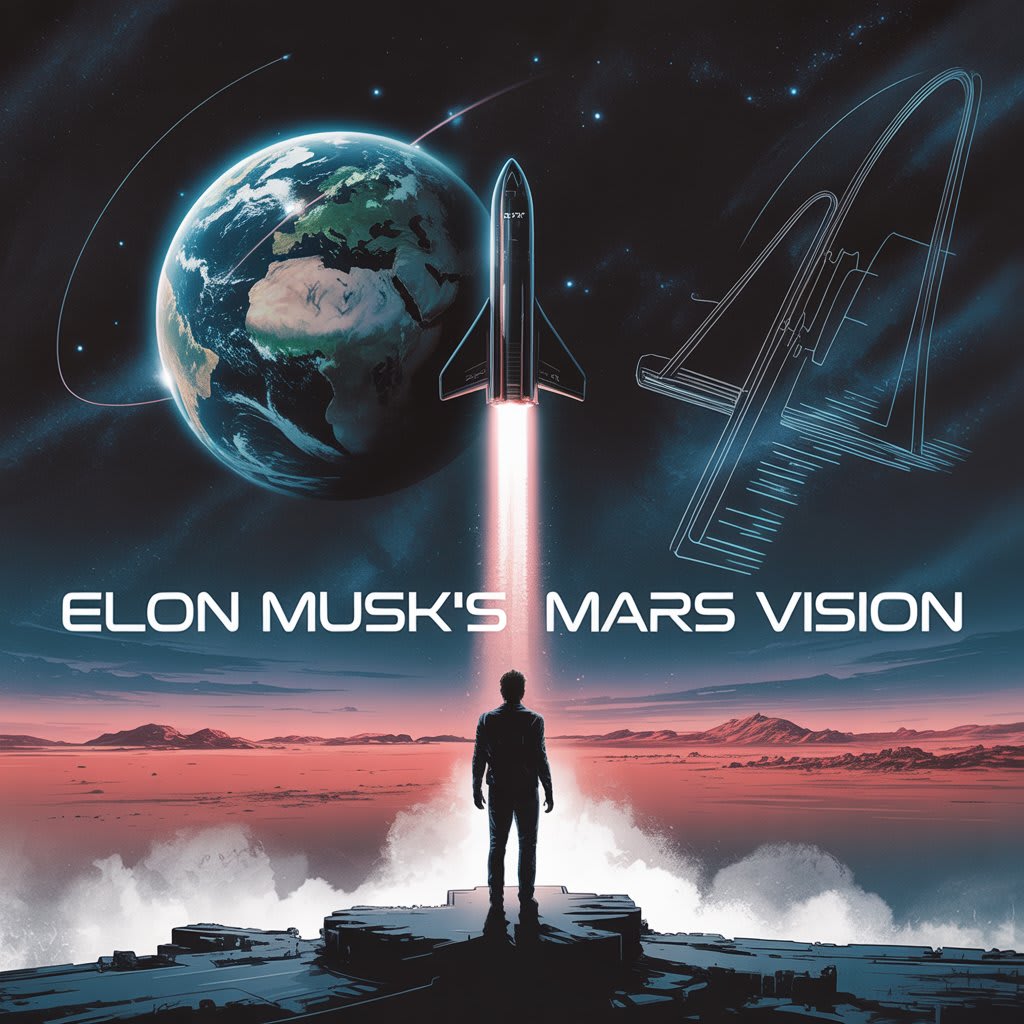
From Silicon Valley to the Stars
In the quiet hum of his Los Angeles office, Elon Musk stared at the simulation on his screen. A 3D model of Mars rotated slowly, bathed in soft, crimson light. He didn’t see just dust and rock — he saw cities, fields of solar panels, and the seeds of a second chance for humanity.
Years earlier, few took him seriously. He was just the "PayPal guy" to some, a reckless billionaire to others. But inside Musk burned an obsession — not with wealth, but with the future. He saw Earth not as a final home, but as a cradle from which civilization must someday rise.
That vision began in the early 2000s when he founded SpaceX. Most experts believed private spaceflight was impossible — a playground for dreamers with no real path to success. His first three rockets exploded, taking millions of dollars and years of hope with them. The fourth attempt, launched in 2008, was all or nothing. As the Falcon 1 lifted off and disappeared into the blue, Musk watched in silence. Moments later, a cheer erupted — the mission was a success. The impossible had become real.
But that was just the beginning.
With Tesla Motors, he aimed to do the unthinkable again — redefine transportation. As Detroit laughed, he built electric cars that could outrun sports cars and drive themselves through traffic. Yet, while the world debated EV tax credits and battery ranges, Elon’s mind was elsewhere — still chasing Mars.
By 2016, Starship was on the drawing board — a fully reusable rocket capable of carrying 100 people to another planet. It looked like science fiction. But in Texas, near the border town of Boca Chica, construction began. Steel towers rose, and prototypes began their dance with gravity. Some exploded, others soared. Elon called these "tests," not failures — each one a lesson.
His critics were loud. Too ambitious. Too reckless. Too strange. He shrugged it off. "If things are not failing, you’re not innovating enough," he often said.
Behind the scenes, the pressure mounted. His companies were stretched thin, his time even thinner. Rumors swirled about burnout, breakdowns, and battles with investors. But through every crisis, Elon held fast to the vision. Earth, he believed, was vulnerable — to war, to climate, to extinction. A single-point failure. Mars was insurance. Not an escape, but an extension. A beginning.
Then came the announcement: Starship would attempt an uncrewed Mars landing within the decade. The world watched as the first full-scale prototype lifted off. It roared through the atmosphere, flipped for descent, and — against all odds — landed softly on the pad. No explosion. Just dust, silence, and then cheers.
The mission to colonize Mars was no longer a dream. It was a schedule.
Over the next few years, SpaceX launched missions that delivered habitats, rovers, and cargo to the red planet. Tesla engineers helped design solar arrays that unfolded like petals in the Martian sun. Boring Company drills carved into Martian soil, laying the groundwork for underground cities. Neuralink offered real-time Earth-Mars communication via brain interfaces. The pieces of the puzzle were falling into place.
And then came the moment — the first human crew bound for Mars. Elon didn’t go with them. He watched from Mission Control, surrounded by engineers, scientists, and silent anticipation. As Starship disappeared into the blackness, tears welled in his eyes. Not for the glory, but for the meaning. Humanity was no longer bound to one world.
Years later, a dusty plaque would be placed in the first Martian settlement. It would read:
"This outpost stands not as a retreat from Earth, but as a monument to possibility. A reminder that bold visions, driven by purpose, can lift a species beyond the stars."
And below that, in smaller text:
— Elon Musk, Visionary, Engineer, Citizen of Two Worlds
About the Creator
Rachel Reviews: Lakefront Wolves by Joseph Deegan
Meet Finn. He's an 18 year old kid who has potential. He's bright with great school scores and he's also an athlete, a footballer of some prowess. He has it all going for him, it would seem, and yet, he's determined to send what could be a well-planned, stable existence firmly off the rails. He drinks, he smokes, he takes drugs, he has violent tendencies and he's in danger of losing not only his mind but all that he holds dear.
By Rachel Deeming13 days ago in BookClub
8 Books That Will Change How You Understand Human Nature
Human beings are endlessly fascinating—and often confusing. Why do we cooperate with strangers yet compete with friends? Why do we fall for irrational beliefs even when evidence says otherwise? Why do emotions, culture, and biology shape our decisions more than logic?
By Diana Meresc6 days ago in BookClub
Why Didn't Anyone Tell Us
Men, move along. This is not for you. This is for the women. I was forty-five when I began menopause. It is pretty young for that to be going on in a woman’s life, but I had undiagnosed PCOS, my entire life. Thank you to all the gynecologists I had seen my entire life. That in itself should encourage women to keep seeking second opinions, especially when you are not getting correct answers or any at all.
By Alexandra Grant4 days ago in Humans


Comments
There are no comments for this story
Be the first to respond and start the conversation.