
Caesar's Rise and the Shadow of Rebellion
A review on "The Death of Kings"

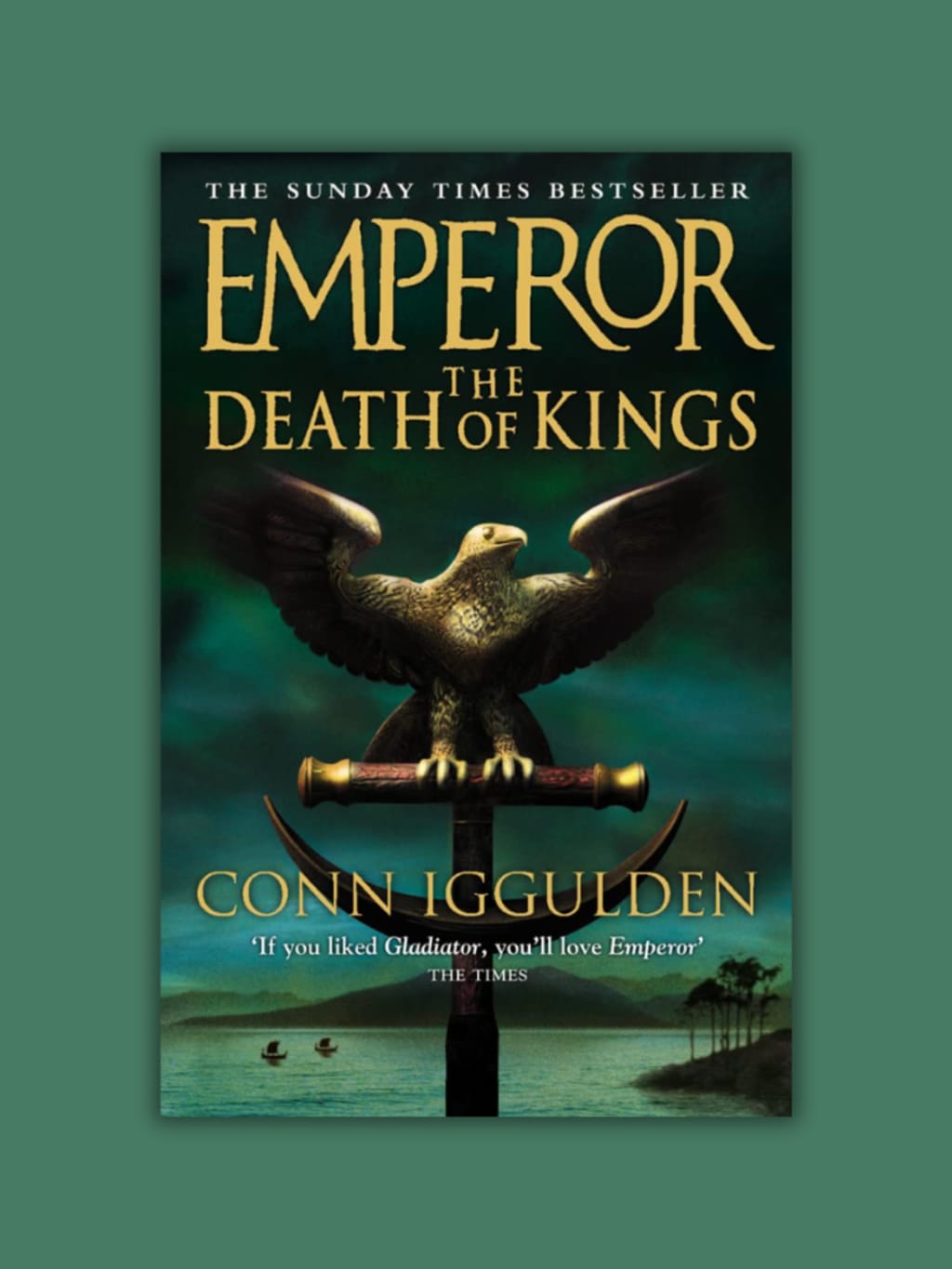
Conn Iggulden's "The Death of Kings" continues the epic journey of Julius Caesar, delving into his burgeoning leadership and the escalating tensions within the Roman Republic. The narrative seamlessly blends Caesar's personal growth with the looming threat of Spartacus's slave rebellion, creating a compelling tapestry of political intrigue and military conflict.
The book opens with a vivid portrayal of Caesar's burgeoning military prowess. His campaign against the pirates, a daring act of revenge and strategic brilliance, solidifies his reputation as a formidable leader. Iggulden effectively captures Caesar's charisma and his ability to inspire loyalty among his troops.
Meanwhile, Marcus Brutus, Caesar's former comrade, navigates the treacherous waters of Roman politics. The assassination of a dictator casts a long shadow over the Republic, highlighting the fragility of power and the ever-present threat of instability. Iggulden skillfully portrays the political machinations and the shifting alliances that define Roman senatorial life.
The central conflict of the narrative is the rise of Spartacus and his army of slaves. This rebellion, a cataclysmic event in Roman history, serves as a powerful backdrop for Caesar's ascent. Iggulden portrays Spartacus as a complex figure, driven by a desire for freedom and justice, while also highlighting the brutal realities of slave warfare.
The theme of leadership is central to "The Death of Kings." Caesar's ability to inspire and command is contrasted with the political infighting and instability within the Roman Senate. The narrative explores the qualities that define a great leader, highlighting the importance of courage, strategic thinking, and the ability to inspire loyalty.
The relationship between Caesar and Brutus, once as close as brothers, is strained by their diverging paths. Iggulden subtly foreshadows the tragic events that will ultimately separate them, adding a layer of emotional depth to the narrative.
The narrative also explores the theme of social justice and the brutal realities of slavery. Spartacus's rebellion serves as a powerful reminder of the inherent contradictions within Roman society, where wealth and power were built on the backs of enslaved people.
Iggulden's writing is vivid and engaging, seamlessly blending action, drama, and historical detail. He skillfully portrays the contrasts of Roman society, from the opulence of the elite to the harsh realities of slave life. The battle scenes are particularly well-crafted, conveying the brutality and chaos of warfare.
"The Death of Kings" is a compelling continuation of the Emperor series, a testament to Iggulden's ability to bring history to life. It's a story of ambition, rebellion, and the forging of a legend, told with vivid detail and a keen understanding of the human heart. This book successfully blends historical accuracy with engaging storytelling, making it a captivating read for both history enthusiasts and those seeking a compelling tale of human drama.
About the Creator
Morgana Steele
Old books, my happy place. Dreaming of adding my own stories to those cherished shelves. Working towards that goal, one word at a time, embracing the vulnerability. Join the adventure!
Keep reading
More stories from Morgana Steele and writers in BookClub and other communities.
A Crucible of Friendship and Empire
Conn Iggulden's "The Gates of Rome" is a masterfully crafted historical fiction that transports readers to the heart of the Roman Republic, a world of burgeoning power, political intrigue, and personal ambition. With vivid prose and compelling characters, Iggulden paints a captivating portrait of a pivotal era, focusing on the formative years of a young Julius Caesar and the enduring bonds of friendship forged in the crucible of a rising empire.
By Morgana Steele12 months ago in BookClub
Rachel Reviews: Lakefront Wolves by Joseph Deegan
Meet Finn. He's an 18 year old kid who has potential. He's bright with great school scores and he's also an athlete, a footballer of some prowess. He has it all going for him, it would seem, and yet, he's determined to send what could be a well-planned, stable existence firmly off the rails. He drinks, he smokes, he takes drugs, he has violent tendencies and he's in danger of losing not only his mind but all that he holds dear.
By Rachel Deeming15 days ago in BookClub
7 Must-Read Books for Those Looking to Start Reading Again
Rediscovering the joy of reading can feel a bit like returning to an old friend. Many of us once devoured books but gradually drifted away due to busy schedules, digital distractions, or simply losing the habit. The good news? It’s never too late to rebuild a reading routine—and the right books can make the journey exciting again.
By Diana Meresc3 days ago in BookClub


Comments
There are no comments for this story
Be the first to respond and start the conversation.