

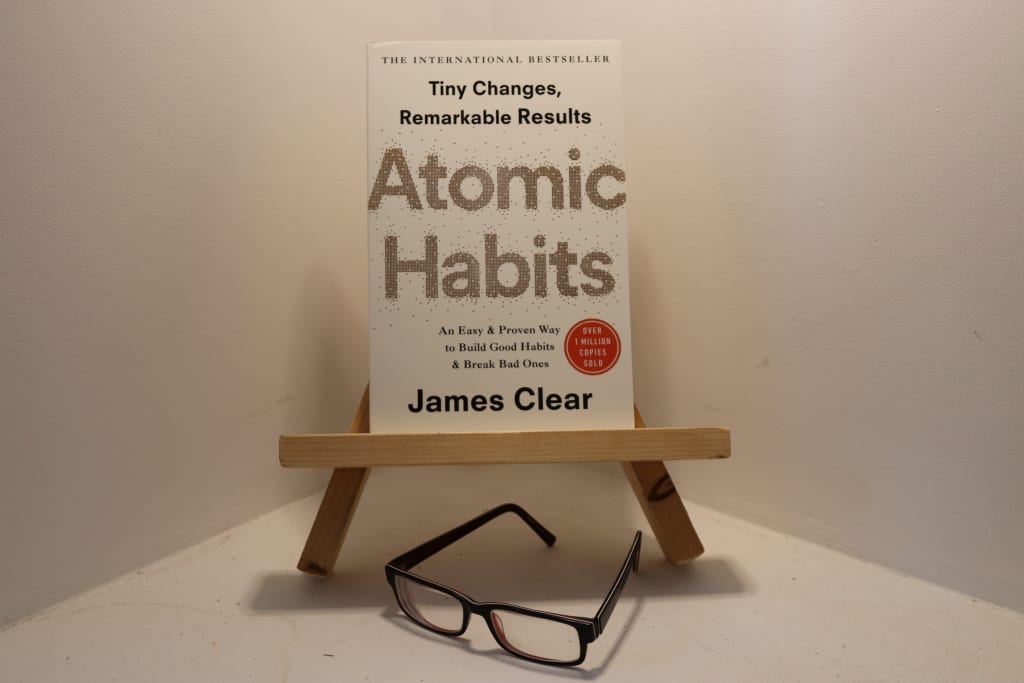
James Clear's "Atomic Habits" is an insightful book that explores the influence of habits and how small adjustments can yield significant outcomes. This book thoroughly examines the mechanics of habits and presents practical solutions for forming, improving, and changing habits. The following is a brief overview that includes an introduction and a synopsis for each chapter, emphasising the fundamental principles and practical insights outlined throughout the book.
James Clear introduces the concept of "atomic habits" as small behaviours that result in significant outcomes. He stresses that habits act as the exponential growth of self-enhancement, with minor adjustments building up to substantial results in the long run. The introduction establishes the significance of habits in attaining long-term objectives and personal growth,you can have a better idea of the story by getting a free audiobook on us through audible by clicking here.
Chapter 1: The Surprising Power of Atomic Habits
The initial chapter delineates the significant influence that minor habits can exert on our lives. Clear demonstrates how small changes in our daily habits may result in significant progress and achievement. He presents the idea of marginal benefits, illustrating how a 1% enhancement in any aspect of our life can accumulate into significant development in the long run.
Chapter 2: How Your Habits Shape Your Identity (and Vice Versa)
Clear explores the connection between habits and identity, proposing that developing habits is not solely about attaining outcomes but about personifying the kind of individual we aspire to be. He presents the idea of identity-based habits, suggesting that concentrating on our desired identity can help establish durable habits that are in line with that identity.
Chapter 3: How to Build Better Habits in 4 Simple Steps
This chapter dissects the habit building process into four essential steps: trigger, craving, response, and reward. Clear presents a structure for comprehending the mechanics of habits and provides tactics for establishing new habits and abandoning old ones by controlling these four components.
Chapter 4: The Man Who Didn't Look Right
Clear demonstrates the significance of awareness in altering behaviours through a captivating narrative. He stresses the importance of self-observation and comprehending the signals that initiate our habits. This chapter emphasises the need of identifying our patterns as the initial stage in facilitating transformation.
Chapter 5: The Best Way to Start a New Habit
Clear provides practical guidance on initiating new habits, highlighting the significance of ensuring they be noticeable, appealing, effortless, and rewarding. He presents the idea of habit stacking, which involves linking a new habit with an established routine to facilitate its adoption.
Chapter 6: Motivation Is Overrated; Environment Often Matters More
Clear contends in this chapter that the environment is a pivotal factor in habit formation, frequently outweighing motivation. He proposes creating our environment in a way that facilitates positive behaviours and hinders negative behaviours.
Chapter 7: The Secret to Self-Control
Clear examines self-control in relation to habit development, proposing that establishing an atmosphere where positive habits are the easiest option might enhance self-control. He promotes adjusting our surroundings to match our objectives instead of depending only on self-control.
Chapter 8: How to Make a Habit Irresistible
Clear discusses strategies to enhance the appeal of habits in the second step of habit formation, known as desire. The individual explores the impact of dopamine on habit development and how this knowledge might assist in forming more engaging behaviours.
Chapter 9: The Role of Family and Friends in Shaping Your Habits
Clear explores how the social environment affects habit formation, emphasising how the actions of others in our surroundings can influence our habits. He recommends utilising social dynamics to cultivate habits that support our objectives.
Chapter 10: How to Find and Fix the Causes of Your Bad Habits
This chapter concentrates on pinpointing the underlying reasons behind negative habits and creating tactics to deal with them. Clear stresses the significance of comprehending the fundamental causes behind our actions in order to successfully alter our routines.
Chapter 11: The Law of Least Effort
Clear explores how humans often choose the easiest option and how this can be beneficial in forming habits. He recommends structuring our lives to prioritise good habits as the most convenient choice.
Chapter 12: How to Make Good Habits Inevitable and Bad Habits Impossible
Clear offers the concept of commitment devices as an extension of making good habits easy and bad habits hard. These are decisions we make in the present that establish improved behaviour in the future, ultimately ensuring our desired habits.
Chapter 13: How to Stick with Good Habits Every Day
Clear tackles the difficulty of sustaining behaviours in the long run. He presents the idea of habit tracking and emphasises the need of consistency rather than perfection. He proposes methods for maintaining focus and progress, especially in the face of challenges.
Chapter 14: How to Get Back on Track After Slipping Up
Clear provides guidance on overcoming setbacks in habit formation, recognising them as a natural part of the process. He stresses the significance of forgiveness and adaptability in establishing habits, urging readers to not allow minor obstacles to hinder their long-term objectives.
Chapter 15: The Goldilocks Rule: How to Stay Motivated in Life and Work
Clear presents the Goldilocks Rule, which suggests that individuals reach optimal motivation levels when engaging in tasks that are at the brink of their existing capabilities. He recommends striking a balance between things that are very simple and overly challenging to sustain interest and drive in maintaining our routines.
Chapter 16: The Downside of Creating Good Habits
Clear examines the risks of habit formation in this chapter, including the dangers of being overly inflexible or losing creativity. He stresses the significance of maintaining flexibility and incorporating spontaneity into our habits to ensure they benefit us rather than restrict us.
Chapter 17: How an Accountability Partner Can Change Everything
Clear emphasises the importance of accountability in strengthening the establishment of habits. He recommends collaborating with someone who can offer assistance and ensure we follow through on our promises, greatly improving the chances of maintaining our behaviours.
Chapter 18: The Truth About Talent (When Genes Matter and When They Don't)
Clear contends that heredity can establish boundaries in habit development and performance, but developing the appropriate habits can enable individuals to approach and potentially beyond those boundaries. He advocates prioritising effort and method rather than intrinsic brilliance.
Chapter 19: The Secret to Results That Last
In the last chapter, Clear discusses the significance of ongoing enhancement and the buildup of little, daily routines for attaining enduring outcomes. He emphasises the continuous nature of self-improvement and the importance of maintaining consistent atomic habits over an extended period.
Some of the links in this book summary are affiliate links , meaning we will receive a commision at no additional cost to you. In fact , you will receive a free book as a result of our parnership with Audible.
About the Creator
Stefan Adrian
Hello, my name is Stefan, I'm here to help everyone by trying to make your life easier with practical ideas.
Keep reading
More stories from Stefan Adrian and writers in BookClub and other communities.
Book Summary " The Women "
Kristin Hannah’s novel “The Women” delves on the intricate dynamics of female friendships, resilience, and the significance of forgiveness. The tale takes place in a beautiful yet difficult Alaskan landscape, which serves as a character and a test for the relationships amongst the ladies in the story. Kristin Hannah is renowned for her emotionally charged and vivid narrative in “The Women,” providing readers with a thorough exploration of its characters as they deal with love, sorrow, and survival.
By Stefan Adrian2 years ago in BookClub
Feast & Folklore: Autumn Recipes with a Story
Welcome to The Chapter Café, where stories simmer, flavors mingle, and every book is served with a side of imagination. Today’s menu? Cookbooks—the kind that leave grease stains on the margins and breadcrumbs in the binding. You know the ones: well-loved, well-used, and maybe even a little chewed on by time (or a curious pet).
By Kristen Barenthaler5 days ago in BookClub




Comments
There are no comments for this story
Be the first to respond and start the conversation.