
Book Review: The Holy Grail of Investing by Tony Robbins
Finance, Money, Freedom!

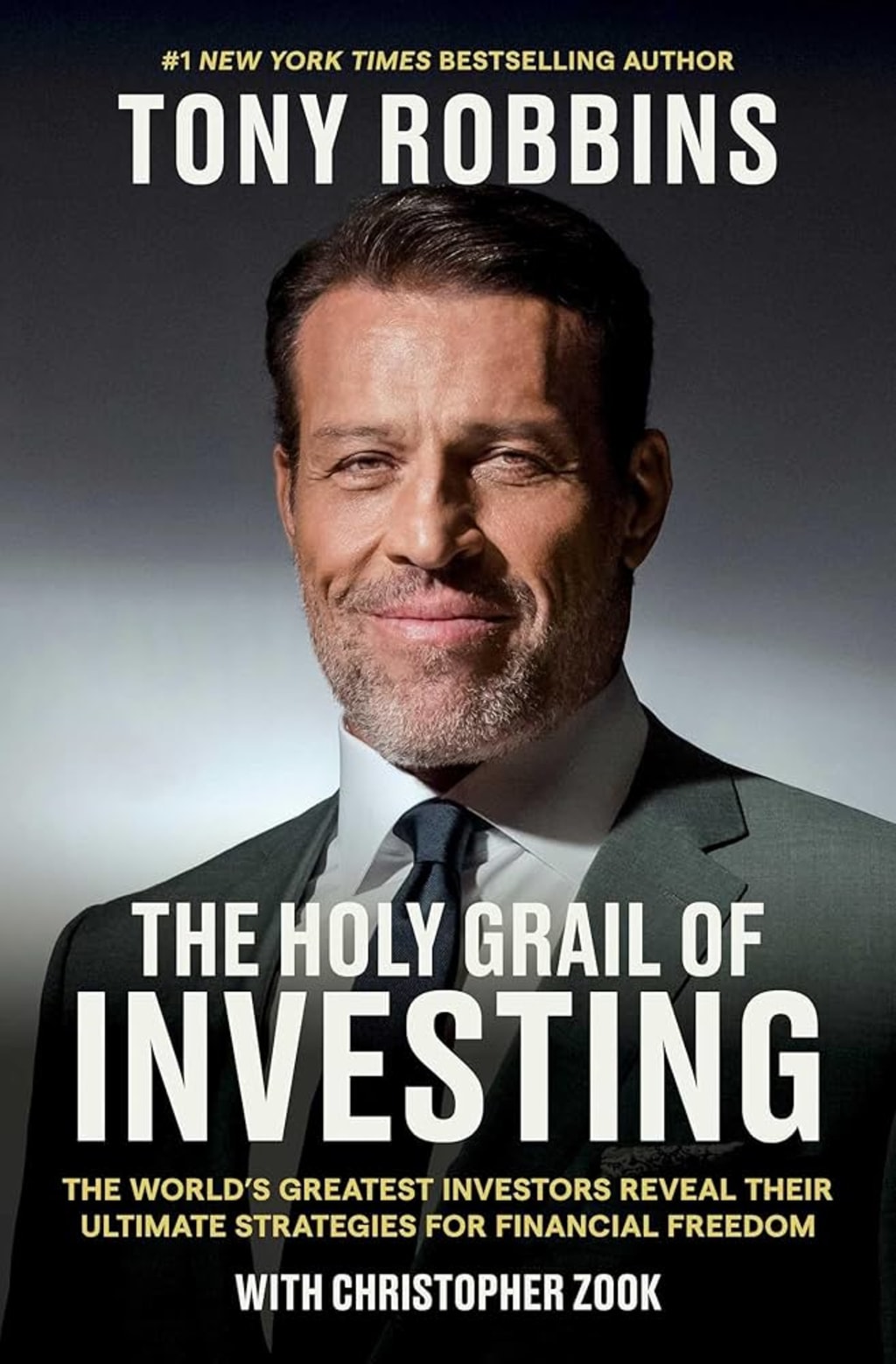
Tony Robbins, widely recognized for his motivational speaking and personal development programs, brings his dynamic approach to finance in The Holy Grail of Investing. This book distills his financial wisdom into clear, actionable strategies aimed at helping anyone—whether a seasoned investor or a beginner—achieve long-term wealth. Robbins’ key goal is to make the often complex world of investing accessible to everyone, regardless of background or experience. To do this, he enlists the advice of some of the world’s top financial minds, including Warren Buffett, Ray Dalio, and John Bogle.
At its core, The Holy Grail of Investing is about creating a roadmap to financial freedom, centered around sound investing principles, risk management, and emotional discipline. Robbins shares timeless strategies and offers practical steps to help readers not only grow their wealth but protect it in uncertain times. What sets this book apart is its ability to demystify advanced financial concepts, delivering them in an engaging and easy-to-understand format.
Simplifying Complex Financial Concepts:
One of the most impressive aspects of the book is how Robbins takes notoriously complicated topics like asset allocation, diversification, and risk management and breaks them down into manageable pieces. For example, Robbins introduces readers to Ray Dalio’s “All-Weather” portfolio, a strategy designed to perform well in any economic condition, whether the market is booming or in a downturn. He explains that diversification isn’t just about having different types of investments but ensuring you have a mix of assets that respond differently to various economic changes.
The “All-Weather” portfolio is particularly elevaluable for those who are risk-averse but still want to see steady, long-term growth in their investments. By balancing stocks, bonds, and commodities in specific proportions, Robbins offers a straightforward blueprint for financial stability. He also covers key principles like rebalancing portfolios and keeping fees low, explaining how even small changes in investment fees can have a massive impact on long-term returns.
Timeless Lessons from the Masters
Robbins doesn’t just rely on his own knowledge—he brings in insights from financial legends. His interviews with investment moguls like Warren Buffett and Jack Bogle provide fascinating perspectives on what has made them successful over the decades. Robbins repeatedly highlights a common thread among these experts: their long-term, disciplined approach to investing.
Warren Buffett, for example, emphasizes the importance of staying patient and investing in companies with solid, long-term fundamentals rather than chasing quick profits. Jack Bogle, the founder of Vanguard, is credited with creating index funds, and his philosophy of low-cost, passive investing is a cornerstone of Robbins' advice.
What makes these interviews valuable is Robbins' ability to translate their insights into simple terms, so that even a novice investor can apply them. He drives home the message that wealth-building is not about finding the hottest stock or market trend but about sticking to a disciplined, well-diversified strategy over the long haul.
Managing Emotional Discipline
One of Robbins’ key messages in The Holy Grail of Investing is that success in investing is as much about mindset as it is about knowledge. In fact, he argues that emotional discipline is one of the most important aspects of long-term success. Fear and greed, two of the most common emotions that derail investors, are addressed in depth. Robbins provides techniques to avoid these common pitfalls, encouraging readers to stay focused on their long-term goals rather than reacting to market volatility.
He emphasizes the idea that wealth-building is a marathon, not a sprint. While it’s easy to get swept up in the panic of market crashes or the excitement of bull markets, Robbins encourages a level-headed approach. His advice is to stick to the plan and avoid the temptation to make emotional decisions that could cost you in the long run.
Interesting Facts About Tony Robbins:
While Tony Robbins is widely known for his personal development empire, fewer people know about his diverse career and life experiences that make him particularly well-suited to write about finance. Robbins has worked with a wide range of high-profile clients, including athletes, politicians, and business leaders. In fact, he’s personally coached billionaires like Marc Benioff, the founder of Salesforce, and Paul Tudor Jones, one of the most successful hedge fund managers in the world.
Robbins has also built a massive business empire of his own. His companies generate over $6 billion in annual revenue, making him more than just a motivational speaker—he’s a shrewd businessman. He’s also an active philanthropist, contributing to causes like Feeding America, where he has helped provide millions of meals to families in need. His personal financial success and his commitment to helping others achieve it lend an extra layer of credibility to his advice in The Holy Grail of Investing.
Final Thoughts
The Holy Grail of Investing is more than just a guide to navigating the stock market—it’s a comprehensive manual for achieving financial independence. Tony Robbins does an excellent job of turning intimidating financial concepts into easy-to-understand, practical steps that anyone can follow. He blends timeless wisdom from financial legends with his own unique insights into the psychology of success, creating a book that is both informative and inspiring.
For those looking to build long-term wealth and protect their financial future, this book offers valuable advice grounded in real-world experience and expert knowledge. Whether you're new to investing or looking to refine your strategy, The Holy Grail of Investing is an engaging and powerful resource that can help you reach your financial goals.
About the Creator
Alex Williams
Exploring the dynamics of relationships - love, trust, and communication. Tips and insights for building stronger, healthier relationships.
Keep reading
More stories from Alex Williams and writers in BookClub and other communities.
My Path to Happiness
Love has a way of sneaking up on you when you least expect it. I wasn’t searching for it, not really. My life was comfortable, busy, and predictable. I had my routine, my friends, my work, and for the most part, I was content. Sure, I had thought about love, but it wasn’t something I was actively chasing.
By Alex Williamsabout a year ago in Poets
My New Book is Finally Here
My poetry collection Beautiful and Brutal Things is done. It's actually done and finally published over 270 pages. Over a year of my life went into this book. More than a year, really. Long days at my computer, sometimes seven days a week because I couldn't stop even when I probably should have. Then two months of editing that felt harder than the writing itself. But it's finished, and I'm still standing, and the book is real.
By Tim Carmichael3 days ago in BookClub
Rachel Reviews: Paradise Cove - They Escaped the Cuckoo's Nest by Pini Dunner
On starting Pini Dunner's book, I was grateful for the thorough history that is provided at the start. This gives a much-needed context in order to enjoy the subsequent letters contained therein. The letters belong to George Nagel, an octagenarian pursuing a psychology degree which in itself would be remarkable; however, it is soon clear that this is just one remarkable thing in a life full of them.
By Rachel Deeming2 days ago in BookClub




Comments (1)
nice story