
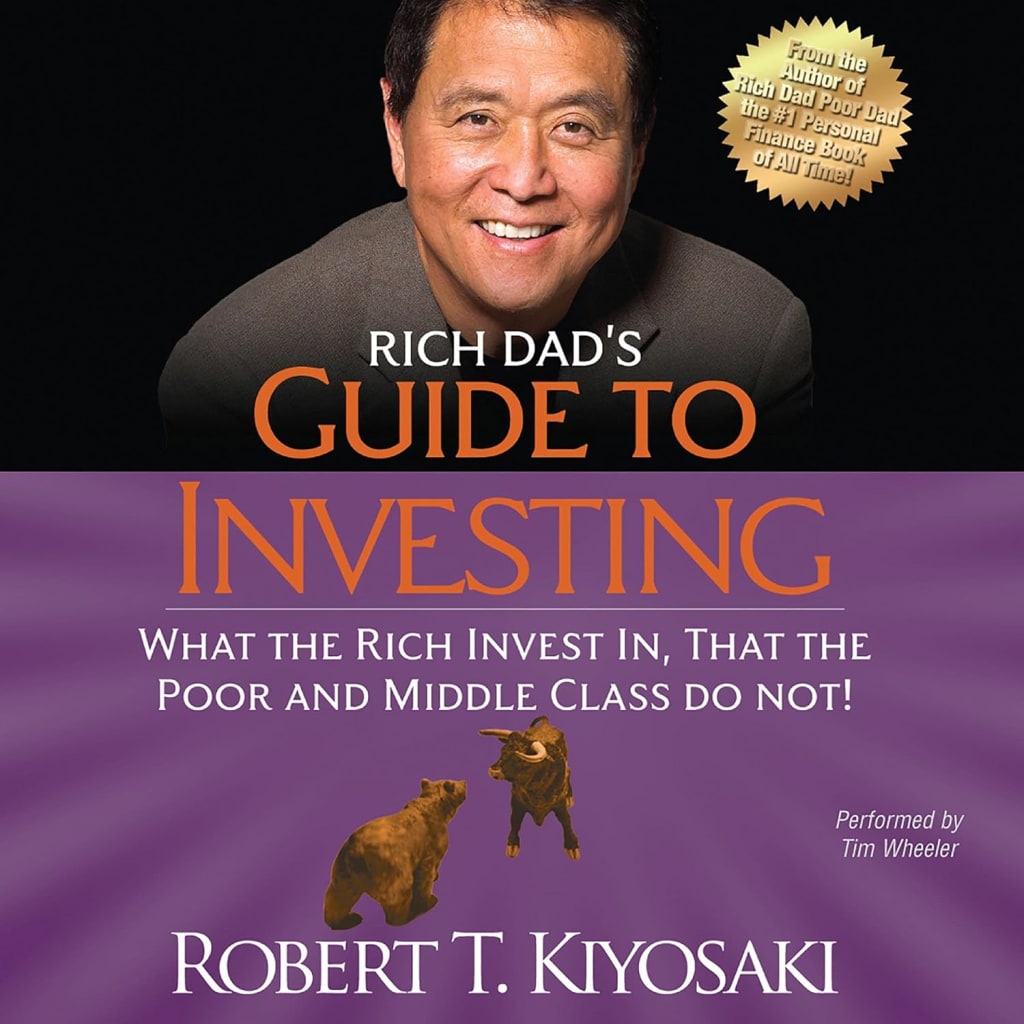
Book Review: Rich Dad’s Guide to Investing: What the Rich Invest in That the Poor and the Middle Class Do Not! by Robert T. Kiyosaki
Investing means different things to different people And there is a huge difference between passive investing and becoming an active, engaged investor. Rich Dad’s Guide to Investing, one of the three core titles in the Rich Dad Series, covers the basic rules of investing, how to reduce your investment risk, and how to convert your earned income into passive income plus Rich Dad’s 10 Investor Controls.

Introduction
Rich Dad’s Guide to Investing by Robert T. Kiyosaki aims to redefine how we think about money, investments, and building wealth. Part of the celebrated Rich Dad universe, this installment challenges conventional wisdom and encourages a shift from earned income to passive and portfolio income. Framed as essential reading for aspiring investors—especially those frustrated with slow, traditional paths to financial security—it explains what separates the investment mindset of the rich from the rest.
Overview & Structure
Rather than a granular how‑to investing manual, Rich Dad’s Guide to Investing takes a mindset-first and strategic approach. It’s split into three phases:
Investor Lessons – 13 core principles, including “The Rich Don’t Work for Money,” “Mind Your Own Business,” and “Invent Money”
Types of Investors – From passive shareholders to "inside" business owners and accredited investors who leverage control and ownership for greater returns.
Fundamentals of Business Building – How to start and scale businesses to become investment vehicles rather than mere jobs.
Interspersed are stories, personal anecdotes, and case studies emphasizing financial literacy, calculated risk-taking, and the emotional elements of investing.
1. Mindset Over Mechanism
Kiyosaki asserts the primary distinction between the rich and the rest is mindset: those who invest to become rich first, then to find security, contrast sharply with middle-class investors who invest for comfort and preservation
2. Inside vs. Outside Investing
While most people invest “outside”—via stocks or public funds—the rich often invest “inside.” They build or invest in private enterprises where they hold real control, and thus access greater returns and tax benefits
3. Leverage as a Wealth Multiplier
Kiyosaki discusses the strategic use of "good debt" and leverage—employing other people's money (OPM) or time (OPT)—to acquire assets and scale investments faster than traditional savings trajectories allow
4. Financial Literacy as Survival
Understanding financial statements—distinguishing between assets (cash-flowing investments) versus liabilities (expenses masked as assets)—is foundational. Kiyosaki differentiates earned, portfolio, and passive income and urges a shift toward the latter two
5. Building a Support Team
He emphasizes surrounding yourself with financial experts—lawyers, accountants, advisors—to navigate complex structures like corporations and tax code advantages
6. Emotional Intelligence and Fear
Fear and ego often hold investors back. The book advises developing emotional discipline—learning from losses rather than fearing them—and steadily increasing sophistication as one gains confidence and knowledge.
Pros & Cons
✅ Pros
Mindset-shifting: Challenges status quo beliefs about saving versus investing.
Accessible to beginners: Written in simple language with practical anecdotes.
Reinforces financial education: Encourages an ongoing commitment to learning and growth
⚠️ Criticisms
- Many readers note it’s lighter on concrete investing mechanics and heavier on business formation and general philosophy
- Some sections feel overly repetitive or promotional (mentioning Kiyosaki’s board game and other products)
- Advice is often U.S.-tax-complex-centric and may feel dated or less applicable outside that context.
- Communities such as financial subreddits criticize the advice as motivational fluff rather than actionable instruction and question the author's credibility
Key Takeaways
- Rich investors think differently—they focus on building assets, not just earning money.
- Strategic leveraging of debt, business structures, and teams multiplies wealth-building opportunities.
- Owning or controlling a business provides access to investment deals and tax strategies not available to salaried employees.
- Financial literacy is the bridge—learn to read balance sheets, cash flow, and differentiate liabilities from assets.
- Emotional resilience and long-term vision matter more than timing the market.
Plan to be rich, not just secure or comfortable.
Writing Style & Structure
Kiyosaki writes in a conversational, approachable tone. The chapters are structured around "lessons" followed by “Study Session” review questions, reinforcing the learning flow. However, many readers report the material feels repetitive—especially if you've read earlier Rich Dad books—and occasionally promotional
Who Should Read This Book?
- Aspiring investors want a paradigm shift away from wage-based wealth-building.
- Entrepreneurs are interested in structure, leverage, and growing businesses as investment vehicles.
- Anyone seeking financial mindset transformation rather than step-by-step investing tactics.
- Not ideal for investors looking for detailed analysis on stocks, mutual funds, or investment metrics.
Conclusion
Rich Dad’s Guide to Investing is not your typical investment manual—it’s a mindset manifesto aimed at reframing how you think about money, assets, and wealth-building. Kiyosaki champions becoming an "inside investor," leveraging business ownership, debt, and teams to beat traditional savings limitations. While criticized for being light on technical investing details and occasionally repetitive or self-promotional, the book remains a powerful tool for readers seeking to change their financial identity and ambition.
Ultimately, if you're ready to question mainstream financial advice and embrace an entrepreneurial mindset—where building assets matters more than job security—this book offers a bold starting point.
👉 Want to shift from employee to investor? Grab your copy of Rich Dad's Guide to Investing and learn how the wealthy think differently about money.
About the Creator
TAPHA
Hi! Whether you're looking for insightful answers or a fresh perspective on a topic,I'm here to provide engaging, accurate,and thought-provoking content tailored just for you. Stick around, and let's explore the world of knowledge together!
My New Book is Finally Here
My poetry collection Beautiful and Brutal Things is done. It's actually done and finally published over 270 pages. Over a year of my life went into this book. More than a year, really. Long days at my computer, sometimes seven days a week because I couldn't stop even when I probably should have. Then two months of editing that felt harder than the writing itself. But it's finished, and I'm still standing, and the book is real.
By Tim Carmichael3 days ago in BookClub
7 Best Historical Fiction Books In 2026
Historical fiction has a rare power: it transports us across time while illuminating timeless truths about humanity. Through richly imagined characters and meticulously researched settings, the best historical fiction novels allow us not just to learn history, but to feel it. We walk alongside soldiers, queens, rebels, healers, and ordinary people caught in extraordinary moments—discovering how their choices echo into our own lives.
By Diana Meresc6 days ago in BookClub




Comments
There are no comments for this story
Be the first to respond and start the conversation.