
Book Review: Rich Dad Poor Dad
A quick review of the Rich Dad Poor Dad giving you a sample of what the book covers!
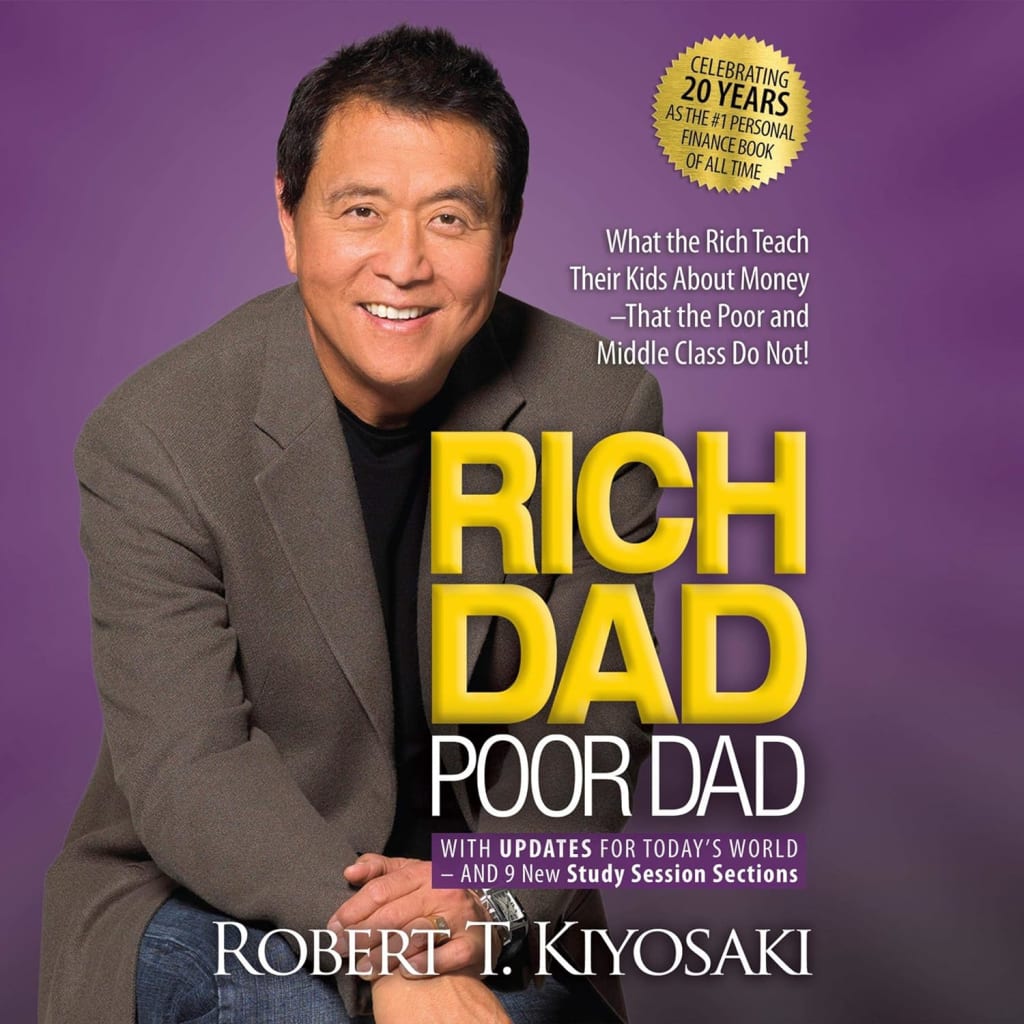
Rich Dad Poor Dad by Robert T. Kiyosaki is a personal finance classic that contrasts two different financial philosophies, one from the author's biological father (the "Poor Dad") and one from his best friend’s father (the "Rich Dad"). The book explores how the two men’s attitudes towards money, education, and risk shaped their financial outcomes, offering lessons on wealth-building, entrepreneurship, and financial literacy. Kiyosaki's main premise is that financial independence is achievable not through traditional education or working hard in a 9-to-5 job, but by cultivating an entrepreneurial mindset and learning how money works.
Below is a chapter-by-chapter summary of the book.
Chapter 1: Rich Dad, Poor Dad
In the opening chapter, Kiyosaki introduces the two father figures in his life: his biological father (the Poor Dad) and his best friend’s father (the Rich Dad). Both men were successful in their own ways, but they had vastly different views on money and wealth. Poor Dad, who was highly educated and worked as a government employee, believed in the conventional path of getting a good education and securing a stable job. In contrast, Rich Dad, a self-made millionaire with little formal education, believed in building wealth through entrepreneurship and investing.

The key lesson here is that wealth is largely a product of one's mindset. While Poor Dad saw money as something to be earned and saved, Rich Dad saw it as a tool that should be invested and leveraged. Kiyosaki advocates for adopting Rich Dad’s entrepreneurial mindset.
Chapter 2: The Rich Don’t Work for Money
In this chapter, Kiyosaki explains that the wealthy do not trade their time for money, as most people do through traditional employment. Instead, they make money work for them by owning assets and businesses. The "rat race" — the cycle of working for wages, paying bills, and being stuck in financial limbo — is a result of focusing solely on earning income instead of investing in wealth-building assets.
Kiyosaki recounts how Rich Dad taught him and his friend the value of financial education by making them work in his stores for free. This lesson instilled in them the understanding that working for money is not as important as learning how money works. The chapter emphasizes the importance of breaking free from the mindset of working for a paycheck.
Chapter 3: Why Teach Financial Literacy?
This chapter focuses on the importance of financial education. Kiyosaki argues that schools fail to teach students about money, leaving them ill-equipped to manage finances as adults. He emphasizes the need to understand the difference between assets and liabilities, a concept central to building wealth.
Rich Dad taught Kiyosaki that the rich focus on acquiring assets — things that put money in their pockets, like businesses, stocks, real estate, and intellectual property. On the other hand, the poor and middle class often acquire liabilities, such as cars and houses, which take money out of their pockets. The key takeaway is to invest in assets that generate passive income.
Chapter 4: Mind Your Own Business
In this chapter, Kiyosaki advises readers to start minding their own business, meaning that they should focus on building their asset columns rather than working to increase someone else’s. He emphasizes that even if you have a job, it is crucial to create additional income streams through investments and side ventures.
Kiyosaki encourages readers to build businesses or invest in assets that generate passive income. His own ventures in real estate, stocks, and small businesses serve as examples. The chapter teaches the importance of controlling one's financial destiny rather than being dependent on a job or employer.

Chapter 5: The History of Taxes and the Power of Corporations
This chapter delves into how taxes have evolved and how the rich use corporations to minimize their tax burden. Kiyosaki explains that the tax system was originally designed to target the rich, but over time, the burden has shifted to the middle class. Rich people use corporations to shelter their income from taxes, as corporations can deduct expenses and invest pre-tax money in ways individuals cannot.
Kiyosaki urges readers to understand the benefits of owning a corporation and how to legally minimize taxes by using the same strategies as the wealthy. This chapter is a lesson in how financial education can protect wealth from erosion by taxes.
Chapter 6: The Rich Invent Money
Kiyosaki introduces the idea that the rich "invent money" by being creative and taking risks. While most people wait for opportunities to come to them, the rich actively create opportunities. This chapter encourages readers to develop their financial IQ and learn how to spot and seize opportunities, whether through investing, starting a business, or leveraging new technologies.
He recounts examples of his own ventures, showing how understanding markets and using creativity can lead to financial success. The key takeaway is that the rich take calculated risks, while the poor often play it safe and miss out on opportunities.
Chapter 7: Work to Learn—Don’t Work for Money
In this chapter, Kiyosaki emphasizes the importance of learning and personal development over earning a paycheck. He argues that instead of focusing solely on making money, people should seek out jobs that teach them valuable skills. For instance, learning about sales, marketing, and management can be more beneficial in the long run than working in a high-paying, but limiting, job.

He advises readers to diversify their skills and seek out opportunities for growth. This chapter reinforces the idea that financial education and self-improvement are critical to building long-term wealth.
Chapter 8: Overcoming Obstacles
Kiyosaki outlines the five primary obstacles that prevent people from achieving financial success: fear, cynicism, laziness, bad habits, and arrogance. He explains that fear of losing money is a major reason why many people never invest or take risks. Cynicism, often fueled by self-doubt, holds people back from seizing opportunities. Laziness and bad habits, such as procrastination, can prevent people from taking the necessary steps toward financial independence.
The chapter stresses the importance of recognizing these obstacles and developing the discipline to overcome them. Kiyosaki encourages readers to focus on continuous self-improvement and to push through their fears.
Chapter 9: Getting Started
This chapter provides actionable steps for readers who want to begin their journey toward financial independence. Kiyosaki offers practical advice on how to start building wealth, including:
-Finding a mentor or someone to learn from.
-Choosing to surround yourself with like-minded, financially literate individuals.
-Starting small and gradually increasing your investments.
-Taking advantage of every opportunity to learn and grow.
He reiterates the importance of taking action, learning from mistakes, and continuously educating oneself about finance and investments.
Chapter 10: Still Want More? Here Are Some To Do’s
The final chapter offers additional resources and advice for readers who are serious about improving their financial future. Kiyosaki provides a list of books, seminars, and workshops that can help further financial education. He emphasizes the importance of continuing to learn, applying the lessons from the book, and networking with successful individuals.
The chapter serves as a motivational close, encouraging readers to take control of their financial destinies by continually investing in their financial education and taking calculated risks.
Conclusion
Rich Dad Poor Dad is not just a book about money; it is a guide to changing the way people think about wealth and financial independence. By challenging conventional wisdom and advocating for financial literacy, entrepreneurship, and strategic risk-taking, Kiyosaki offers readers a path to financial freedom. The book's lessons — focusing on assets, understanding taxes, and continually learning — remain relevant for anyone looking to improve their financial situation.
**Affiliate Disclosure** This article contains affiliate links, meaning that we will receive a small commission fee at no added cost to you as part of our partnership with Audible when you sign up for a free trial to obtain this book.
About the Creator
Keep reading
More stories from writers in BookClub and other communities.
My New Book is Finally Here
My poetry collection Beautiful and Brutal Things is done. It's actually done and finally published over 270 pages. Over a year of my life went into this book. More than a year, really. Long days at my computer, sometimes seven days a week because I couldn't stop even when I probably should have. Then two months of editing that felt harder than the writing itself. But it's finished, and I'm still standing, and the book is real.
By Tim Carmichael11 days ago in BookClub
The Duelist
The rays of a dying red sun flashed against the onrushing blade. The grey beards say the key to dueling lies in size, speed, reach, righteous fury, whatever the person in front of them pays them to say. Matteo knew better than any it was none of these and had an undefeated record on these sands to prove it.
By Matthew J. Fromm3 days ago in Fiction



Comments
There are no comments for this story
Be the first to respond and start the conversation.