
Book Review : "Rich Dad Poor Dad" by Robert T. Kiyosaki
A quick review of the Rich Dad Poor Dad book giving you a sample of what the book cover


Introduction
"Rich Dad Poor Dad" by Robert T. Kiyosaki is one of the most influential personal finance books of all time. First published in 1997, it challenges conventional wisdom about money, investing, and financial independence. The book is structured around the contrasting financial philosophies of Kiyosaki’s two "dads": his biological father (Poor Dad), a highly educated man who struggled financially, and his best friend’s father (Rich Dad), a successful entrepreneur with limited formal education but a deep understanding of wealth-building.
Kiyosaki uses these two figures to illustrate the different approaches to money, work, and education, highlighting the importance of financial literacy and the mindset required for financial success. The book is divided into nine chapters, each focusing on a specific lesson or principle that Kiyosaki believes is crucial for achieving financial independence.
Chapter 1: The Rich Don’t Work for Money
In this opening chapter, Kiyosaki introduces the key concept that the rich don’t work for money; instead, they make money work for them. He recalls his childhood when he and his best friend, Mike, sought financial advice from Rich Dad. Rich Dad taught them early on that working for a paycheck would never lead to true wealth. Instead, he emphasized the importance of learning how money works and how to make it grow through investments and entrepreneurship. This chapter sets the stage for the rest of the book by challenging the conventional notion that a stable job and a steady income are the keys to financial security.
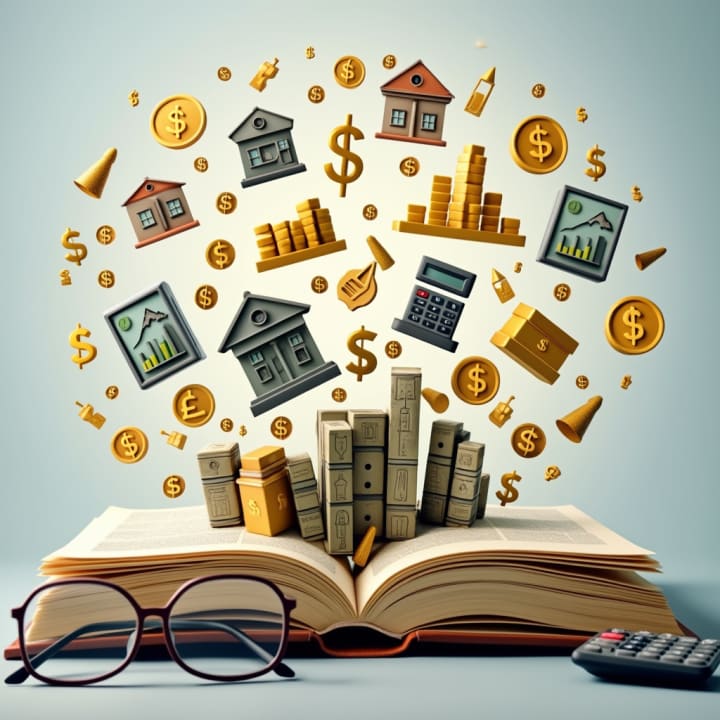
Chapter 2: Why Teach Financial Literacy?
Kiyosaki argues that financial literacy is the foundation of wealth. In this chapter, he stresses the importance of understanding financial statements—specifically, the differences between assets and liabilities. He points out that many people mistakenly believe their home is an asset, when in reality, it can often be a liability due to ongoing expenses like mortgages, taxes, and maintenance. Rich Dad taught Kiyosaki that true assets are things that put money in your pocket, while liabilities take money out. The chapter concludes by emphasizing that building wealth requires acquiring assets that generate income, such as investments, real estate, or businesses.
Chapter 3: Mind Your Own Business
This chapter encourages readers to focus on building their own businesses or acquiring income-generating assets, rather than solely relying on a paycheck from a job. Kiyosaki explains that many people confuse their profession with their business, but the two are not the same. He advises readers to start investing in assets that will eventually replace their job income. Rich Dad taught him to always have a business on the side, whether it’s investing in stocks, real estate, or starting a small business. The key is to keep your day job while you build up enough assets to achieve financial independence.
Chapter 4: The History of Taxes and the Power of Corporations
Kiyosaki explores the history of taxes and how they were initially intended to tax the rich but ended up affecting the middle class the most. He discusses how the rich use corporations to minimize their tax burden and protect their wealth. Rich Dad taught him that corporations offer legal protection and significant tax advantages, which are not available to employees. By understanding the tax code and leveraging corporate structures, the wealthy can legally reduce their tax liability and reinvest their money into income-producing assets.
Chapter 5: The Rich Invent Money
In this chapter, Kiyosaki emphasizes the importance of financial creativity and the ability to see opportunities where others do not. He shares stories of how Rich Dad encouraged him to think creatively about money, using his imagination to find investment opportunities. Kiyosaki argues that wealth is created by those who are willing to take calculated risks and use their financial knowledge to seize opportunities. He also stresses the importance of education and continually learning about money and investing.
Chapter 6: Work to Learn—Don’t Work for Money
Kiyosaki advises readers to seek jobs that offer the opportunity to learn new skills rather than just focusing on salary. He reflects on his own career choices, where he took jobs not for the money, but for the experience and the chance to learn skills that would later help him in business. Rich Dad encouraged him to develop a broad skill set, including sales, marketing, and investing. This chapter underscores the idea that the rich focus on acquiring skills and knowledge that will help them build wealth, rather than simply working for a paycheck.
Chapter 7: Overcoming Obstacles
Kiyosaki discusses the five main obstacles that prevent people from becoming financially independent: fear, cynicism, laziness, bad habits, and arrogance. He explains how each of these obstacles can hold people back from achieving their financial goals. Rich Dad taught him that overcoming fear and taking action is essential for success. Kiyosaki shares personal stories of how he faced and overcame these obstacles, and offers advice on how readers can do the same. The chapter emphasizes the importance of mindset and persistence in achieving financial independence.
Chapter 8: Getting Started
This chapter provides practical advice on how to begin the journey to financial independence. Kiyosaki outlines ten steps that readers can take to start building wealth, including setting clear goals, finding mentors, and starting small. He encourages readers to take control of their financial education and start taking action, no matter how small the initial steps may be. Rich Dad’s advice is to always be on the lookout for opportunities and to continually invest in your own financial knowledge.
Chapter 9: Still Want More? Here Are Some To Do’s
In the final chapter, Kiyosaki offers additional tips and strategies for those who want to continue learning and growing their wealth. He suggests specific actions, such as joining investment clubs, reading financial books, and attending seminars. Kiyosaki also emphasizes the importance of surrounding yourself with like-minded people who are focused on financial success. The chapter concludes with a reminder that building wealth is a lifelong journey, and the key is to keep learning, growing, and taking action.
Conclusion
"Rich Dad Poor Dad" is more than just a book about money; it’s a guide to changing your mindset about wealth and financial independence. Kiyosaki’s lessons challenge conventional wisdom and encourage readers to think differently about how they approach their finances. By contrasting the philosophies of his two "dads," Kiyosaki illustrates the importance of financial literacy, investing in assets, and taking control of your financial future. The book’s enduring popularity is a testament to its powerful message: that anyone can achieve financial independence with the right mindset and knowledge.
**Affiliate Disclosure** This article contains affiliate links , meaning that we will receive a small commission at no added cost to you as part of our partnership with Audible when you sign up for a free trial to obtain this book.
About the Creator
Keep reading
More stories from Hesham hassan and writers in BookClub and other communities.
The Last Mrs. Parrish: A Novel Review
The novel that can be classifiedas a psychological thriller and focuses on the themes of lying, manipulation, and the pursuit of the American dream. The book authored by the sisters Lynne and Valerie Constantine under the pen name Liv Constantine presents a novel that will make its readers sit on the edge of a seat throughout its length.
By Hesham hassanabout a year ago in BookClub
My New Book is Finally Here
My poetry collection Beautiful and Brutal Things is done. It's actually done and finally published over 270 pages. Over a year of my life went into this book. More than a year, really. Long days at my computer, sometimes seven days a week because I couldn't stop even when I probably should have. Then two months of editing that felt harder than the writing itself. But it's finished, and I'm still standing, and the book is real.
By Tim Carmichael10 days ago in BookClub
7 Books for People Who Feel Stuck but Don't Know Why
Feeling stuck in life is more common than most of us admit. We wake up, go through our routines, and yet a sense of unease, dissatisfaction, or inertia lingers. Sometimes it isn’t a specific event that holds us back — it’s an inner blockage, a mental fog, or a lack of clarity about our direction. When this happens, reading the right book can be like discovering a flashlight in a dark room: it illuminates your path, helps you understand the root of your stagnation, and offers actionable steps to move forward.
By Diana Meresc4 days ago in BookClub
The Blue Ridge Stalker
Tom had left the Ford down the way, its spark plugs finally exhausted and no mechanics for a dozen miles back through the foothills to Strossburg. No matter, he had worn his boots—almost as if he planned for this to happen. The puzzle he sought to solve emanated from the woods clinging to the slopes above; the valley behind held no mysteries.
By Stephen A. Roddewig6 days ago in Fiction




Comments
There are no comments for this story
Be the first to respond and start the conversation.