
Book Review: "Means of Control: How the Hidden Alliance of Tech and Government Is Creating a New American Surveillance State"
Byron Tau's Revelatory Investigation

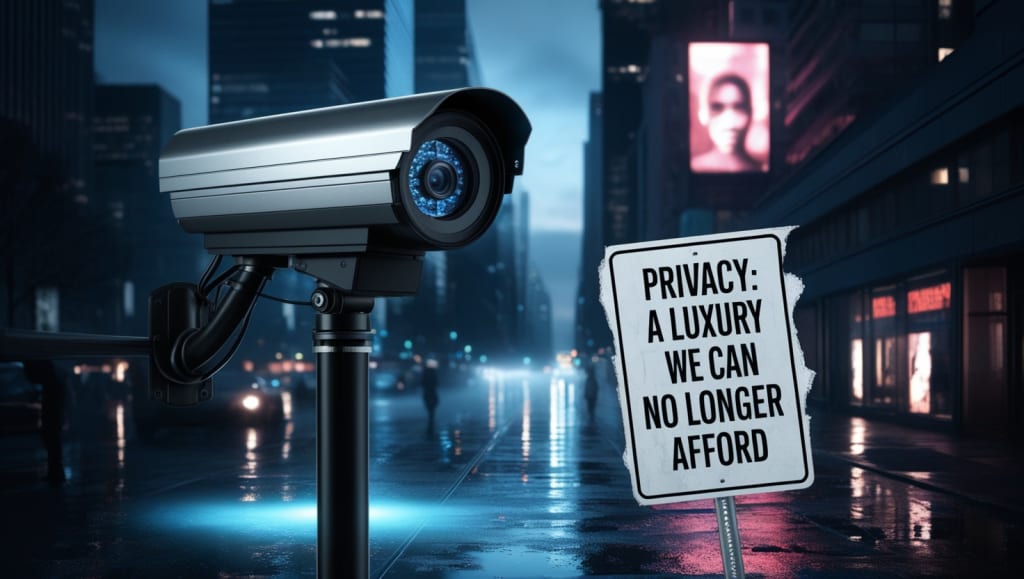
Byron Tau’s "Means of Control: How the Hidden Alliance of Tech and Government Is Creating a New American Surveillance State" yanks back the curtain on a surveillance machine so vast and pervasive it makes the wiretaps of past scandals look quaint. This is not a hypothetical future but a present reality, unfolding in our everyday lives.
In my years of following the interplay between technology and policy, Tau’s exploration of the digital surveillance state stands out as both urgent and comprehensive. This book isn’t just a wake-up call; it’s a blaring alarm about the very nature of freedom and privacy in the digital age.
Personal Experience and Engagement
Having spent much of my career uncovering hidden truths, Tau's revelations resonate deeply with me. My investigative work has often intersected with the boundaries of privacy and governmental power, but the scale and sophistication of today's surveillance state, as detailed by Tau, present a new frontier of concern.
Reading Tau’s account, I was reminded of the moments when I first encountered the chilling implications of government overreach. The data brokers and the seamless integration of tech giants into state surveillance are developments that challenge our understanding of personal freedom.
Critique and Analysis
Now, I've been reviewing books for over a decade, and I've seen my share of dystopian warnings about the future of privacy. But Tau's book cuts through the usual doomsaying and delivers a chillingly real account of how this new surveillance state is functioning right under our noses.
Forget the big tech giants – Tau dives deep into the shadows, exposing the shadowy army of "data brokers" and anonymous companies that are collecting your data like it's going out of style. He reveals that these companies, often operating in the digital backwaters of Virginia and Maryland, are feeding information to government agencies with little oversight or accountability. And the scale is staggering: an estimated 3,000 data brokers are operating in the U.S. alone, and the global market is projected to reach a whopping $561.5 billion by 2029 [1]. That's a lot of data being collected and, potentially, exploited.
Tau isn't just throwing out abstract concerns, either. He brings the issues to life with vivid examples: tire pressure sensors in your car being used for tracking, the vast network of display ads that collect data even as you're reading the weather, and the chilling reality that even your sleep data might be up for grabs. And it's not just a handful of people; approximately 62% of Americans believe it's impossible to go through daily life without companies collecting their data, often without their consent.
He doesn't sugarcoat the situation, but he also doesn't leave you feeling completely hopeless. Tau argues that the current free-for-all is partly a result of our consumer habits and our reliance on "free" services that come at the price of our data. He suggests that a return to paying for services could be a step towards regaining some control.
But here's the thing that stuck with me: even if we all decide to ditch our smartphones and live off the grid, there's still a vast, hidden world of data flowing between tech companies and government agencies. The government isn't just passively observing; they're actively engaging in data collection on a massive scale. Google received over 211,000 requests for user data from government agencies in the first half of 2023, a significant increase from just 26,000 requests in 2013 [2]. This isn't just about catching criminals; it's about a powerful, ever-expanding surveillance apparatus.
The book’s strength lies in its thorough research and clear presentation of facts. Tau uses concrete examples, like the PRISM program and law enforcement’s use of facial recognition technology, to illustrate the breadth of surveillance. He also traces the historical evolution of these practices, highlighting how modern-day digital tracking has built upon past precedents.
Digital Colonialism and Imperial Control
Tau's exploration of digital colonialism is particularly compelling. He draws parallels between the control exerted by U.S. multinationals over the global digital ecosystem and traditional forms of imperial domination. This control extends into economic, political, and cultural domains, raising significant ethical and geopolitical questions.
Totalitarian Paranoia and Neoliberal Modernity
Tau's writing resonates with the notion that today’s neoliberal modernity has paved the way for a surveillance state with authority surpassing dystopian scenarios akin to Orwellian nightmares. This establishment utilizes fear and consumerism to uphold its power, fostering an environment characterized by surveillance and suppression.
Normalization of Control in the Age of Pandemics
The book also delves into how crises such as COVID-19 have been exploited to normalize digitally driven modes of control. Governments have put in place information systems initially aimed at mitigating the pandemic but have since become fixtures in the landscape of surveillance.
Technologies of Deception and Control
Tau delves into how various technological frameworks are crafted to mislead and govern, ranging from workplace monitoring tools to law enforcement data-gathering techniques. These frameworks underscore the power differentials and moral dilemmas in living under scrutiny.
Bureaucratic Social Control
Sophisticated electronic technologies have notably bolstered oversight across realms like employment settings, commercial spheres, and governmental bodies. The surveillance state often solidifies its control automatically, evading systems in the process.
Privacy and Social Control
The widespread use of surveillance technologies has shifted control from being obvious to discreet, embedding surveillance deeply into our lives. This change poses a threat to the concept of control and hints at a future where people may need to adapt to powerful surveillance tools.
Conclusion
Even though "Means of Control" may have some flaws, it is a must-read for those who are worried about privacy issues. Tau's work acts as an alert, shedding light on the risks associated with a surveillance state that evolves without approval. The book prompts inquiries about the essence of democracy in a time dominated by massive amounts of data and advocates for a fresh social agreement that strikes a balance between security requirements and strong privacy safeguards.
Byron Tau’s "Means of Control" is a piece that uncovers the aspects of our digital realm. It provides insights into how technology intersects with government surveillance and its impact on democracy and individual liberty. This book encourages us to reconsider our interactions with technology and push for privacy regulations and increased transparency.
Footnote:
[1] "Global Data Broker Market Size, Share & Industry Trends Analysis Report by Offering, End-Use, Deployment Mode, and Region – Global Forecast to 2029." Knowledge Sourcing, 2023.
[2] "Government Requests for User Data Worldwide." Statista. https://www.statista.com/topics/12167/government-requests-for-user-data-worldwide/ (accessed October 26, 2023).
About the Creator
Debbie Bourne
Experience: 10+ years as an Audio Books Critic, Ebooks & Books Critic, and Film/Movie Critic 📚🎬
🎓 BA in Literature & Writing
🎓 MA in Film & Writing
📍 Salinas, CA
Hobbies: 🎧 motivational speeches, 📖 reading quotes, 🎥 movies & books
Keep reading
More stories from Debbie Bourne and writers in BookClub and other communities.
My New Book is Finally Here
My poetry collection Beautiful and Brutal Things is done. It's actually done and finally published over 270 pages. Over a year of my life went into this book. More than a year, really. Long days at my computer, sometimes seven days a week because I couldn't stop even when I probably should have. Then two months of editing that felt harder than the writing itself. But it's finished, and I'm still standing, and the book is real.
By Tim Carmichael4 days ago in BookClub
7 Cyberpunk Books You Must Read In 2026
Cyberpunk isn’t just a literary genre—it’s a warning signal, a mirror, and a roadmap. Born at the intersection of rapid technological advancement and social decay, cyberpunk books explore high-tech futures haunted by low-life realities.
By Diana Meresca day ago in BookClub




Comments (1)
where to buy the book?