
Blue Sisters by Coco Mellors review — a cinematic portrayal of sisterhood and loss
Blue Sisters by Coco Mellors offers a brutal and relatable depiction of grief, addiction, and sisterhood that is a truly powerful read.
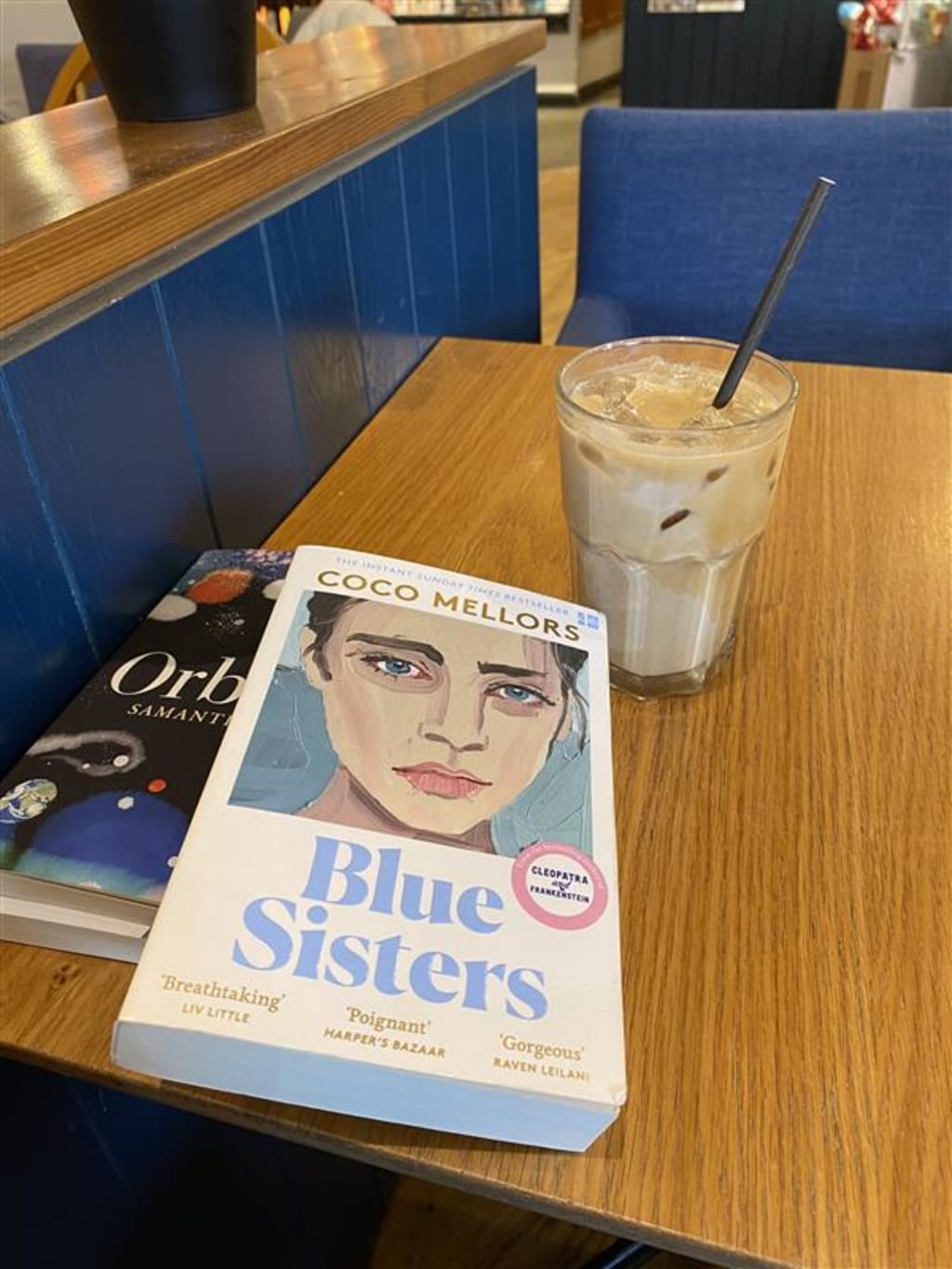
I have always been an avid book reader. Creative writing and understanding how words can be crafted to beautifully emanate the human experience has always moved me.
I consider emotions almost impossible to convey in a simple word — a collection of symbols that can portray something as profound, complex, and personal as the human experience.
I have only encountered a few writers who have been able to do this for me: Toni Morrison, Arundhati Roy, and George Orwell.
As someone who loves the classics, I am fairly prejudiced in believing that modern-day writers can’t mirror works like these classic authors. So, when I was strolling through my local Waterstones and saw Coco Mellors’ latest novel Blue Sisters half-price, I decided to push my biases aside and give it a go after reading the blurb, which spoke directly to something many people value — family.
A typical 350-page book, I mentally prepared myself to dive in. Unexpectedly, I was completely drawn in and shockingly moved by the first page alone.
“A sister is not a friend.” The opening line hits you right across the face. Mellors proceeds to describe how sisterhood cannot be described as something as “banal” as a “friend.”
She beautifully writes, “True sisterhood, the kind where you grew fingernails in the same womb, were pushed screaming through identical birth canals, is not the same as friendship.”
Mellors compares a friend to a typical bracelet — something that is just “brightly woven thread.” This juxtaposes the deep connection between sisters, which she describes as “an umbilical cord — tough, sinuous, unlovely, yet essential.”
I inhaled deeply after reading this page. I took a second and snapped a picture of it. I sent it to all the women in my life who are my sisters, or whom I consider to be my sisters.
In that moment, I realised I may have found a modern writer who is capable of doing what I believed was rare: expressing the human experience — the sisterly experience — through words. Words I struggled to articulate myself to the people I love.
A brief overview
The novel, simply, tells the story of three sisters who are coping with the loss of their sister, who accidentally committed suicide after battling endometriosis. The eldest, Avery Blue — an ex-junkie and now successful lawyer living in London — is struggling after her wife wants to have a baby. The second eldest, Bonnie, a professional boxer turned bouncer after her sister’s passing. And the youngest, Lucky, a model who has also turned to party drugs to block out the loss of their sister.
Their deceased sister, Nicky, who was older than Lucky, craved the simple life — one her sisters did not abide by. She simply wanted to be a teacher, marry, and have children. But the intolerable pain of her endometriosis forced her to turn to extreme painkillers, which ultimately took her life.
A year after Lucky's death, the sister's find out that their parents have put her apartment up for sale. A shocking revelation that forces them to enter the scene of incident and clear out her items.
Each sister goes on a journey. Avery struggles to come to terms with her wife wanting to have children, when she does not want that responsibility, so in response has an affair.
Bonnie struggles after losing a big boxing fight, where her coach (who she is in love with) throws in the towel to save her life. She escapes to LA to become a bouncer where she struggles to adjust.
And Lucky, the model who expresses the curse of her beauty. Being viewed as an idiot in the industry, being sexually abused from a young age or just a sex symbol. Her stream of consciousness conveys that she has substance that goes beyond her beauty,
Each chapter is told from the perspective of each sister. In one instance, you jump into Lucky’s life in Paris, trying to enjoy Paris Fashion Week on the anniversary of her sister’s death. In the next chapter, you are in London with Avery, who is attending an AA meeting she considers “mundane.”
People have described the book as a modern-day Little Women and, through the structure of the storytelling, I am inclined to agree.
Did I like the book?
Well, I read it in two days. People throw around the phrases “page-turner” and “I couldn’t put it down.” But without exaggeration — I couldn’t.
I woke up thinking about the book. Whilst working, I was waiting for my lunch break so I could continue reading. At night, I would spend hours just reading and reading.
It’s hard to describe why I found this book “unputdownable.” If I have to break down why I loved it so much, it comes down to the writing style and the depiction of the characters.
Yes — the characters were fairly cliché at points. Avery, a successful ex-junkie; Lucky, the rebellious youngster party animal; and Bonnie, the masculine, level-headed female character.
Despite the cliché, I felt connected to these women. Their successes, their mistakes, their past, and their journey. It almost felt as if they were real women I have encountered in my life.
I was invested — I wanted to know how they overcome, how they grow, and if they have a happy ending — an ending they deserve.
The writing style was also captivating. Mellors has a way of writing as if you are watching a movie — where you can see the images easily flow in your mind. The narration is incredibly relatable; even when she is discussing people who are the worst, you cannot help but relate, empathise, and forgive them — as you would with your own family.
The untold reality of grief and addiction
The portrayal of grief was somewhat overwhelming. As someone who has recently experienced a deep loss, Mellors’ depiction of the all-encompassing and inescapable darkening of grief was shockingly accurate.
The idea that there is “no correct way” to grieve is put forward by Mellors. You can go off the rails like Lucky, you can try and escape like Bonnie, or you can put on a brave face like Avery.
But despite this, the sisters — and, like many of those who are grieving — have to address the true reality of life: that grief is inescapable. It doesn't get easier, as it has not for the sisters after a year has passed. It is them, united together, that has allowed them to get stronger to carry that grief with them.
The cycle of addiction was an interesting concept in the book. Not only did Mellors portray how inescapable addiction is, with Lucky constantly falling in and out of it, but also the cycle in which addiction passes on through family.
All of the children have some form of addiction issues. Avery with heroin, Bonnie to pain through her boxing, and Lucky to her party drugs. The addiction stems from their father, a deadbeat alcoholic.
Mellors shows, tragically, the vulnerabilities of an addict. A bad comment, bad moment, or memory is enough to push someone into the precipice of this disease.
I found Lucky’s journey with addiction heart-breaking and frustrating. Knowing how many times she tried to become sober only to relapse — it truly conveyed how one must feel seeing their loved one relapse.
Individual perspectives that shape the narrative
The representation of the human perspective was one I found interesting. Through the story of the sisters, you feel inclined to dislike their parents due to their addiction and abusive tendencies. With Avery, you feel a deeper sense of her anguish over her mother staying with their father despite his violence and neglect.
As the older sister, you understand how addiction caused her to become responsible from an early age and how it caused her to be easily influenced into the cycle of addiction itself.
I felt such fury towards her mother for not protecting the children.
It’s easy, as the reader, to lambast their mother as weak and neglectful in her actions — until Avery has an eye-opening conversation with her, where she finds out that her mother was not just tied to some addicted mess of a man. She struggled and also contemplated leaving him.
This moment highlighted something I think we all forget — that we are human. Humans with unique experiences and choices. Though her mother could have done things differently, Avery provided her with empathy. An empathy that healed her — and something that many people reading could relate to.
Most importantly, it deeply conveyed how challenging the female experience is. Whether it’s being dismissed for their beauty, addiction, strength, or medical illnesses — Mellors shows that women have to unite as a collective in a society that ignores women and their plights.
What about Nicky?
One qualm I had with the book was the depiction of Nicky. I understand why Mellors chose not to include her perspective. After all, she is dead. The story is about understanding grief from the perspective of those who are living — not those who have passed.
But personally, I think hearing Nicky’s struggles before her attempt would have been insightful. Understanding her as her own person, her own woman, who experienced a silent disease that is rarely taken seriously — I think many people would have related to her story just as much as to a complex story of addiction and loss.
I found the ending somewhat predictable too, with Bonnie having a child and naming her after Nicky. Don’t get me wrong — it was a lovely way of conveying how their sister’s memory lives on — but I felt it made a very beautiful story slightly basic and corny.
Overall
This was a truly stunning depiction of sisterhood, the human experience, and the complexity of grief and addiction. A book that represents life in its simplest form. I would happily give this an 8.8/10 and mark it as a must-read for all — especially for women.
About the Creator
Keep reading
More stories from writers in BookClub and other communities.
Book Review: Atmosphere by Taylor Jenkins Reid
I flipped the book over in my hands in the centre of the small airport book shop. Although I had heard promising reviews of Atmosphere by Taylor Jenkins Reid, I hesitated. The synopsis didn’t compel me - I wasn’t much of a space girly. In high school it made me cringe when my peers would talk about the stars.
By sleepy draftsabout 11 hours ago in BookClub
7 Dark Academia Books You Must Read In 2026
The allure of Dark Academia lies in its intoxicating mix of intellectual pursuit, existential longing, and Gothic aesthetics. It's a genre that celebrates the beauty of learning, the thrill of secrets, and the tension between light and darkness in human nature. If you’ve ever been captivated by candlelit libraries, the scent of old books, or the quiet intensity of academic obsession, these stories will speak directly to your soul. Below is a list of 7 dark academia books you must read in 2026.
By Diana Meresc7 days ago in BookClub
Trouble at the Tea Leafing Café
The rain had started right around the time that Annie was buttering her second thick slice of homemade toast for breakfast, and hadn’t paused since. Not that anyone could tell. The windows of the café were fogged over, and with every seat filled with happy customers munching on fresh baked pastries or steaming bowls of the delicious soup of the day, it was hardly surprising. Annie looked around the room, finally taking a moment to breathe after the lunch time rush. Her old life already felt like a bad memory, a part of her history, always, but just that. History.
By Hannah Moore4 days ago in Fiction



Comments