
"Beyond Good and Evil": Nietzsche's Revolutionary Philosophy Unveiled
A Deep Dive into Nietzsche's Radical Critique of Morality and Truth!!!

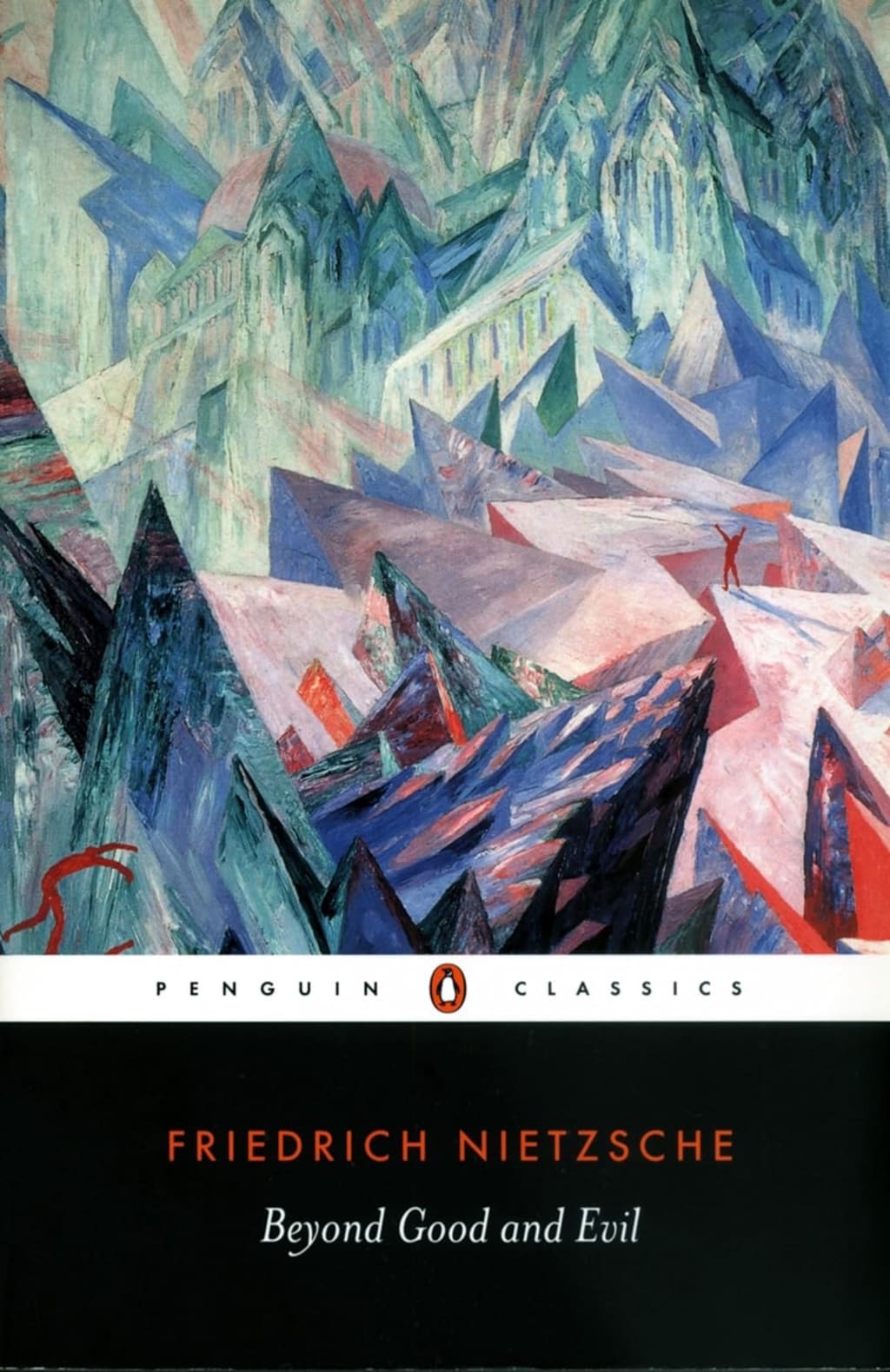
Friedrich Nietzsche's "Beyond Good and Evil," published in 1886, is a cornerstone of his philosophical work. It represents a profound critique of traditional morality and introduces Nietzsche's radical ideas about truth, morality, and power. This review delves into six critical aspects of the text, evaluating its impact, themes, and relevance.
1. Challenging Traditional Morality
Nietzsche's "Beyond Good and Evil" is best understood as a direct confrontation with the conventional moral frameworks of his time. Traditional morality, especially as championed by Christianity, is critiqued for its life-denying aspects and for fostering what Nietzsche terms "slave morality." Nietzsche argues that conventional morality is a construct of the weak to constrain the strong, promoting values like meekness and humility as virtues while demonizing strength and assertiveness.
Nietzsche's approach is revolutionary in that he does not merely critique these moral values but actively proposes that they arise from a deep-seated resentment. He views these moralities as life-denying and suggests that they stem from a "will to power" that suppresses natural instincts and desires. This radical perspective invites readers to question their own ethical beliefs and consider whether their moral values serve their true interests or are merely societal impositions.
2. The Concept of the "Will to Power"
One of Nietzsche's most influential concepts introduced in "Beyond Good and Evil" is the "will to power." This idea posits that the fundamental driving force in humans is not the struggle for survival or the pursuit of happiness, but rather an intrinsic drive to assert and enhance one's power and influence.
Nietzsche's will to power challenges the notion that human behavior is driven by rationality or ethical principles. Instead, he suggests that underlying all human actions is a desire to overcome obstacles and assert dominance. This concept serves as a foundation for his critique of traditional morality, as it reframes human motivations in terms of power dynamics rather than moral absolutes. The idea has had a profound impact on existentialism and modern psychology, reshaping how we understand personal and social dynamics.
3. Critique of Philosophers and Philosophies
Nietzsche’s text is also a pointed critique of previous philosophers, including Kant, Hegel, and Schopenhauer. He accuses these thinkers of being too grounded in conventional moralities and failing to acknowledge the underlying power structures in their philosophies. For example, Nietzsche critiques Immanuel Kant's categorical imperative and argues that it fails to account for the complexities of human motivation and the underlying will to power.
This critical stance is not merely destructive but constructive in that it paves the way for Nietzsche’s own philosophical vision. By deconstructing the philosophies of his predecessors, Nietzsche aims to lay the groundwork for a new philosophical approach that transcends traditional dichotomies and embraces a more nuanced understanding of human nature and existence.
4. Perspectives on Truth and Objectivity
Nietzsche’s exploration of truth in "Beyond Good and Evil" is equally provocative. He questions the objectivity of truth, suggesting that what we consider as "truth" is a construct shaped by our perspectives and biases. Nietzsche argues that there are no absolute truths, only interpretations influenced by various power dynamics.
This perspective challenges the Enlightenment belief in objective knowledge and rationality. Instead of viewing truth as a static, objective reality, Nietzsche sees it as something fluid and subjective, shaped by the perspectives of those in positions of power. This radical idea pushes readers to reconsider the nature of knowledge and the extent to which our perceptions of reality are influenced by power structures and personal biases.
5. The Role of the "Übermensch" (Overman)
Central to Nietzsche’s philosophy is the concept of the "Übermensch" or "Overman," which is indirectly related to the themes discussed in "Beyond Good and Evil." The Übermensch represents an ideal figure who transcends the limitations imposed by traditional morality and embraces a life-affirming ethos. This individual creates their own values and lives authentically, free from the constraints of societal norms.
Nietzsche’s Übermensch is often misunderstood as a call for an authoritarian or elitist figure. However, it is better understood as a symbolic representation of an individual who transcends conventional moralities and embraces a more authentic, self-determined existence. This concept challenges readers to think about what it means to live a life of true freedom and creativity, beyond the constraints of societal expectations.
6. Relevance and Impact
"Beyond Good and Evil" has had a lasting impact on philosophy, psychology, and literature. Nietzsche’s ideas have influenced existentialists like Jean-Paul Sartre and Albert Camus, who grappled with themes of meaning and existence in the wake of Nietzsche’s assertion that traditional values are insufficient for understanding the human condition.
In contemporary contexts, Nietzsche’s critique of morality and his ideas about the will to power continue to resonate in discussions about ethics, politics, and personal development. His work encourages a reevaluation of the values that shape our lives and a deeper exploration of the motivations behind our actions.
Conclusion
"Beyond Good and Evil" by Friedrich Nietzsche remains a seminal work in philosophical literature, challenging conventional moralities and offering provocative insights into human nature and society. Through its critique of traditional ethics, exploration of the will to power, and skepticism of objective truth, Nietzsche’s text encourages readers to question established norms and consider new ways of understanding the world. Its impact on subsequent philosophical thought and its relevance to contemporary debates underscore the enduring significance of Nietzsche’s revolutionary ideas.
Thank you 🙏
Future of Resilience
About the Creator
Future of Resilience
I enjoy writing book and product review, relationship and parenting blogs. I hope you enjoy my writing. Happy Reading!
Keep reading
More stories from Future of Resilience and writers in BookClub and other communities.
A Journey Through Dreams With Whispers In The Night Sleep & Dream Journal
In a world where mindfulness and self-awareness are at the forefront of personal development, "Whispers in the Night" a journey through dreams offers an exceptional tool for those seeking to delve into the complexities of their subconscious. This sleep and dream journal is more than just a place to record your dreams; it's a sophisticated guide designed to help you explore the intricate world of your nighttime experiences. Here's a detailed review that highlights five key aspects of this beautifully crafted journal, including its unique sections for recording your thoughts and emotions before bed, dream interpretations, and personal reflections.
By Future of Resilience about a year ago in BookClub
8 Books That Help You Understand Human Behavior In Business
Markets shift, technologies evolve, and strategies change, but one constant remains: people make decisions. They buy, sell, negotiate, resist change, lead teams, and build cultures based on psychological, emotional, and social forces that often operate beneath the surface.
By Diana Meresc5 days ago in BookClub
Center Stage with Paul Stewart
*** I'm keen to republish the interviews I did for my series with Vocal creators. It's been a few years and I thought it might be nice to revisit these wonderful conversations. I'll be releasing them one at a time for a few weeks/months.
By Heather Hubler3 days ago in Interview




Comments (2)
Excellent piece
Great work and now I want to read more philosophy books and the first one that I plan to read is 'Ethics' I think it was written by Aristotle but not sure.