
"American Predator: The Hunt for the Most Meticulous Serial Killer of the 21st Century" by Maureen Callahan
Book club discussion questions

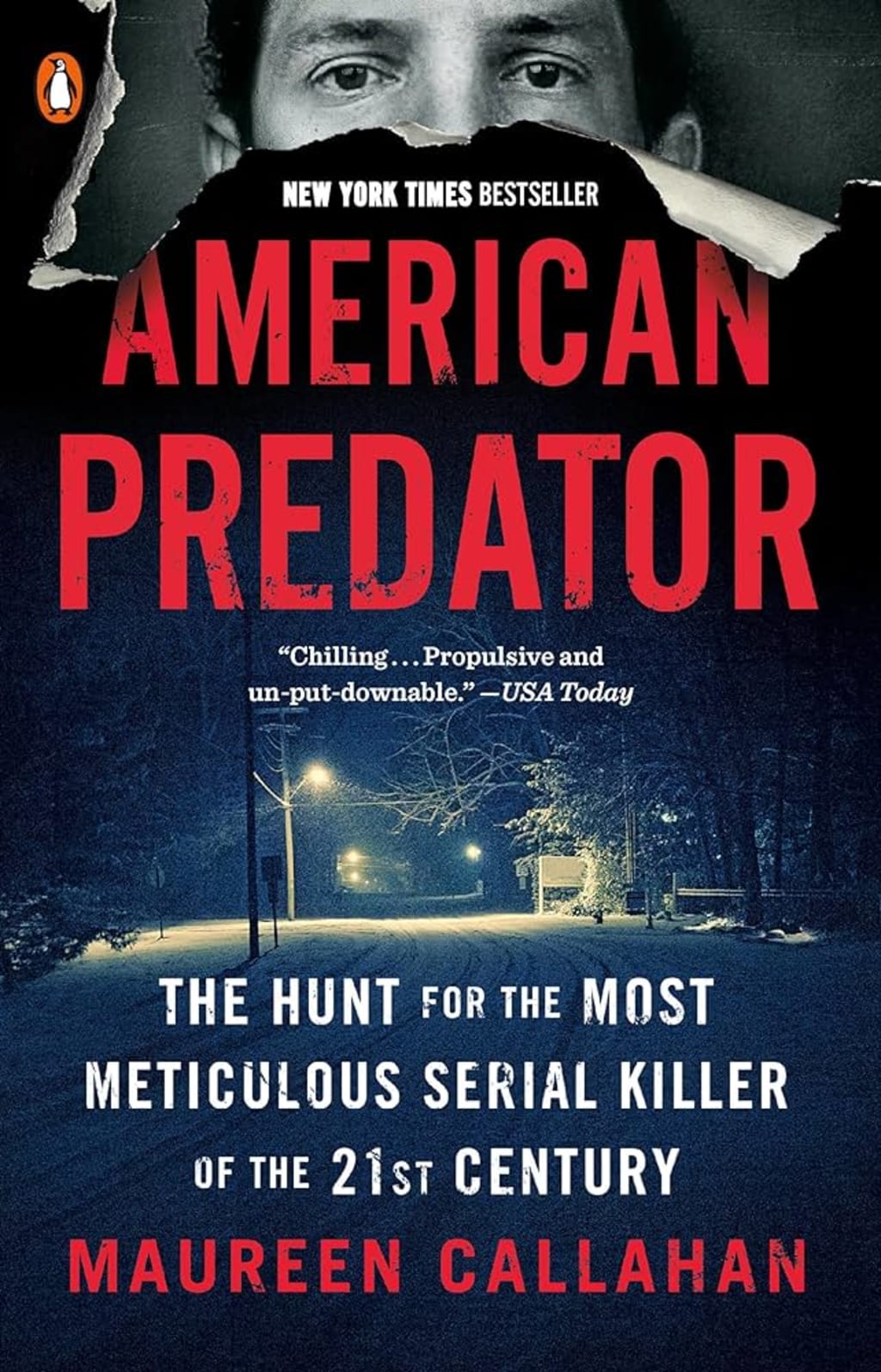
Ted Bundy. John Wayne Gacy. Jeffrey Dahmer. The names of notorious serial killers are usually well-known; they echo in the news and in public consciousness. But most people have never heard of Israel Keyes, one of the most ambitious and terrifying serial killers in modern history. The FBI considered his behavior unprecedented. Described by a prosecutor as "a force of pure evil," Keyes was a predator who struck all over the United States. He buried "kill kits"--cash, weapons, and body-disposal tools--in remote locations across the country. Over the course of fourteen years, Keyes would fly to a city, rent a car, and drive thousands of miles in order to use his kits. He would break into a stranger's house, abduct his victims in broad daylight, and kill and dispose of them in mere hours. And then he would return home to Alaska, resuming life as a quiet, reliable construction worker devoted to his only daughter.
Reading:
Had you heard of Israel Keyes before reading this book? Why do you think his crimes haven’t been shared in the same light as other serial killers of pop culture?
Were you surprised that these crimes happened so recently in history?
Do you think there is a reason why we don’t know about Keyes, but we know a lot about older cases (Manson in the 60s, Dahmer in the 70-80s, Bundy in the 70s, etc.)?
Motive and Methodology:
What do you think motivated Israel Keyes to commit such heinous crimes?
How does Keyes' approach to killing differ from other notorious serial killers?
Do you think Keyes was really able to kill 10+ people during his travels? Or was this his way of trying to get the investigation moving while only thouroughly admitting to 3 murders?
What did you think of Keyes’ “murder kits”? Was this a sophisticated mind at play in a long game? Or just a way to get rid of evidence from his other crimes in a convenient way?
Law Enforcement Response:
How effective do you think law enforcement was in handling the Keyes case? Were there missed opportunities or mistakes made during the investigation?
What challenges do investigators face when dealing with a killer as calculated and methodical as Keyes?
Do you think Keyes would have stopped if he hadn’t been caught by a case so close to home?
Do you think Keyes wanted to be caught on some level, since he was so careful about timing and location up until the case of Samantha?
Psychological Profile:
How would you describe Israel Keyes' psychological profile based on the information provided in the book?
Were there any early warning signs or red flags that could have indicated Keyes' potential for violence?
Did Keyes want to share his history for an “expediated death” or to relive the pleasure and display his power?
Why do you think Keyes decided to committ suicide instead of waiting for his trial and sentencing?
Victimology:
Discuss the various victims in the book. What commonalities or patterns do you notice among them?
How did Keyes select his victims, and what strategies did he employ to avoid detection?
Media Influence:
How did the media coverage of the case impact public perception and the investigation itself?
Do you think the media has a responsibility to report on cases like Keyes' in a particular way?
Ethical Considerations:
The book touches on the ethical dilemmas faced by law enforcement during the investigation. What ethical challenges do you find most compelling?
Were there moments where you questioned the ethics of the investigators' decisions?
Impact on the Community:
How did Keyes' crimes impact the communities where they occurred? How do communities cope with the aftermath of such tragedies?
Were there any changes in law enforcement practices or policies as a result of the Keyes case?
Lessons Learned:
What lessons can be drawn from the Keyes case in terms of improving law enforcement procedures and preventing similar crimes in the future?
How can society better protect itself against individuals like Keyes?
Narrative Style:
How did Maureen Callahan's narrative style contribute to your understanding of the case? Were there aspects of the storytelling that stood out to you?
Personal Reflections:
How did reading American Predator affect you personally? Did it change your views on crime, law enforcement, or the criminal justice system?
About the Creator
Kristen Barenthaler
Curious adventurer. Crazed reader. Librarian. Archery instructor. True crime addict.
Instagram: @kristenbarenthaler
Facebook: @kbarenthaler
Keep reading
More stories from Kristen Barenthaler and writers in BookClub and other communities.
"Roll Red Roll: Rape, Power, and Football in the American Heartland" by Nancy Schwartzman & Nora Zelevansky
In football-obsessed Steubenville, Ohio, on a summer night in 2012, an incapacitated sixteen-year-old girl was repeatedly assaulted by members of the “Big Red” high school football team. They took turns documenting the crime and sharing on Facebook, Twitter, and YouTube. The victim, Jane Doe, learned the details via social media at a time when teens didn’t yet understand the lasting trail of their digital breadcrumbs. Crime blogger Alexandria Goddard, along with hacker collective Anonymous, exposed the photos, Tweets, and videos, making this the first rape case ever to go viral and catapulting Steubenville onto the national stage. Filmmaker Nancy Schwartzman spent four years embedded in the town, documenting the case and its reverberations. Ten years after the assault, Roll Red Roll is the culmination of that research, weaving in new interviews and personal reflections to take readers beyond Steubenville to examine rape culture in everything from sports to teen dynamics. Roll Red Roll explores the factors that normalize sexual assault in our communities. Through interviews with sportswriter David Zirin, victim’s rights attorney Gloria Allred and more, Schwartzman untangles the societal norms in which we too often sacrifice our daughters to protect our sons. With the Steubenville case as a flashpoint that helped spark the #MeToo movement, a decade later, Roll Red Roll focuses on the perpetrators and asks, can our society truly change?
By Kristen Barenthaler2 years ago in BookClub
Rachel Reviews: Lakefront Wolves by Joseph Deegan
Meet Finn. He's an 18 year old kid who has potential. He's bright with great school scores and he's also an athlete, a footballer of some prowess. He has it all going for him, it would seem, and yet, he's determined to send what could be a well-planned, stable existence firmly off the rails. He drinks, he smokes, he takes drugs, he has violent tendencies and he's in danger of losing not only his mind but all that he holds dear.
By Rachel Deeming15 days ago in BookClub


Comments
There are no comments for this story
Be the first to respond and start the conversation.