
A Guide to Creative Problem Solving and Innovation; A Review of Red Thread Thinking by Debra Kaye
Unleashing Innovation Through Connection, Storytelling, and Challenging Assumptions: A Review of Debra Kaye’s Red Thread Thinking!!!

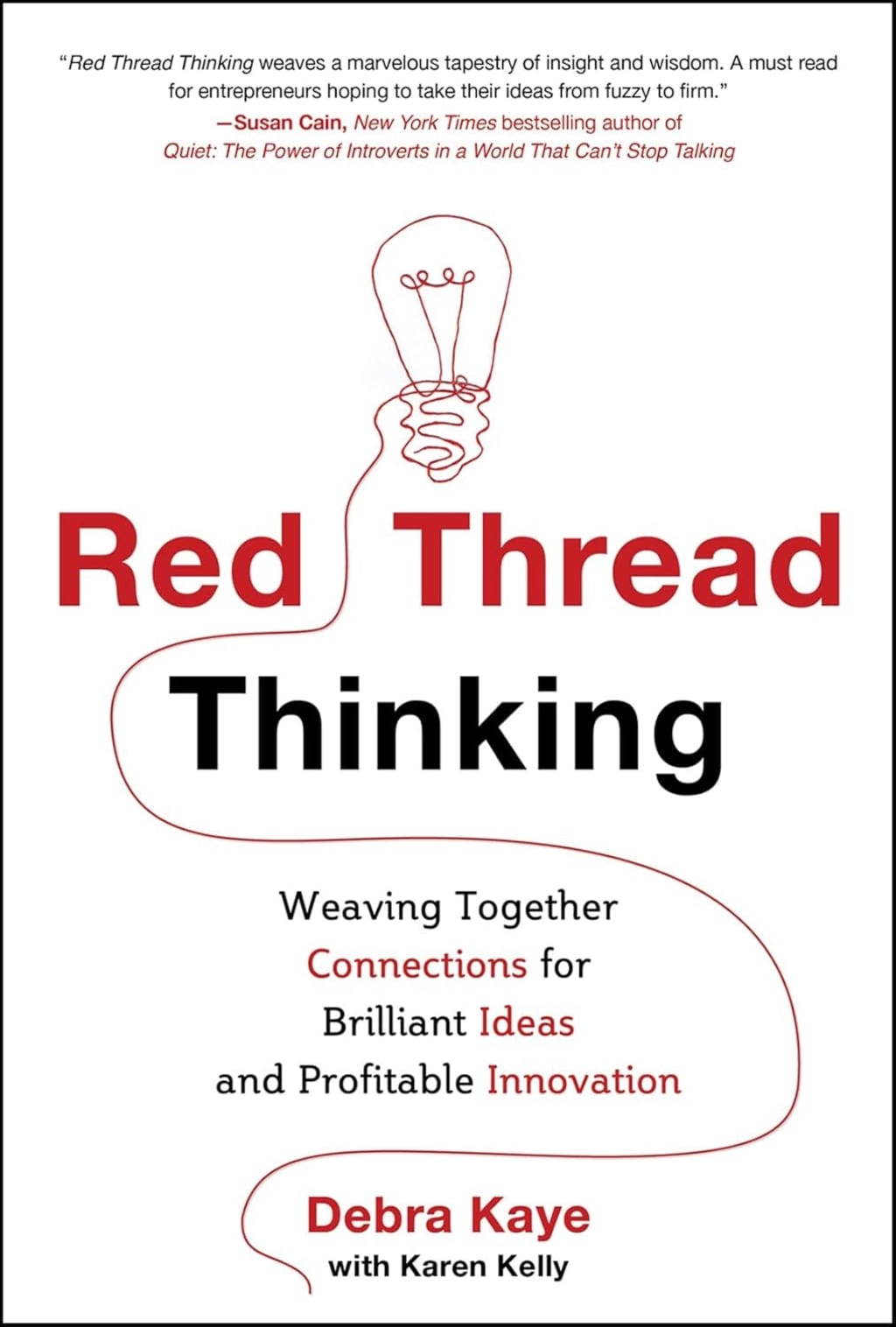
In a world constantly craving innovation, creativity, and solutions to complex problems, the ability to think outside the box has never been more critical. But how do we move beyond the standard methodologies and come up with ideas that are truly groundbreaking? Enter Debra Kaye’s Red Thread Thinking: Weaving Together Connections for Brilliant Ideas and Profitable Innovation. Kaye, an innovation expert and consultant, offers a fresh perspective on creative problem-solving and innovative thinking, providing readers with a practical framework to uncover unique solutions in any industry or discipline.
In this review, we’ll explore Kaye’s approach to creativity, the key concepts of the book, and how Red Thread Thinkingcan help individuals and organizations unlock their potential for original ideas and impactful solutions.
What is Red Thread Thinking?
At the heart of Kaye’s book is a simple but powerful concept: the “Red Thread.” In Kaye’s definition, the Red Thread represents the central, unifying idea that runs through every decision, thought, and action you take in the pursuit of a solution. It’s about finding connections where others see disconnection. It’s the thread that links disparate elements together into a cohesive, insightful narrative. Whether you’re an entrepreneur, a manager, or an individual contributor, identifying your Red Thread is the first step toward solving problems creatively and innovatively.
The title of the book itself is a metaphor for the way great ideas often emerge: the Red Thread weaves seemingly unrelated concepts into something meaningful and valuable. Kaye asserts that innovation doesn’t necessarily come from a flash of genius or from starting with a clean slate, but from making connections between the things that are already in front of you. The real challenge is seeing the patterns, noticing the “threads,” and pulling them together in a way that others might miss.
The Red Thread Thinking Framework: Three Key Principles
Red Thread Thinking is structured around three core principles that Kaye argues are essential to sparking innovation and driving creative solutions. These principles are:
Connecting the Unconnected The first principle revolves around identifying and linking ideas, concepts, or products that seem unrelated at first glance. Kaye challenges readers to think like a connector — seeing patterns and relationships where others might see random fragments. The ability to draw connections between disparate ideas or observations is at the core of creative thinking.
For example, Kaye illustrates this principle by recounting how Steve Jobs’ passion for calligraphy influenced the design of Apple’s iconic graphical user interface. It was a seemingly obscure and unrelated field to the world of computing, but Jobs’ ability to connect it with technology led to one of the most revolutionary products in modern history.
Storytelling and Narrative The second principle Kaye explores is the power of storytelling. Great ideas aren’t just about raw data or technical prowess; they’re about crafting a compelling narrative that resonates with people. This is particularly true when it comes to pitching a new idea, launching a product, or leading a team. People don’t remember facts or features — they remember stories.
By using storytelling, Kaye argues, innovators can convey the essence of their ideas in a way that captures attention, engages emotions, and encourages action. The Red Thread, in this case, is the narrative that pulls everything together. A great story helps to humanize an idea and makes it more accessible and memorable.
Challenging Assumptions The third and final principle emphasizes the importance of challenging assumptions and questioning the status quo. To truly innovate, Kaye suggests, we must be willing to ask “What if?” and “Why not?” rather than simply accepting the way things are. Many breakthroughs have come from questioning assumptions that were once thought to be inviolable.
For instance, in the book, Kaye examines how the Wright brothers revolutionized the concept of flight. Rather than accepting the prevailing belief that human flight was impossible, they approached the problem from a new angle — challenging assumptions and refusing to be deterred by failure.
How the Book is Structured
Kaye’s writing style is clear, engaging, and conversational, making Red Thread Thinking accessible for readers from all walks of life. The book is structured into easily digestible chapters that combine theory with practical advice. Each chapter is built around a central idea, followed by real-world examples, case studies, and exercises to help readers implement the principles of Red Thread Thinking in their own lives or organizations.
The book is not just a theoretical guide to creativity; it’s a practical manual. After each principle, Kaye provides actionable steps and reflective exercises to help readers put their newfound knowledge into practice. These exercises range from identifying your personal Red Thread to recognizing patterns in your work environment or thinking about how to approach problems from a new perspective.
Key Takeaways from Red Thread Thinking
Creativity is a skill that can be cultivated. One of the most refreshing aspects of Red Thread Thinking is its assertion that creativity is not a rare, inborn talent but a skill that can be developed. The book offers concrete methods for fostering creativity by changing the way you think and approach problems.
Innovation comes from within. Kaye emphasizes that true innovation is not necessarily about having a groundbreaking new idea but rather the ability to connect existing concepts in new ways. Innovation comes from within — not just through external resources, but by leveraging your own experiences, knowledge, and connections.
Storytelling is a tool for innovation. By weaving your ideas into a coherent story, you make them more memorable, persuasive, and impactful. Storytelling is not just for marketers and writers — it’s a tool for anyone trying to convey new ideas or make a change.
Challenging the status quo is essential for growth. To unlock innovation, Kaye argues that you must question everything — assumptions, norms, and traditional ways of thinking. It’s only by challenging these preconceptions that you can truly discover new possibilities.
Who Will Benefit from Reading This Book?
Red Thread Thinking is an invaluable resource for anyone who needs to think creatively or solve problems in their personal or professional life. Here are a few specific groups who will benefit from Kaye’s approach:
Entrepreneurs and Innovators: The book is a goldmine of practical tips for entrepreneurs looking to create unique solutions and grow their businesses. It provides a roadmap for developing fresh ideas that set you apart in a competitive marketplace.
Leaders and Managers: If you’re managing a team, Kaye’s insights on storytelling and connecting the unconnected will help you inspire your team and encourage innovative thinking in your workplace.
Marketers and Creatives: Anyone in a creative field, especially marketing, advertising, or product development, will find Kaye’s storytelling techniques invaluable. The book will help you craft compelling narratives that resonate with audiences and drive action.
Anyone Seeking Personal Growth: Lastly, Red Thread Thinking is for anyone who wants to develop their creative abilities. It’s an excellent resource for anyone looking to think more strategically, find solutions to personal challenges, or improve their overall problem-solving skills.
Final Thoughts
Debra Kaye’s Red Thread Thinking is an insightful and practical guide to innovation, creativity, and problem-solving. By focusing on the power of connection, narrative, and challenging assumptions, Kaye provides a framework that can be applied in any area of life — whether you’re working on a business strategy, developing a product, or simply trying to see the world through a more creative lens.
If you’re looking to unlock your own creative potential and start weaving together brilliant, profitable ideas, Red Thread Thinking offers the tools, techniques, and inspiration you need. With its actionable advice and real-world examples, this book is a must-read for anyone looking to innovate and think differently in today’s fast-paced world.
Thank you 🙏
Future of Resilience
About the Creator
Future of Resilience
I enjoy writing book and product review, relationship and parenting blogs. I hope you enjoy my writing. Happy Reading!
Keep reading
More stories from Future of Resilience and writers in BookClub and other communities.
A Personal, Informative Look at the Ultimate Wellness Playbook; A Review of "The TB12 Method" by: Tom Brady
Tom Brady, the NFL legend widely regarded as one of the greatest quarterbacks in history, has amassed more than just Super Bowl rings throughout his career—he's also built an empire around his health and wellness philosophy. In his book The TB12 Method, Brady shares the principles that have kept him playing at an elite level well into his 40s, defying the conventional timeline of a professional athlete's career. It's not just about the workout regimen or the diet; it's about a holistic approach to longevity, recovery, and performance. Here's an in-depth review of the book, broken down into six key areas.
By Future of Resilience about a year ago in BookClub
7 Business Books You Must Read In 2026
In the fast-paced world of business, knowledge is power—but not just any knowledge. The right insights can transform your approach, sharpen your strategy, and help you avoid costly mistakes. For entrepreneurs, executives, or anyone passionate about growth, reading the right business books is one of the most effective ways to gain a competitive edge. Below is a list of 7 business books you must read in 2026. Whether you’re scaling a startup, leading a team, or simply seeking personal growth, these books offer timeless wisdom that resonates across industries.
By Diana Meresc7 days ago in BookClub




Comments (1)
What a great book review for anyone to read and learn.