
8 Philosophical Books To Read In 2025
Do you like philosophical books?


Philosophy is more than abstract theories—it's the cornerstone of critical thinking, ethics, and human understanding. For those seeking profound insight into the human condition, the best philosophical books offer timeless lessons that stretch across centuries. Below is a list of 8 must-read philosophical books that will not only challenge your intellect but also reshape your worldview.
1. Meditations by Marcus Aurelius
Meditations is a deeply introspective collection of personal reflections written by Roman Emperor Marcus Aurelius during his military campaigns. Rooted in Stoic philosophy, the book provides guidance on how to live a virtuous life, maintain emotional resilience, and remain grounded amid hardship. Aurelius focuses on themes such as mortality, duty, and rationality, encouraging readers to align their actions with nature and reason. Its timeless wisdom is especially resonant for those facing modern stressors. It’s not a philosophical treatise but a manual for inner strength, offering practical insights into managing anger, anxiety, and disappointment with stoic calm and purpose.
2. The Wealth of Nations by Adam Smith
Often regarded as the birth of modern capitalism, this book outlines the principles of free markets, the division of labor, and the role of self-interest in promoting economic prosperity. Smith argues that individuals pursuing their own interests unintentionally contribute to the public good through the invisible hand of the market. Though primarily an economic work, Smith’s ideas have had profound implications for philosophy, particularly regarding human nature, morality, and the role of the state in regulating economic activity. For anyone interested in understanding the philosophical underpinnings of modern economic systems, this book is essential reading.
3. Being and Time by Martin Heidegger
In Being and Time, Martin Heidegger revolutionizes the field of existential ontology by asking the question, “What does it mean to be?” Heidegger examines time, death, authenticity, and the human tendency to flee from existential anxiety. He critiques traditional metaphysics and urges readers to confront being-toward-death as a way to live authentically. While dense and challenging, the book is a powerful exploration of human existence that laid the groundwork for existentialism, influencing thinkers like Sartre, Camus, and Derrida.
4. Beyond Good and Evil by Friedrich Nietzsche
Friedrich Nietzsche’s Beyond Good and Evil is a bold critique of traditional morality and philosophical dogma. In this book, Nietzsche dismantles binary concepts of good and evil, advocating instead for a master morality rooted in individual will and creativity. He introduces the will to power, a driving force behind human behavior, and argues for the emergence of the übermensch—a superior individual who transcends societal norms. Nietzsche also exposes the hypocrisy of philosophers who pretend to be objective but are influenced by personal prejudices. The book is essential for understanding postmodern skepticism and the need for personal moral evolution.
5. Leviathan by Thomas Hobbes
Thomas Hobbes’ "Leviathan" is one of the earliest and most powerful arguments for the necessity of a strong central authority to prevent chaos and violence. Written during the English Civil War, Hobbes describes life in the state of nature as “solitary, poor, nasty, brutish, and short.” To escape this anarchy, individuals must consent to surrender some of their freedoms to a sovereign who can maintain peace and order. Hobbes' vision of a social contract and absolute authority laid foundational ideas for modern political science, making "Leviathan" a cornerstone of political philosophy and a critical text in understanding power, sovereignty, and human nature.
6. Being and Nothingness by Jean-Paul Sartre
Sartre’s exploration of existence, freedom, and bad faith delves deep into the nature of human experience. He argues that human beings are condemned to be free and must take full responsibility for their choices. Sartre’s view of existence precedes essence challenges the traditional view of human nature and suggests that we are free to define ourselves and our purpose.
7. The Prince by Niccolò Machiavelli
Far from being a philosophical idealist, Machiavelli takes a realist approach to politics, emphasizing pragmatism, power, and statecraft. In this book, he offers strategic advice to rulers on how to gain and maintain power, often advocating for manipulation, deceit, and even cruelty when necessary. Although often misunderstood as promoting immorality, "The Prince" provides critical insight into the nature of power, human behavior, and the dynamics of leadership. It remains a foundational text in political theory and is essential for understanding realpolitik.
8. Existentialism is a Humanism by Jean-Paul Sartre
Originally delivered as a lecture, this book clarifies misconceptions about existentialism, arguing that it is not nihilistic but rather a philosophy of freedom and responsibility. Sartre’s famous phrase, “existence precedes essence,” encapsulates the core idea that humans define themselves through actions, not preordained essence or divine design. This concise text remains one of the best introductions to existentialism, human agency, and personal authenticity.
Why These Books Matter Today
In a world overloaded with superficial content and fleeting opinions, these 8 philosophical books offer depth, clarity, and timeless truth. They demand our attention and reward us with a broader understanding of life, society, and ourselves. Each book not only explores fundamental philosophical questions but also provides practical wisdom for navigating the complexities of modern life.
About the Creator
Diana Meresc
“Diana Meresc“ bring honest, genuine and thoroughly researched ideas that can bring a difference in your life so that you can live a long healthy life.
Keep reading
More stories from Diana Meresc and writers in BookClub and other communities.
10 Sports Fiction Books To Read In 2025
Sports fiction combines the thrill of competition with the depth of storytelling, delivering powerful narratives of perseverance, teamwork, ambition, and personal growth. Below is a list of ten of the sports fiction books ever written—novels that not only capture the essence of the game but also leave a lasting emotional impact on readers.
By Diana Meresc11 months ago in BookClub
Rachel Reviews: Lakefront Wolves by Joseph Deegan
Meet Finn. He's an 18 year old kid who has potential. He's bright with great school scores and he's also an athlete, a footballer of some prowess. He has it all going for him, it would seem, and yet, he's determined to send what could be a well-planned, stable existence firmly off the rails. He drinks, he smokes, he takes drugs, he has violent tendencies and he's in danger of losing not only his mind but all that he holds dear.
By Rachel Deeming14 days ago in BookClub
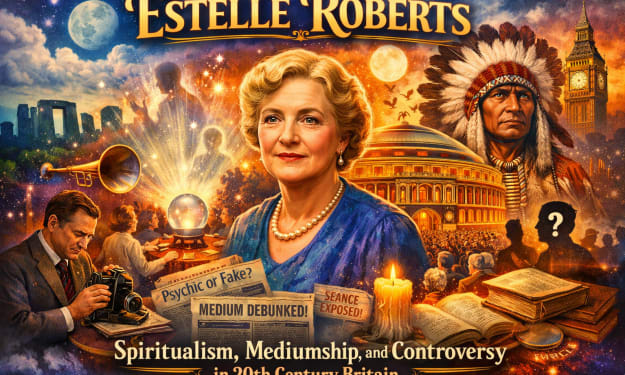
Estelle Roberts
The Rise of Modern Spiritualist Mediumship Public fascination with communication beyond death reached extraordinary levels during the late nineteenth and early twentieth centuries. Spiritualism, a religious and social movement built upon the belief that human consciousness survives physical death and remains capable of communicating with the living, spread rapidly throughout Britain, Europe, and North America. Séances, trance lectures, automatic writing, and spirit photography attracted large audiences and intense debate. Newspapers reported demonstrations with curiosity and skepticism, while scientific investigators attempted to test claims associated with psychic phenomena.
By Marcus Hedare3 days ago in BookClub



Comments
There are no comments for this story
Be the first to respond and start the conversation.