
7 Books You Should Never Read If You Don't Want To Change Yourself
Life-changing books that will shatter your beliefs, confront your habits, and permanently reshape how you think and live.


Change is uncomfortable. It challenges our habits, beliefs, and even the stories we tell ourselves about who we are. Yet, growth has always demanded discomfort. The books in this article are not casual reads. They don’t simply entertain or inform—they confront, disrupt, and transform. If you are perfectly content staying exactly as you are, we genuinely recommend skipping these titles.
But if a part of you is curious—if you sense that you could live with more clarity, courage, purpose, or resilience—then these books may become some of the most important companions of your life.
Below is a list of 7 books you should never read if you don't want to change yourself.
1. The Four Agreements – Don Miguel Ruiz
The Four Agreements distills ancient Toltec wisdom into four simple yet life-altering principles: be impeccable with your word, don’t take things personally, don’t make assumptions, and always do your best. While deceptively short, the book exposes how deeply social conditioning shapes our fears and self-image. Ruiz explains how these agreements can dismantle internalized shame and emotional suffering. Readers often realize how much energy they waste on interpretation and judgment. After applying these principles, emotional clarity increases and interpersonal conflict loses much of its power.
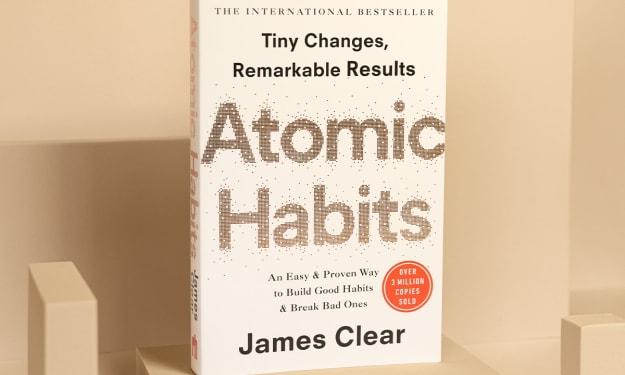
2. Atomic Habits – James Clear
Atomic Habits explains how small, consistent actions create remarkable long-term change. James Clear breaks down habit formation using behavioral science, showing how identity, environment, and systems matter more than motivation. The book introduces practical frameworks—such as habit stacking and the four laws of behavior change—that are easy to apply immediately. Its power lies in simplicity: tiny improvements compound over time. Clear forces readers to confront an uncomfortable truth—our daily habits are shaping our future whether we notice them or not. Once understood, staying stuck feels less accidental and more intentional.
3. The Power of Now – Eckhart Tolle
Eckhart Tolle’s The Power of Now challenges our obsession with past and future by emphasizing deep presence. Blending spirituality and psychology, Tolle explains how the ego creates suffering through constant identification with thought. The book gently but firmly invites readers to observe their minds instead of being controlled by them. Many find it unsettling because it dissolves familiar mental narratives. Yet that discomfort leads to clarity and peace. After reading this book, awareness becomes unavoidable—and unconscious living feels like a choice rather than a default state.
4. Think Again – Adam Grant
In Think Again, Adam Grant argues that the ability to rethink beliefs is more valuable than raw intelligence. Using research from psychology, education, and business, he shows how rigid thinking leads to poor decisions and missed growth. Grant encourages intellectual humility, curiosity, and flexibility—skills essential in a rapidly changing world. The book reframes disagreement as learning and uncertainty as strength. Once internalized, the reader begins to question assumptions rather than defend them. This shift alone can dramatically improve relationships, leadership, and personal development.
5. Meditations – Marcus Aurelius
Meditations is a timeless collection of personal reflections from Roman Emperor Marcus Aurelius, written as guidance to himself rather than for public praise. Rooted in Stoic philosophy, the book teaches emotional discipline, acceptance of hardship, and control over one’s reactions. Aurelius reminds us that external events are neutral; our judgments give them power. Reading this book strips away entitlement and self-pity, replacing them with responsibility and inner strength. Its quiet wisdom forces readers to examine their character, habits, and priorities. Once absorbed, emotional reactivity feels less justified and self-mastery becomes the goal.
6. Deep Work – Cal Newport
Deep Work argues that focused, distraction-free effort is becoming rare—and incredibly valuable. Cal Newport combines neuroscience, productivity research, and real-world examples to show how shallow work erodes creativity and fulfillment. He provides practical strategies to cultivate concentration in a world of constant interruption. The book forces readers to confront how fragmented their attention has become. Once awareness sets in, multitasking feels costly rather than efficient. Deep Work doesn’t just improve productivity—it restores meaning to how we use our time and cognitive energy.
7. Mindset – Carol S. Dweck
Carol Dweck’s Mindset explores how beliefs about intelligence and ability shape our success. She contrasts the fixed mindset, which avoids challenges, with the growth mindset, which embraces learning and effort. Backed by decades of research, the book shows how mindset affects education, leadership, relationships, and resilience. What makes it powerful is its universality—everyone recognizes themselves in its examples. After reading, failure feels less like a verdict and more like feedback. This shift alone can unlock long-term personal and professional growth.
Conclusion
These are not books you casually skim and forget. They linger. They reshape how we interpret pain, success, time, and identity. If you truly don’t want to change yourself, these books will feel threatening.
But if you’re ready—even slightly—to grow, then reading them isn’t a risk. It’s an investment.
Our recommendation? Don’t read all seven at once. Choose the one that unsettles you the most. That discomfort is often a sign you’re standing at the edge of meaningful change.
About the Creator
Diana Meresc
“Diana Meresc“ bring honest, genuine and thoroughly researched ideas that can bring a difference in your life so that you can live a long healthy life.
Keep reading
More stories from Diana Meresc and writers in BookClub and other communities.
7 Books Worth Carrying Into 2026
Not all books are meant to be finished and shelved. Some are meant to be carried forward—revisited, re-applied, and re-interpreted as we grow. These are the books that shape how we think, decide, lead, heal, and live. In a world overwhelmed by noise, fleeting trends, and surface-level advice, the books worth carrying into the future are those that offer timeless frameworks, deep insight, and practical wisdom we can return to again and again.
By Diana Meresc3 days ago in BookClub
Bruce Lee and The God of War: Kuan Ti
It starts with love.. The Power to the God Of War and Wealth Walk into a Chinese restaurant (even in Oklahoma, USA), a Chinese police station, a kung fu martial arts studio or even a Chinese temple and you often see a red faced warrior holding a heavy quan-do (spear like weapon).
By WILD WAYNE : The Dragon King4 days ago in Chapters



Comments
There are no comments for this story
Be the first to respond and start the conversation.