
„1984“ – A Book That Feels Too Real
" Big brother is watching you" - How real was is Orwell's warning?
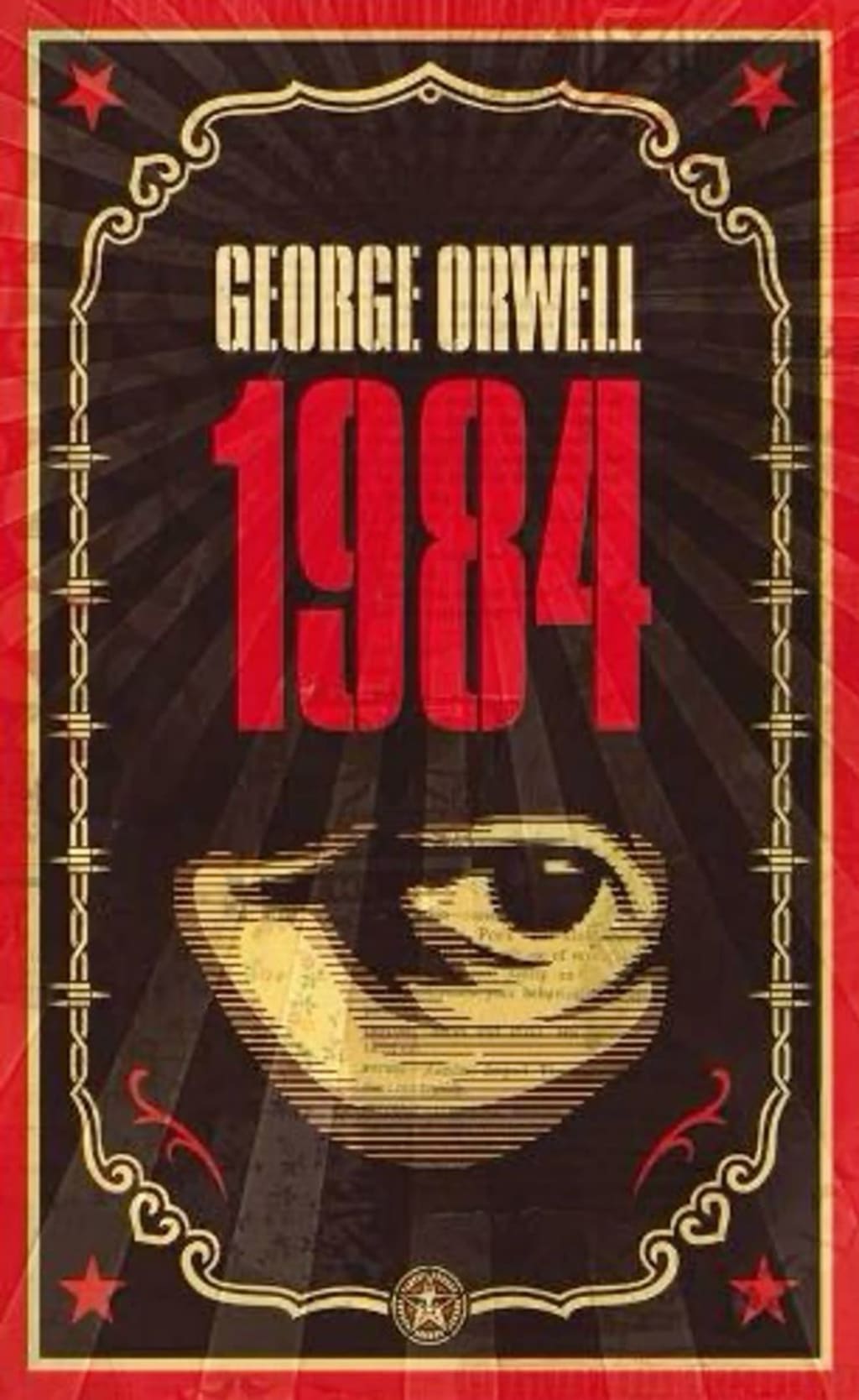
„1984“ – A Book That Feels Too Real
„The masses never revolt of their own accord, and they never revolt merely because they are oppressed. Indeed, so long as they are not permitted to have standards of comparison, they never even become aware that they are oppressed.“
As unfortunate as it may be, reading George Orwell’s 1984 reveals just how closely its storyline mirrors the real world. Most readers experience a sense of familiarity—these themes feel like something they have seen, heard, learned about in history lessons, or even lived through in real life. Despite the novel’s tendency to hyperbolize many aspects, we realize that its core message remains relevant for many people across the world today.
1984 is George Orwell’s final and, according to many, his most important work. He published it in 1949, and since then, the book has been banned multiple times in various countries. Unsurprisingly, it was most heavily censored in the Soviet Union.
I believe that a reader should approach 1984 without much prior knowledge of its plot. Therefore, in this blog, I will try to describe the storyline as little as possible.
1984 is a dystopian novel—a genre that portrays a society that is the complete opposite of an ideal world, or utopia. The book depicts dictatorship and the absence of personal freedom. “Big Brother,” the main antagonist, is inspired by historical dictators, primarily Hitler and Stalin. He embodies the qualities typical of all authoritarian rulers. However, the book repeatedly emphasizes that Big Brother is not just a single person—he is a system, a mechanism that strips individuals of their rights, their ability to think independently, and their capacity to stand apart from the masses.
As in many dystopian stories, the novel’s driving force is the protagonist, who suddenly „awakens“ to the reality of the system and begins to see its flaws. This narrative technique has also been employed by Ray Bradbury in Fahrenheit 451, Kurt Wimmer in his 2002 film Equilibrium, and many others.
1984 vividly illustrates how easily a society can be manipulated, how collective influence shapes an individual’s behavior regardless of their personal beliefs, and how challenging it is to resist a system that has controlled the majority for so long. Orwell also assigns significant weight to the theme of love—can strong emotions aid in one’s fight against oppression, or will they only serve as a weakness? Will love be enough to preserve a person’s sanity?
Another major theme of the novel is censorship—a defining characteristic of all totalitarian regimes.
„Every reduction is a success. The fewer the words to choose from, the less you think.“
The more access a person has to information, the more they think. The more they think, the more critically they perceive the world around them. They begin to notice problems in society. The inability to solve these issues leads to frustration and rebellion, which eventually drives people to challenge the system. As a result, censorship plays a crucial role in ensuring that the public receives only the information that serves the regime’s interests.
Conclusion
To summarize, why is reading 1984 important? As I mentioned earlier, despite the fictional nature of its world, the novel perfectly illustrates how a system can subjugate individuals, silence their thoughts, manipulate their perceptions, and eliminate any possibility of resistance. My only advice to readers would be to read the book in its entirety. Every page, down to the very last one, serves a purpose, and skipping or neglecting any part may hinder a full understanding of its message.
1984 is a book that can evoke anger, sadness, and a sense of helplessness in many readers. But it is precisely these emotions and the reflections they provoke that make the novel a truly valuable work.
About the Creator
Keep reading
More stories from writers in BookClub and other communities.
My New Book is Finally Here
My poetry collection Beautiful and Brutal Things is done. It's actually done and finally published over 270 pages. Over a year of my life went into this book. More than a year, really. Long days at my computer, sometimes seven days a week because I couldn't stop even when I probably should have. Then two months of editing that felt harder than the writing itself. But it's finished, and I'm still standing, and the book is real.
By Tim Carmichael10 days ago in BookClub
When Success Isn’t Enough:
Joseph G. Motley did not write Unlocking Your Greatest You because he lacked discipline, opportunity, or ambition. He wrote it because he discovered that checking every box society hands out does not automatically lead to peace. Known as Coach Mot, Motley built a life many people strive for. He worked hard, provided for his family, and achieved professional stability. On paper, his story looked complete. Internally, it felt unfinished.
By Elisa Smithabout 11 hours ago in BookClub




Comments
There are no comments for this story
Be the first to respond and start the conversation.