
"12 Rules for Life: An Antidote to Chaos" by Jordan B. Peterson
Humorous, surprising, and informative, Dr. Peterson tells us why skateboarding boys and girls must be left alone, what terrible fate awaits those who criticize too easily, and why you should always pet a cat when you meet one on the street
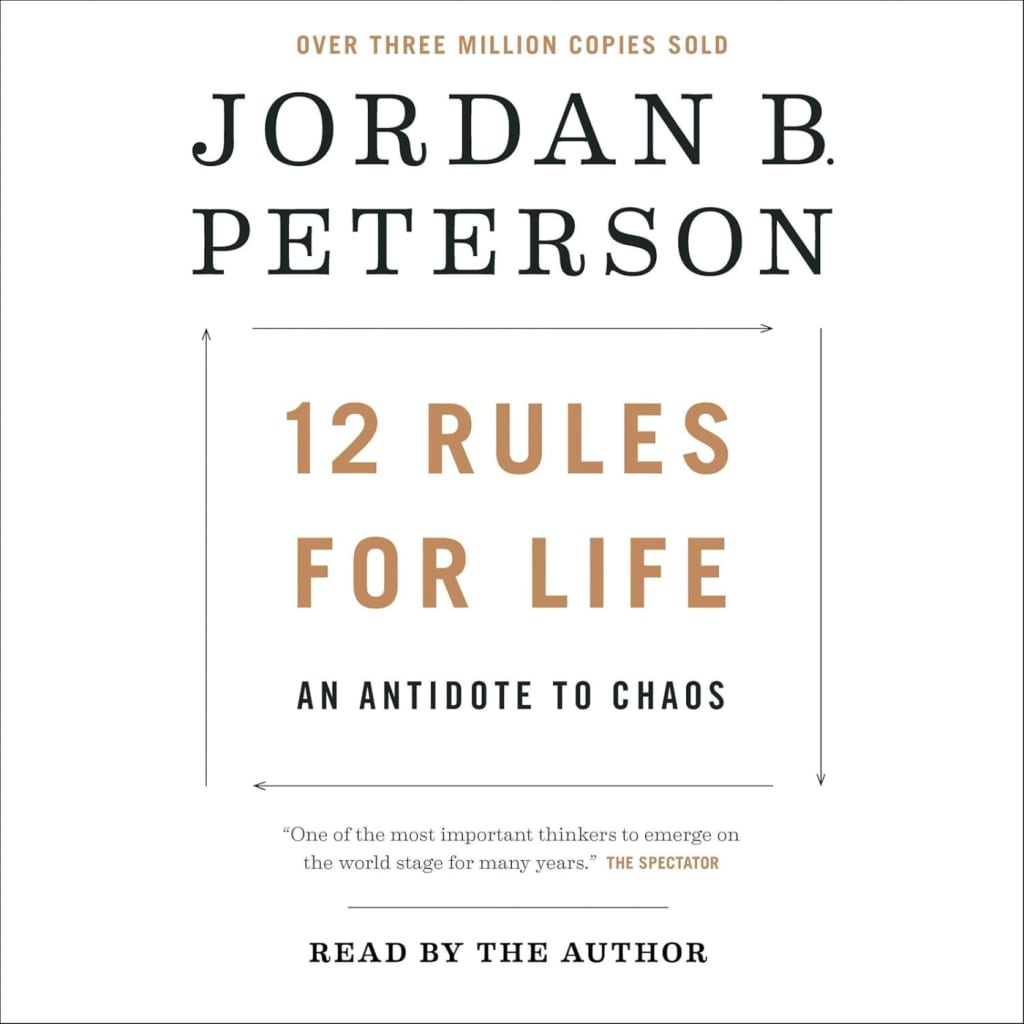
"12 Rules for Life: An Antidote to Chaos" by Jordan B. Peterson is a self-help book that combines psychology, philosophy, and practical advice to offer guidance on how to navigate the complexities of modern life. Peterson, a clinical psychologist and professor, draws from a wide array of sources, including religious teachings, mythology, evolutionary biology, and his clinical practice, to propose twelve practical principles designed to bring order to the chaos of existence. His rules emphasize personal responsibility, discipline, and the importance of finding meaning in life's struggles.
Chapter 1: Stand Up Straight with Your Shoulders Back.
Peterson begins with the concept of dominance hierarchies, which exist not only in human societies but also in the animal kingdom, such as with lobsters. He uses the example of lobsters to illustrate how posture and behavior can influence one's place in social hierarchies. Standing up straight with your shoulders back is not just about physical posture but also about adopting a position of confidence and self-respect. By doing so, you project strength and resilience, which positively affects your interactions with others and your perception of yourself. This rule emphasizes the importance of taking responsibility for one's own life and decisions.
Chapter 2: Treat Yourself Like Someone You Are Responsible for Helping.
Peterson observes that people often take better care of their pets or loved ones than they do of themselves. This chapter challenges readers to extend the same care, compassion, and responsibility they show others to themselves. He argues that each individual has inherent worth and potential, which should be nurtured and respected. By taking responsibility for your own well-being, you can improve not only your own life but also the lives of those around you.
Key Themes:
- Self-care and self-respect
- The psychological roots of self-neglect
- Responsibility as a path to self-improvement
Chapter 3: Make Friends with People Who Want the Best for You.
This rule emphasizes the influence that others have on our lives. Peterson advises surrounding oneself with people who genuinely want the best for you, as opposed to those who might drag you down or encourage negative behaviors. He argues that true friends will challenge you to grow and be better, rather than enabling self-destructive habits. By choosing relationships wisely, you can create a supportive environment that fosters personal growth.
Key Themes:
- The impact of social relationships on personal development
- The importance of positive influences
- Setting boundaries with toxic individuals
Chapter 4: Compare Yourself to Who You Were Yesterday, Not to Who Someone Else is Today.
In this chapter, Peterson addresses the destructive nature of constant comparison to others, which is amplified in the age of social media. He encourages readers to focus on personal progress rather than comparing themselves to others, who may be at different stages of their own journeys. By setting realistic and personal goals, individuals can achieve a sense of accomplishment and self-worth. This rule promotes self-improvement and a more balanced, fulfilling life.
Key Themes:
- The dangers of comparison and envy
- The value of personal growth and self-reflection
- Setting achievable, personal goals
Chapter 5: Do Not Let Your Children Do Anything That Makes You Dislike Them.
This rule addresses parenting and the importance of discipline and boundaries. Peterson argues that it is crucial for parents to teach their children how to behave in a manner that is socially acceptable and that fosters positive relationships. If parents allow their children to act in ways that are disruptive or harmful, they are not only harming their child's future but also their relationship with their child. This chapter emphasizes the importance of guiding children with clear rules and expectations.
Key Themes:
- The role of discipline in parenting
- The impact of child behavior on relationships
- Setting boundaries and expectations for children
Chapter 6: Set Your House in Perfect Order Before You Criticize the World.
This chapter focuses on the need for personal accountability and order before seeking to change the world. Peterson argues that before you criticize external circumstances or the actions of others, you should first address the chaos in your own life. This rule advocates for taking control of what you can change within yourself and your immediate environment. By setting your own house in order, you can then approach broader societal issues with clarity and integrity.
Key Themes:
- Personal responsibility and accountability
- The importance of self-improvement before societal critique
- The value of addressing one's own flaws
Chapter 7: Pursue What Is Meaningful (Not What Is Expedient).
Peterson explores the concept of meaning versus expediency, urging readers to seek long-term fulfillment rather than short-term pleasure. He draws on religious and philosophical traditions to highlight the importance of sacrifice and commitment in the pursuit of a meaningful life. This chapter argues that true satisfaction comes from dedicating oneself to something greater than personal gain, whether it be family, career, or community service.
Key Themes:
- The pursuit of meaning and purpose
- The pitfalls of seeking immediate gratification
- Sacrifice and commitment as pathways to fulfillment
Chapter 8: Tell the Truth—or, at Least, Don't Lie.
This chapter emphasizes the importance of honesty, both with oneself and others. Peterson argues that lying, even in small ways, can lead to a tangled web of deception that distorts reality and causes harm. By telling the truth, individuals can align their actions with their values and build trust with others. The chapter explores the psychological and societal benefits of honesty, as well as the dangers of deceit.
Key Themes:
- The impact of honesty on personal integrity
- The consequences of lying
- Building trust through truthfulness
Chapter 9: Assume That the Person You Are Listening to Might Know Something You Don’t.
Peterson encourages active listening and open-mindedness in this chapter. He suggests that in every conversation, there is an opportunity to learn something new, and that assuming the other person has valuable knowledge fosters better communication and understanding. This rule promotes humility and the recognition that others' experiences and insights can contribute to one's own growth.
Key Themes:
- The importance of active listening
- Openness to new ideas and perspectives
- The value of humility in communication
Chapter 10: Be Precise in Your Speech.
This chapter addresses the power of language and the importance of being clear and precise in communication. Peterson argues that vague or imprecise speech can lead to misunderstandings, confusion, and unresolved problems. By articulating thoughts clearly, individuals can better navigate challenges and avoid unnecessary conflict. Precision in speech also reflects clarity of thought and intention.
Key Themes:
- The power of language in shaping reality
- The benefits of clear and precise communication
- Avoiding misunderstandings through precise speech
Chapter 11: Do Not Bother Children When They Are Skateboarding.
Peterson uses the metaphor of children skateboarding to discuss the importance of allowing individuals, especially the young, to take risks and learn from their experiences. He argues against overprotectiveness and the imposition of unnecessary safety measures that can stifle growth and resilience. The chapter highlights the value of facing challenges and the role of risk-taking in personal development.
Key Themes:
- The importance of risk-taking and resilience
- The dangers of overprotection
- Learning through experience and challenge
Chapter 12: Pet a Cat When You Encounter One on the Street.
The final chapter offers a reflection on finding moments of peace and gratitude in the midst of life's struggles. Peterson discusses his personal experiences with hardship, including his daughter's severe illness, and how small acts of kindness or moments of beauty, like petting a cat, can provide solace. This rule encourages readers to appreciate the simple, positive experiences that can help counterbalance life's inevitable difficulties.
Key Themes:
- Finding solace in small moments of beauty
- Coping with hardship and suffering
- The importance of gratitude and presence
Conclusion.
"12 Rules for Life: An Antidote to Chaos" offers readers practical advice for navigating the complexities of life by focusing on personal responsibility, self-improvement, and the pursuit of meaning. Peterson's twelve rules are grounded in a deep understanding of human nature and a belief in the potential for growth and resilience. By applying these principles, individuals can bring order to their lives and find a path to a more fulfilled existence. The book challenges readers to confront their own shortcomings, embrace their strengths, and strive for a life of purpose and integrity.
In this review, some of the links are affiliate links. This means that, at no additional cost to you, I can win a commission if you make a purchase through these links. I only recommend products and services that I consider valuable and useful. Thank you for your support!
About the Creator
Keep reading
More stories from ysaac mendez and writers in BookClub and other communities.
"We Who Wrestle with God: Perceptions of the Divine"
"We Who Wrestle with God: Perceptions of the Divine" is a thought-provoking exploration of how humans perceive and interact with the concept of the divine across different cultures, religions, and personal beliefs. The book examines the dynamic and often complex relationship between humanity and the divine, probing into questions of faith, doubt, and the human need to find meaning in the universe. The author delves into historical, philosophical, and theological perspectives, offering readers a multifaceted view of how perceptions of God have evolved over time and how they continue to shape human experience.
By ysaac mendezabout a year ago in BookClub
My New Book is Finally Here
My poetry collection Beautiful and Brutal Things is done. It's actually done and finally published over 270 pages. Over a year of my life went into this book. More than a year, really. Long days at my computer, sometimes seven days a week because I couldn't stop even when I probably should have. Then two months of editing that felt harder than the writing itself. But it's finished, and I'm still standing, and the book is real.
By Tim Carmichael5 days ago in BookClub
7 Best Philosophy Books For Beginners In 2026
Philosophy can feel intimidating at first—dense language, ancient names, and questions that seem abstract or unanswerable. Yet at its core, philosophy is simply the art of thinking well about life. It asks the questions we all quietly wrestle with: What is a good life? How should we act? What can we really know?
By Diana Meresc6 days ago in BookClub




Comments
There are no comments for this story
Be the first to respond and start the conversation.