

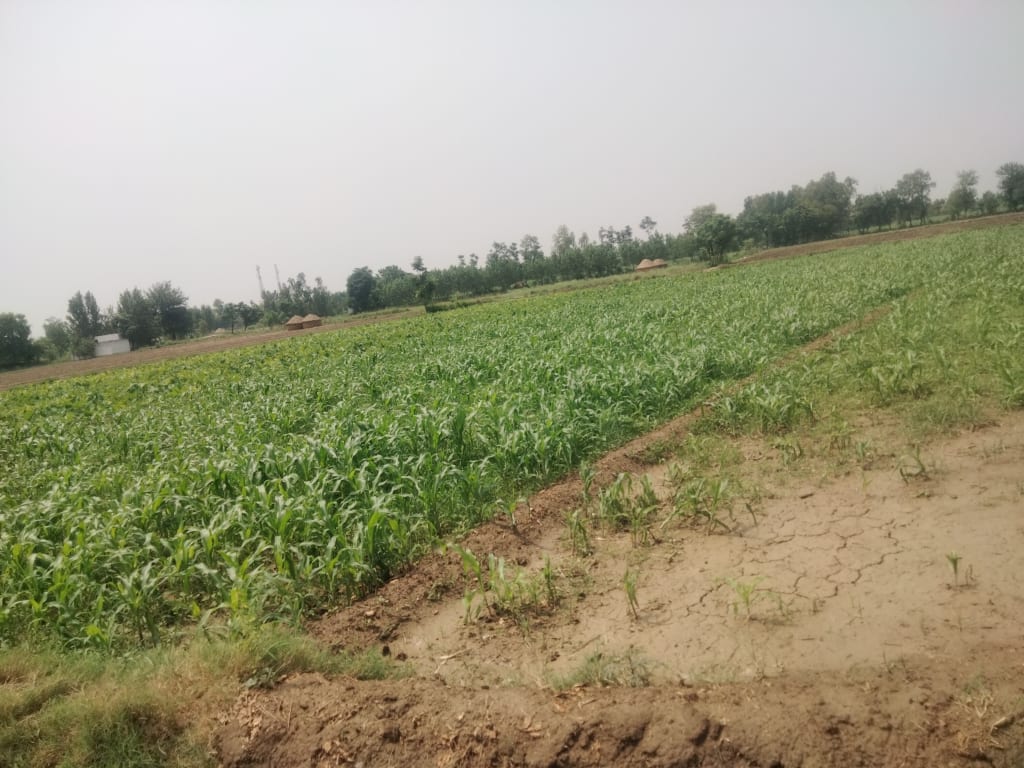
The Sweaty and Green Village
By Ali Asadullah
Real-Life Inspired Village Story
They call it the green village. But to me, it’s more than just fields and trees—it’s sweat on my skin, wind in my chest, and memories stuck between sugarcane and silence.
My name is Ali Asadullah, and I come from a place where mornings smell like wet grass and cow dung, where afternoons feel like the sun is sitting on your head, and where nights are filled with whispers that never reach the sky.
Our village is alive—but it breathes heavily, like an old man under a blanket of heat and secrets.
he people here know me. Not because I’m special. But because I never left.
While others went to the cities chasing money and lights, I stayed behind with muddy feet and rough hands. I worked the land my father left me—four acres of wheat and memories. My mother used to say, “This village may be sweaty, beta, but it gives you shade when the world gives you fire.
She was right.
Every morning at Fajr, the azaan from the old mosque breaks the silence, echoing over the green fields like a song of survival. The mist still hugs the soil, and my feet are wet before I even reach the well. The bucket creaks, the water is cold, and I splash it on my face to wake up—not just from sleep, but from the weight of everything I carry.
One day, during a brutally hot June morning, something unusual happened.
The sun hadn’t risen yet, and already my shirt stuck to my back with sweat. The crows screamed from the neem tree, warning us of something. I ignored it and walked into the fields.
That’s when I saw her.
A girl in red, standing in the middle of the sugarcane rows, barefoot, face covered with a dupatta. She looked lost. I stopped.
“Who’s there?” I called.
No answer.
I stepped closer, heart racing. My sweat now had nothing to do with the heat.
When I reached the spot, she was gone. No footprints. Just crushed grass where she had stood.
For days, I couldn’t forget her. I asked the neighbors. I asked the village chaiwala. No one had seen a girl in red.
But the next day, near the well, I found a silver anklet buried in the mud.
I picked it up, cold in my palm. Something about it felt old… almost ancient. I took it home, cleaned it, and placed it on the windowsill.
That night, thunder rolled over the fields, and rain poured like it hadn’t in months. The sweaty heat turned to heavy wind, and power went out.
In the candlelight, I sat near the anklet, staring at it like it held answers.
Then, I heard it.
A knock.
Three soft knocks at the wooden door.
I opened it slowly—and found no one.
Just muddy footprints on the porch.
Small ones. Barefoot.
From that night on, strange things began happening. My wheat crop, which was dying from heat, suddenly began to rise again. My cow, who hadn’t given milk in weeks, overflowed the bucket. Even the neem tree behind the mosque began to bloom yellow flowers again—something it hadn’t done since my childhood.
But every miracle came with a cost.
I began to hear whispers at night.
Soft giggles in the sugarcane field.
My tools would shift places by morning.
And one evening, I saw the girl in red again.
This time, closer. Just by the edge of the pond. She turned her head, just a little, as if she wanted to see me—but never fully did.
I didn’t sleep that night.
The next morning, I took the anklet to Baba Hakeem, the oldest man in the village.
He looked at it, then at me.
“Ali Asadullah,” he whispered. “You’ve touched something that doesn’t belong to this time.”
I sat silent, confused.
He told me the story of Rehna, a girl who lived in the village 80 years ago. She was known for dancing barefoot in the green fields, with anklets that sang louder than any bird. She was in love with a farmer's son, but the boy was forced to marry someone else. Heartbroken, Rehna walked into the sugarcane fields and never returned. They say her anklets were the last thing left behind.
That anklet now sat in my house.
“She is not angry,” Baba said. “She’s waiting.”
“For what?” I asked.
“For someone who will not run away.”
I didn’t sleep that night either. But this time, I wasn't afraid.
At dawn, I walked to the peepal tree near the stream—the place people say souls rest. I carried the anklet in my hand, wrapped in red cloth.
And there she was.
Not far, standing silently, barefoot once again.
I laid the anklet on the ground and folded my hands.
“Rehna,” I said. “If your soul needs peace, may this land give it to you. If you are protecting us, I thank you. If you're lost… find home.”
The wind blew gently, rustling the tall grass around me. She slowly faded into it like morning mist.
From that day on, the whispers stopped.
But the green in my village grew deeper.
The soil felt richer.
The air lighter.
And me? I still sweat under the sun, working like always. But now, I walk with something inside me. A story. A connection. A belief that not every spirit is a curse—some are keepers of land, of love, of unfinished truth.
People still laugh when I tell them about Rehna. They say the heat got to my head. That the sweat and the sun made me see things.
But I know what I saw.
And every time I walk through the fields, and the wind brushes past my face like soft fingers, I remember:
The green is not just color here.
It’s life. It’s memory. It’s sweat, soul, and story.
And I, Ali Asadullah, will never leave it.
Because some villages are not just where we live—they are who we are


About the Creator
Ali Asad Ullah
Ali Asad Ullah creates clear, engaging content on technology, AI, gaming, and education. Passionate about simplifying complex ideas, he inspires readers through storytelling and strategic insights. Always learning and sharing knowledge.
Keep reading
More stories from Ali Asad Ullah and writers in Blush and other communities.
When Goodbye Wasn’t My Choice
When Goodbye Wasn’t My Choice By Ali Asad Ullah I never thought I’d write about this. Mostly because I was hoping—somehow—it would stop hurting. That one day I’d wake up and the weight in my chest would be gone, the questions would stop echoing, and the silence would feel normal. But even after all this time, it doesn’t.
By Ali Asad Ullah8 months ago in Blush
SoFi’s All‑In‑One Money
IPO Investing TAMPA, Fla. — February 24, 2026 — In an era when financial lives sprawl across multiple apps and institutions, a growing number of consumers is gravitating toward platforms that bring everything under one roof. Among the most visible names in that movement is SoFi, which has steadily expanded from a lending specialist into a full-spectrum money hub—blending banking, borrowing, investing, and credit insights into a single, streamlined experience.
By Organic Products 4 days ago in Blush
Mistakes Oily-Skin People Make When Applying Makeup
Makeup on oily skin can look flawless at first—but within hours, shine, creasing, and patchiness can take over. Many people assume the problem is their skin type, when in reality it’s often application mistakes that sabotage the finish. Understanding what not to do is just as important as choosing the right products.
By Stories Today4 days ago in Blush




Comments
There are no comments for this story
Be the first to respond and start the conversation.