
The Reason Behind Big Fashion Brands Recent Interest in Plus Sized
Has the fashion industry outlook changed towards plus-sized people?

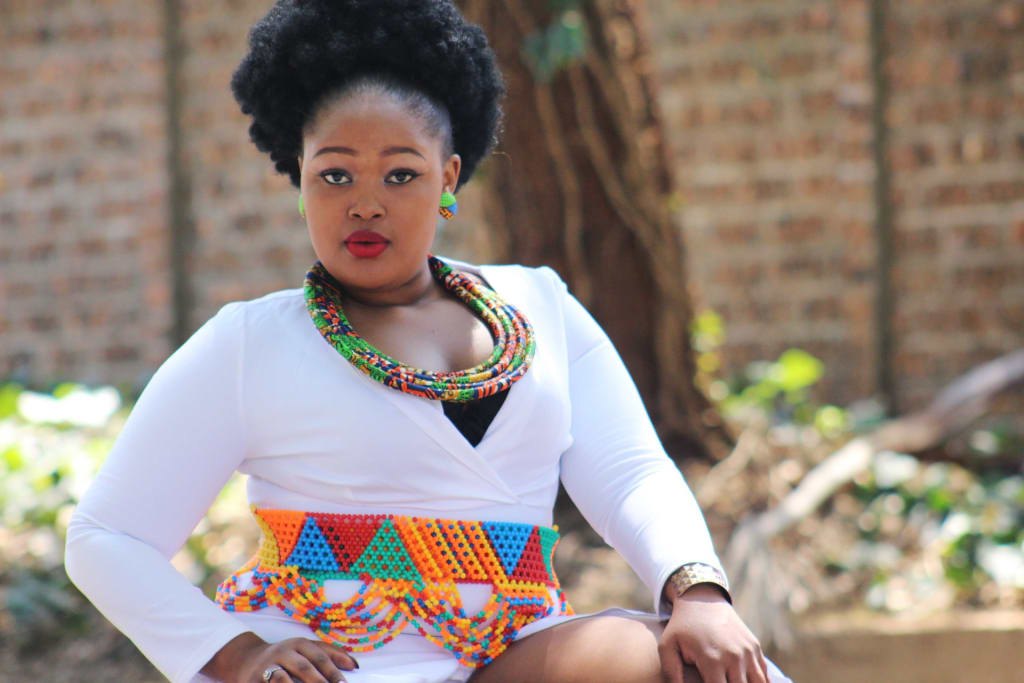
What is the meaning of the word ‘Plus.’? Search for it on the internet. When used as an adjective, plus means positive; as a noun, it means advantage and when used in the context of a flight seat, plus implies luxury.
So why is it that when referring to body size, plus somehow becomes a negative, a stigma that brings insecurity? It also becomes not beautiful enough.
I have been overweight for most of my life, and these questions have always haunted me. Being a plus-size seems like a curse. I have constantly been ridiculed in school and considered an object of making fun all my life.
The question is, who decides what’s beautiful? Who gets to set these beauty standards?
The answer is simple — brands, ramps, and influencers. They are the ones to fund the body image problems and then exploit them.
As kids, Barbie dolls dictated our definition of beautiful — white, slim, and all those hairstyles.
When we grew up, make-up brands defined perfect skin, fair and spotless, and ramps dictated an ideal body — tall and size zero. Anyone who did not fit into these frames was made to feel less.
A study found that simply viewing a Barbie doll reduced body esteem in girls between five to eight years of age. Images in magazines influence the concept of ideal body weight for 69% of adolescent girls.
After television became popular in Fiji, 11% of adolescent girls practiced vomiting for weight control.
Brands have created a very unhealthy relationship between us and our bodies, and now the same brands have latched on to new movements and vogue concepts to sell us a whole new range of products.
The latest cover of ‘Vogue’ magazine features singer Lizzo, the first big black woman. While Oprah was the first black woman, she was encouraged to lose twenty pounds before appearing on the cover.
So now we have Lizzo, the new representative of body positivity, who has trashed it as commercialized. And she’s damn right.
What is body positivity?
Body positivity is the idea that you should be happy and proud of your body irrespective of its shape and size. It means being happy and comfortable in one skin, clothing, and beauty brands love to sell this idea.
These brands tell you to be yourself, love yourself, and size doesn’t matter.
But are they encouraging body positivity? Or are they doing the opposite?
Let’s bring in some history at this point. Our society had many eureka moments when we realized body image issues and tried to fix them. The recent body positivity movement started in 2012. It challenged the unrealistic standards of beauty.
Tess Holliday, a size twenty-six model, was signed by a major European modeling agency. Instagram became the platform of choice for promoting body positivity.
But the movement was soon hijacked by influencers. Today, #bodypositivity has 5.6 million posts; #bodypositivitymovement has 100 thousand posts, but most of them have nothing to do with the original idea of body positivity.
But sadly, positivity has become a hashtag of choice for selfies, gym wear, vacation photos, and paid posts — most of them of visibly thin women.
I don’t see anything wrong in posting photos, but these are way off the mark. Spring 2019 fashion shows in New York, London, Paris, and Milan featured fifty-four plus-sized models.
But in the fashion industry, plus means eight. Thich is nothing close to an average woman in the U.S. who is size fourteen. Plus size does not even start below sixteen. The fashion industry has just reduced body positivity to curvy women walking down the ramp or posing for magazine covers or ads.
A Simply Bee study found that 89% of the women feel that catwalks don’t represent their body types. A study in the U.K. found that 74% of the women were not happy with how they looked.
50% of thirteen-year-old girls in the U.S. are unhappy with their bodies. By the time they reach the age of seventeen, that number shoots up to 80%. In Switzerland, 70% of adult women expressed the desire to be thinner.
In Austria, 60% of older women are unhappy with their bodies. The U.S. has 11% of adult women reporting body image avoidance.
Another study found that using social media for as little as thirty minutes a day can negatively change the way young women view their own bodies.
So are our fashion brands trying to fix all of this?
They are trying to enter new markets to cash in on new trends. As per Florida State University study, researchers showed women photos of models ranging from plus to average and thinner bodies.
The result was that these women recalled plus-sized models better. This means, if a woman with a body image issue is shown an advertisement featuring a curvier model, she’s likely to remember that brand and perhaps add it to her shopping cart.
And that’s what brands are cashing on and featuring curvier models and passing it off as body positivity.
And it’s a massive market we’re talking about. One-third of women in the U.S. identify themselves as plus-sized. There has been an 81% drop in the number of U.S. teens buying junior-size clothes.
At the same time, plus-size clothing shot up from 17% to 42% between 2012 and 2019. In the U.K., the average woman is sized EU46, which is size sixteen.
There is a genuine demand for plus-sized clothing. And brands are in a rush to cater to this demand. More top brands today have a plus-size collection.
But the dilemma is that they do not share the same rack as other sizes.
Brands have been in short supply, but not inclusivity.
Plus size clothing is mostly in another section, category, or department, if not another shop altogether. They are also not priced the same. If XL, L, or M are priced the same, why is plus treated differently? Is that an Obesity Tax of sorts?
The global plus-size market for women is estimated at $180 billion and $1 billion for men. The women’s plus-size market is estimated to have touched $24 billion in the U.S.
There is huge money made from the plus-size segment, but no message of body positivity is offered to them in return. All the so-called revolutionary ads and magazine covers later; we still remain a society that greets people with — Wow, you look great. Have you lost weight?
We live in a society that once cheered Adele for her body positivity, and now we are going head over heels for her beauty transformation — funny, isn’t it?
Conclusion
It is not about being plus or minus, tall or short, curly or straight; none of these really matter in real life. What matters is that you are comfortable being who you are, and you do not let fashion brands dictate your body image.
It is important to understand that you are unique because of who you are and not because of someone else’s perception.
Author's Note:
You may also join Vocal using my affiliate link and support with some commission income without any burden on your pocket. https://shopping-feedback.today/vocal-plus?via=Kavish
References:
https://breakbingeeating.com/body-image-statistics/
About the Creator
Kavi Kamat
A banker by profession and a writer by passion. My life has always been full of ups & down, a treasure which helps me to pen down my memories. Technology and self-help are my drivers and reading is my hobby.
Thanks for your time.
Keep reading
More stories from Kavi Kamat and writers in Blush and other communities.
Google Adsense is Changing in 2022: Should you be concerned?
You might be a blogger, a content creator, or a video creator; if yes, you are no stranger to Google Adsense. It is one of the most sought ad managers for monetizing your content and so, it would be no surprise that any updates to Google Adsense would interest you.
By Kavi Kamat4 years ago in 01

Comments
There are no comments for this story
Be the first to respond and start the conversation.