
. “The Billion-Dollar Industry Built on Your Insecurities”
How beauty, wellness, and self-help giants profit from your deepest doubts—and why it’s time to reclaim control.

In the age of hyper-connectivity, where our screens are reflections of curated perfection, there’s an invisible industry thriving in plain sight. It doesn’t sell products—it sells validation. It markets not answers, but anxieties. And it wraps it all in glitzy packaging with promises of “fixing” you.
Welcome to the Insecurity Economy—where your doubt is worth billions.
The Seed of Self-Doubt
It starts early.
Before you even realize it, subtle cues shape your perception of self-worth. A Disney princess with flawless skin. A magazine cover with “Top 10 Ways to Get a Bikini Body.” That Instagram filter that slims your nose by 10%.
You begin to internalize that who you are isn’t enough. That someone, somewhere, has a secret—one you don’t yet know.
This isn’t by accident. It’s by design.
The Economy of “Not Enough”
Industries that profit off your insecurity include:
Beauty & Cosmetics (valued at over $600 billion globally)
Fitness & Weight Loss (nearing $300 billion)
Self-Help & Wellness (roughly $70 billion and growing)
Plastic Surgery & Aesthetics
Influencer & Lifestyle Marketing
Each thrives on one principle: you need to improve—constantly.
Products are sold not to enhance who you are, but to correct who you aren’t.
Think of slogans like:
“Be your best self.”
“Fix what’s broken.”
“Glow up.”
They sell aspiration disguised as inadequacy.
Social Media: The Perfect Salesperson
Nothing fuels this machine more effectively than Instagram, TikTok, and YouTube.
Every scroll is a sales pitch: someone richer, fitter, happier, glowing with aesthetic lighting and poreless skin.
What’s never shown? The 500 takes. The FaceTune. The cosmetic procedures. The emptiness behind the eyes.
Influencers often partner with brands under the pretense of authenticity. But those “casual morning routines” are polished campaigns. Their “before and after” stories are edited narratives designed for conversion—not connection.
And the worst part?
You begin to see your life as a “before.”
When Wellness Becomes a Trap
The modern wellness industry markets itself as holistic and healing—but often ends up being toxic.
“Clean eating,” “detox teas,” “biohacking,” “spiritual abundance”—these aren’t just fads; they’re belief systems.
And belief is profitable.
The average consumer doesn’t just buy products—they buy identities.
A certain water bottle means you're a minimalist. A specific workout plan makes you “disciplined.” A meditation app implies you're “elevated.”
This subtle branding wraps insecurity in the language of empowerment—but it’s just rebranded self-criticism.
The Psychology Behind the Profits
Marketers know the brain’s wiring. Fear and desire are two of its most powerful triggers.
Fear of being unattractive → skincare and cosmetic products.
Fear of failure → motivational courses, self-help books.
Fear of loneliness → dating apps, confidence coaches.
Fear of aging → anti-wrinkle serums, plastic surgery.
They position their product as the antidote to your internal ache.
The real formula?
“Make the user feel a lack. Offer the solution. Keep the lack alive to sell again.”
Real People. Real Damage.
Meet Amara.
At 26, she spent $18,000 in two years trying to “fix” her face—serums, Botox, contouring classes, micro-needling, all inspired by beauty influencers she followed religiously.
Her mirror became her enemy. Her savings vanished. Her anxiety grew.
“I didn’t even know who I was without a filter,” she says.
And she’s not alone. Millions of men and women suffer from body dysmorphia, low self-esteem, financial strain, and even depression—all quietly fueled by insecurity-based industries.
The Flip Side: Empowered Consumers
The good news?
Once you see it, you can’t unsee it.
That ad telling you your skin needs fixing? You can scroll past.
That influencer selling their “perfect morning”? You can call out the filter.
That supplement with unproven claims? You can demand facts.
Knowledge is disruption. Awareness is rebellion.
And the biggest power move?
Loving yourself in a world built to make you feel broken.
How to Reclaim Control
Here’s how to resist the Insecurity Economy:
Audit Your Feeds: Unfollow people who make you feel “less than.”
Ask ‘Why?’ Before Buying: Is it solving a real need or a manufactured flaw?
Limit Filters: Experience your unfiltered self more often.
Support Authentic Creators: Follow those who show reality—flaws and all.
Educate Yourself: Learn about manipulative marketing tactics.
Final Thoughts
The industry isn’t going away.
It’s too profitable, too embedded, too normalized.
But your awareness is the antidote. Your confidence is the rebellion.
When you recognize that the billion-dollar industry built on your insecurities needs you to stay doubting—you can choose to opt out.
You don’t need to buy into the lie.
Because you were never broken to begin with.
About the Creator
Keep reading
More stories from Hamza Habib and writers in Blush and other communities.
“ChatGPT Wrote My Resume—And Got Me Hired in 3 Days”
Chapter 1: Rejection Fatigue I had been job hunting for nearly four months. That meant 37 applications, 9 interviews, and—brace yourself—zero offers. Each rejection felt heavier than the last. Some companies didn’t even bother to reply. My inbox was a graveyard of “We regret to inform you…” emails.
By Hamza Habib8 months ago in Futurism
Type of Support Required For Mental Health Of celebrities
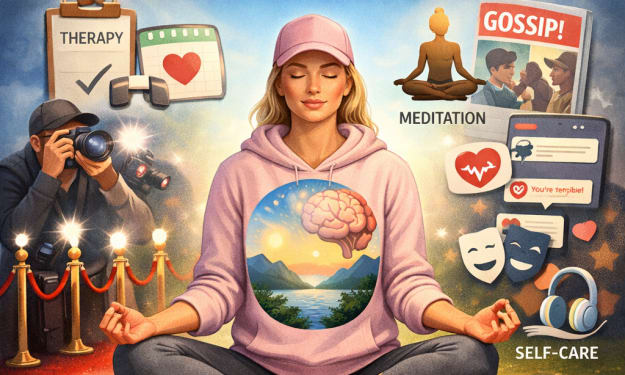
The lives of celebrities are often viewed through the lens of glamor, fame, and fortune, but beneath the surface, many face challenges related to mental health that go unnoticed or unaddressed. The pressures of constant public scrutiny, overwhelming work schedules, and personal sacrifices can take a significant toll on their emotional well-being. As a result, maintaining mental health for celebrities requires a multifaceted approach, involving various types of support systems and coping mechanisms. In this article, we will explore the different types of support that are crucial for preserving the mental health of celebrities, ensuring they can navigate the demanding world of fame while fostering personal well-being.
By Ibrahim Shah about 13 hours ago in Blush



Comments
There are no comments for this story
Be the first to respond and start the conversation.