
"Speak to Be Heard"
Finding Your Voice in a World Full of Noise


Everyone speaks, but not everyone is heard. In a time when communication is constant—tweets, texts, and endless talking—many voices get lost in the noise. Some people shout to be noticed. Others whisper, hoping someone will care enough to listen. But between silence and shouting lies something more powerful: purposeful speaking. Speaking not just to talk, but to truly be heard.
This is the story of Asim, a boy who discovered that being heard doesn’t come from volume, but from value.
Chapter 1: A Voice in the Background
Asim had always been the “quiet kid” in class. Not because he had nothing to say—he had too much to say. Thoughts, opinions, emotions, stories—all swirling inside his mind. But whenever he tried to speak, he hesitated. People often interrupted him. Or they’d nod politely without really listening.
Over time, Asim stopped trying. He figured it wasn’t worth it. At school, in family gatherings, and even in his friend group, he became the listener—the observer. No one asked his opinion, and he stopped offering it.
His voice faded—not in sound, but in significance.
Chapter 2: The Moment That Sparked a Fire
One day, during a heated class discussion about community issues, a few students dominated the conversation with dramatic opinions. Asim disagreed with them silently but didn’t say anything.
But then the teacher, Mrs. Naveed, turned to him and said, “Asim, you’ve been quiet. What do you think?”
The whole room turned.
Asim’s heart pounded. He could feel the fear rising—what if he stumbled? What if they laughed?
But he cleared his throat and spoke.
Softly at first. Slowly. But clearly.
He talked about a local water issue that no one else mentioned. He explained how it affected poor families, how it wasn’t just about politics but survival. He didn’t raise his voice. He didn’t exaggerate. He simply told the truth.
When he finished, there was silence.
And then applause.
Mrs. Naveed smiled. “That’s what it means to speak to be heard,” she said.
Chapter 3: The Power of Speaking With Purpose
That day changed something inside Asim. He realized that being heard wasn’t about being loud—it was about being real. He began reading more. Watching speeches. Practicing his tone, pace, and delivery. Not to become someone else, but to become a better version of himself.
He learned that when you speak with clarity, people listen.
When you speak with conviction, people remember.
When you speak with compassion, people care.
Over time, Asim became a quiet leader. He joined the school’s community outreach group, not as a face for posters, but as the voice that asked the real questions. During meetings, when things got off track, he’d say one sentence—and everyone would listen.
Because when Asim spoke, it meant something.
Chapter 4: More Than Just Words
In college, Asim took a course in public speaking. On the first day, the professor said, “The goal isn’t to speak more. The goal is to say something worth hearing.”
That line became Asim’s personal motto.
He learned that the best speakers don’t memorize—they connect. They don’t just inform—they inspire. They don’t speak to impress—they speak to express.
By his final year, Asim was invited to speak at a youth leadership conference. His speech wasn’t full of fancy words or motivational clichés. It was about a boy who used to sit quietly in the back, watching the world go by, until one day he realized his voice mattered.
And now, hundreds listened as he said:
“You don’t need to be the loudest voice in the room. You just need to speak from where it matters—the heart. Because when your words carry truth, people won’t just hear them. They’ll feel them.”
Final Thoughts
We all have a voice. But using it well is a skill—a choice. Speaking to be heard doesn’t mean dominating a conversation. It means speaking with intention. Listening before responding. Knowing when to pause. And choosing words that reflect not just thoughts, but truth.
In a world that often talks too much and listens too little, the person who speaks with authenticity will always stand out.
So if you have something to say, say it.
Say it with meaning.
Say it with courage.
Say it so it reaches beyond ears—into hearts.
Speak to be heard.
Moral:
Being heard isn’t about being louder—it’s about being clear, honest, and purposeful. Speak with value, and the world will listen—not because you forced it to, but because you gave it something worth hearing.
About the Creator
Keep reading
More stories from Najeeb Scholer and writers in Blush and other communities.
"From Awkward to Articulate"
Some people are born with the gift of gab. They speak with charm, confidence, and clarity. Then there are those who stumble on their words, feel their heart race when called on, and wish they could disappear during every group presentation. Zara was definitely the latter.
By Najeeb Scholer7 months ago in Art
Are Permanent Cosmetics Worth It?
Permanent cosmetics are really popular now, especially for people who want to save time and look great. Many people love getting eyeliner, eyebrows, lip color, and scalp micropigmentation. But a lot of people wonder: are permanent cosmetics really worth it? Let's take a look.
By Milla Rosen6 days ago in Blush
A Historic Declaration
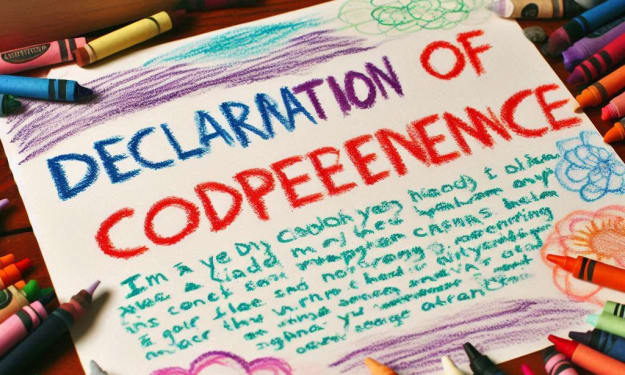
We the People of the Husbands of the United States of America, in Order to form a more perfect Union, and I mean you...with me...establish Justice, insure domestic Tranquility, provide for the common defence, promote the general Welfare, and secure the Blessings of Liberty to ourselves, after Puberty, do ordain and establish this Declaration of Co-Dependence.
By Gerard DiLeo4 days ago in Humans


Comments
There are no comments for this story
Be the first to respond and start the conversation.