

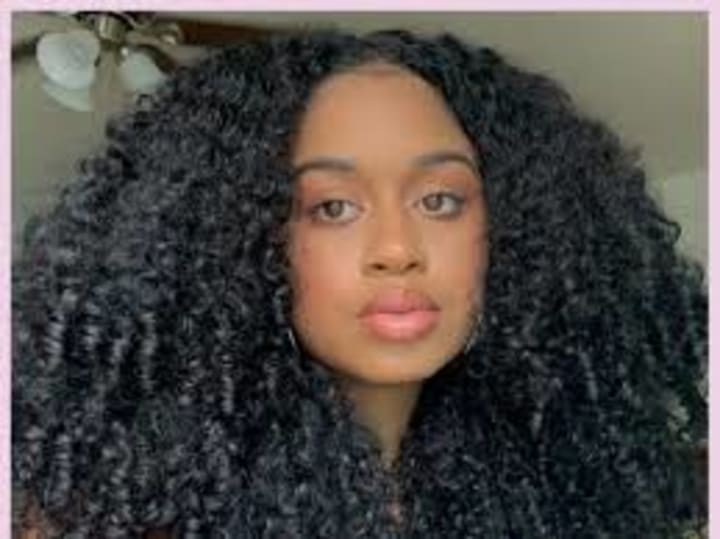
One of the best aspects of natural hair is being able to enjoy a huge variety of styles. Some of these hairdos mimic chemically straightened locks, but many are unique to having no texture-altering chemicals on your hair. Hairstyles that work especially well with natural textures include:
Twists
Braids and cornrows
Afro or TWA
Bantu Knots
How to Color Natural Hair?
"It is OK to color natural hair," says hair educator and Creme of Nature hairstylist Pat Grant Williams. "There are three main categories of color, semi-permanent, demi-permanent, and permanent. From semi-permanent to permanent, choose a color that fits your hair care regimen to maintain the integrity of the hair. Semi-permanent colors last six to eight weeks based on a weekly shampoo and conditioner. These colors gently fade away, will not lighten the hair, and are formulated to deposit color."
Grant says these colors can enhance your hair color and give you fun color options from black to vivid shades without damaging the hair. "The semi-permanent colors are mixed with a low volume developer and last up to 12 weeks. These color formulations can give a gentle lift." Since semi-permanent colors can lift your natural hair color, following-up with a weekly deep conditioner is essential.
Creme of Nature Pure Honey Hydrating Color Boost Semi-Permanent Vivid Colors $4.00
SHOP
Permanent colors last until they grow out or cutaway and can cause damage if the hair isn't properly taken care of which means intensive hair treatments are a must. Grant recommends conditioners that will help to bond the hair after color applications. "After coloring natural hair, stay away from blow dryers and 450 degrees flat irons," she adds. "Allow [the hair] to air dry as often as possible [and] always use a leave-in conditioner."
Olaplex No.3 Hair Perfector $28.00
SHOP
Briogeo Be Gentle, Be Kind Aloe + Oat Milk Ultra Soothing Detangling Spray $24.00
SHOP
Is Texturizing Safe for Natural Hair?
Texturizers are chemicals designed to break down the protein bonds in your hair in order to permanently change the texture.2 Some products market themselves as "natural texturizers" or claim they can increase the manageability of your hair by application and heat. They usually contain the same active ingredients as relaxers, just in lower amounts. Unfortunately, some natural-haired women report being duped by hairstylists who apply these chemicals under the guise of making a person's hair "more manageable" without fully disclosing what the product contains.
"Texturizing, removing 50 % or less of the natural curl can be safe when done correctly," says Grant. "Texturizing can stretch the natural curl for elongation [and] soften the hair and add more manageability to very curly hair." With all of this in mind, talk with your stylist and ask any questions before moving forward with the process.
Is Heat Styling Safe For Natural Hair?
As a straightening method, thermal styling is preferable to texturizing because ideally, you can wet your tresses and they'll return to their natural state. Some women constantly press their locks, however, and over time, their manes become heat-trained. Heat-trained hair has a different texture than hair that hasn't suffered this "controlled damage," so it's not truly natural, although it may appear that way.
"Heat styling can straighten natural hair after repeated services," says Grant. Blow drying and using a flat iron (450 degrees) Grant says can permanently straighten natural hair when used often, which what many call heat-training. To prevent damage, apply a heat protectant. In addition, to prevent heat damage, Grant has a few suggestions.
For starters, using a leave-in conditioner is non-negotiable. Next, be mindful of how and when you blow-dry your hair. "Do not blow-dry hair that is really wet. Hair is in its weakest state when wet. Always air dry partially before adding the blow dryer." The last few tips you're likely familiar with: turn down the heat of the flat iron, wrap the hair, and sleep on a satin pillowcase.
22 Corporate Women Share What Wearing Their Natural Hair to Work Means
ARTICLE SOURCES
Related Stories
natural afro hair tips: Gina Knight with straight afro wig
What is Heat Training for Black Hair?
R+Co Bleu Products
R+Co Bleu: Brand Review and 10 Standout Products
young mixed girl laughing
Your Guide to Blowouts for Natural Hair
Mike Pont
How to Straighten Natural Hair Without Heat
Black woman looking out standing on a balcony
How to Successfully Flat Iron Natural Black Hair
Best Hair Strengthening Products
12 of the Best Products to Keep Your Hair Straight and Smooth
Getty Image Model with Sun Flare
These 10 Little-Known Mistakes Are Drying Out Your Hair
Emilie Joseph in Paris
What Is a Relaxer For Black Hair? A Complete Guide
woman
How to Give Yourself a Brazilian Blowout at Home
woman with curly hair
How to Repair Your Natural Curl Pattern After Damaging Your Hair
Westend61 / Getty Images
How to Maintain Black Hair During Exercise
Three Black women with natural hair
10 FAQs About Transitioning to Natural Hair
Ad
We don’t keep our beauty secrets.
ONE-TAP SUBSCRIBE
Byrdie's Instagram
Byrdie's Pinterest
Byrdie's Facebook
Byrdie's Tiktok
Byrdie's Twitter
SKIN HAIR MAKEUP FRAGRANCE WELLNESS STYLE REVIEWS
ABOUT US
ADVERTISE
TERMS OF USE
CAREERS
EDITORIAL POLICY
PRIVACY POLICY
COOKIE POLICY
CONTACT
CALIFORNIA PRIVACY NOTICE
Byrdie is part of the Dotdash Meredith publishing family.
About the Creator
Keep reading
More stories from Destiny woolfolk and writers in Blush and other communities.
tshirt
body scrub Body scrubs are like the dessert of the skin-care world. Hear me out: They shouldn't replace your go-to body wash, but you're missing out on a major treat if you skip a body scrub in your showering routine altogether. For the sake of this cheeky analogy, may we point out that many of the best body scrubs feature the same ingredients as your favorite baked goods, including, but not limited to, brown sugar and coconut oil.
By Destiny woolfolk4 years ago in Blush
How Independent Filmmakers Are Rethinking Film Financing
Over the past decade, the economics of filmmaking have been quietly transforming. For many years, large studios controlled most aspects of film production, from financing to distribution. Today, however, independent filmmakers are discovering new ways to bring projects to life without relying entirely on traditional studio systems.
By Andreas Szakacsa day ago in Blush
Andreas Szakacs: The Actor and Producer Shaping Stories at the Intersection of Technology and Power
In today’s entertainment industry, where technology and storytelling increasingly overlap, a new generation of filmmakers and actors is emerging to explore this evolving landscape. Among them is Andreas Szakacs — an actor and producer whose work frequently explores the intersection of finance, artificial intelligence, and global influence.
By Andreas Szakacs6 days ago in Blush




Comments
There are no comments for this story
Be the first to respond and start the conversation.