
How Does Permanent Makeup Work with Different Skin Types?
A skin-type–specific guide to how permanent makeup adapts, heals, and lasts

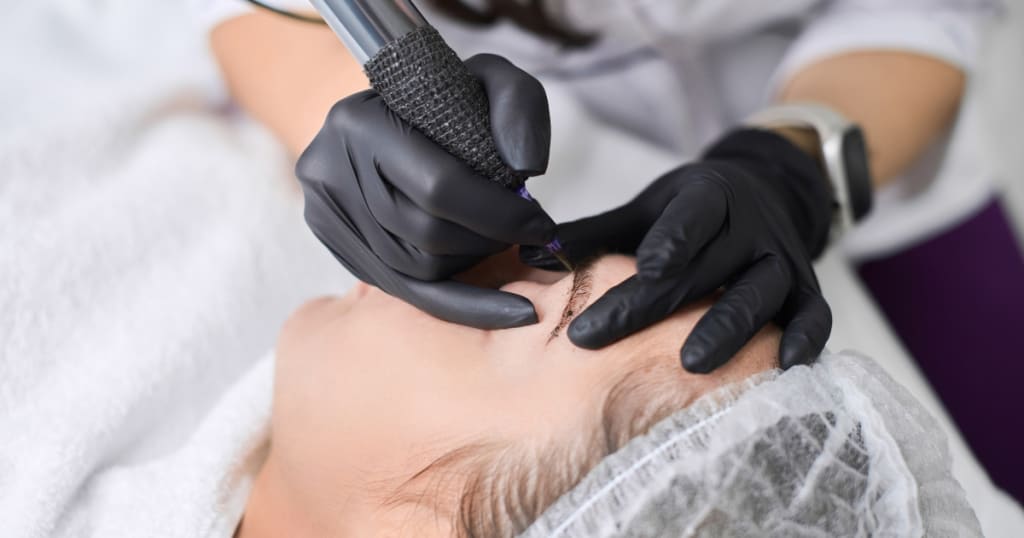
Permanent makeup procedures depend on your skin type to turn out good, since different skin types react differently to pigments. They also take different amounts of time to heal, making it all the more important to know your skin type before the procedure. Skin characteristics play an essential role in determining which pigments to use, how long they’ll last, when the skin will be healed, whether the ink will fade early or trigger an allergic reaction.
Here we take a look at all the skin types, how they influence permanent makeup procedures like microblading and micropigmentation, and what preparations to take before proceeding.
1. Oily Skin
For oily skin, the production of sweat and sebum is much higher compared to normal. It is more porous and prone to blackheads, whiteheads and acne. Therefore, it requires special cleansing. Due to higher sebaceous secretion and oil, the pigments tend to dissolve and blur quicker. This makes it difficult to achieve perfect lines, which is crucial in procedures like microblading.
Oily skin has larger pores and thick oil layers underneath, unlike normal or dry skin. This can prevent some pigments from entering the skin properly, resulting in quick fading lines. The healing time is also much longer compared to normal, as oily skin tends to develop scabs and infections much easier. The excess oil and sweat makes the permanent makeup cuts heal slower.
These are the reasons why micropigmentation techniques like Powder Brows are often more effective for oily skin types than microblading. The inks used for such are less likely to dissolve easily, and are embedded a little deeper than usual.
2. Dry Skin
Dry skin, on other hand, has characteristics completely opposite to oily skin: fewer and smaller pores, reduced sebaceous secretion and lack of natural body oil, rough and flaky texture, but less prone to blackheads and acne. Frequent moisturizing and proper hydration are necessary to keep dry skin healthy.
Thin layers of dry skin absorb pigments faster though not without prior hydration. Moisturizing dry skin is important for any permanent makeup procedure to prevent skin discoloration later. Wrinkles and patchiness are more common for dry skin, so it should be taken in note when sculpting. Since even finer lines are prominent, both micropigmentation and microblading work fine on dry skin.
Dry skin is usually flakey and dull, has higher chances of peeling and is more susceptible to injuries. Therefore, professionals need to handle such with great care. The healing process is pretty long, just like oily skin, since dry skin can get infected easily.
3. Normal Skin
Being the most balanced skin type, it is ideal for all kinds of permanent makeup procedures. It has smoother texture, smaller pores, balanced skin tone and oil secretion, and is least likely to get infected with proper precaution.
Such skin types can retain pigments very well and heal easier compared to all other skin types. Microblading, lash and brow enhancements, scar camouflage, and almost every micropigmentation process can be carried out safely by skilled professionals on such skin.
4. Sensitive Skin
It’s the riskiest skin type for permanent makeup, being prone to redness and allergies. Sensitive skin gets abrasions, swelling, and bruises easily. Which is why patch tests are always advised before proceeding. Some pre-procedure precautions for sensitive skin would be to avoid harsh exfoliants or products with retinol and keeping the skin hydrated. Not following such can worsen the effects even with aftercare.
For the aftercare, one should apply healing cream and meds, stop rubbing or picking at that area of skin, and avoid direct and intense sunlight. All these are meant to ensure that the ink does not fade or react with the skin.
The pigments used on sensitive skin should be safe, hypoallergenic, and professionally tested before use. Permanent makeup artists often don’t recommend many micropigmentation or microblading options to people with sensitive skin for all these reasons.
5. Combination Skin
It refers to a mix of dry, oily, normal and sensitive skin types. In case of combination skin, usually the region around the nose, forehead and chin is oily while the rest of the facial region around the eyes and cheek are dry and sensitive.
Due to the variation in areas of skin, pigment retention rate also differs. Some artists find it hard to work around combination skin as the results are often mediocre without enough experience. Depending on the distribution of oily, dry and sensitive skin, professionals decide what kind of permanent makeup procedure would be better for the particular skin area.
Bottom Line
If you’re aiming for flawless results from permanent cosmetics, knowing your skin type would be the first step. No matter which skin type, there are always a few options available for you to choose from. Consult with the best permanent makeup professionals near you to find the perfect technique and aftercare that suits you.
About the Creator
Milla Rosen
Born in the USSR, Milla received a Master's Degree in electrical engineering. She had been working as an engineer for 10 years before she decided to finally fulfill her life’s dream and pursue a profession in the beauty industry.
Keep reading
More stories from Milla Rosen and writers in Blush and other communities.
Lip Blushing Duration: Understanding the Process
Lip blushing results typically last between one to three years. With proper aftercare, you may be able to extend the duration of the effects. This semi-permanent process uses quality pigments to enhance your lip’s color and shape. Factors such as your lifestyle, skin type, or sun exposure may contribute to the time the effects last. In this article, you will learn more about how long lip blushing lasts and also get a proper understanding of the process.
By Milla Rosen7 months ago in Blush
Aloe Vera in Skin Care
In recent years, the beauty industry has embraced aloe vera, infusing it into an array of skin care products ranging from moisturizers, serums, and masks to soothing gels and ointments. This versatile plant offers a variety of benefits for all skin types.
By Good health to everyone3 days ago in Blush


Comments
There are no comments for this story
Be the first to respond and start the conversation.