
Hormonal Changes and Your Skin: What You Need to Know to Fight Acne, Dryness & More
Discover how hormonal fluctuations affect your skin and learn science-backed solutions to manage acne, dryness, and pigmentation — with product tips and personal insights.
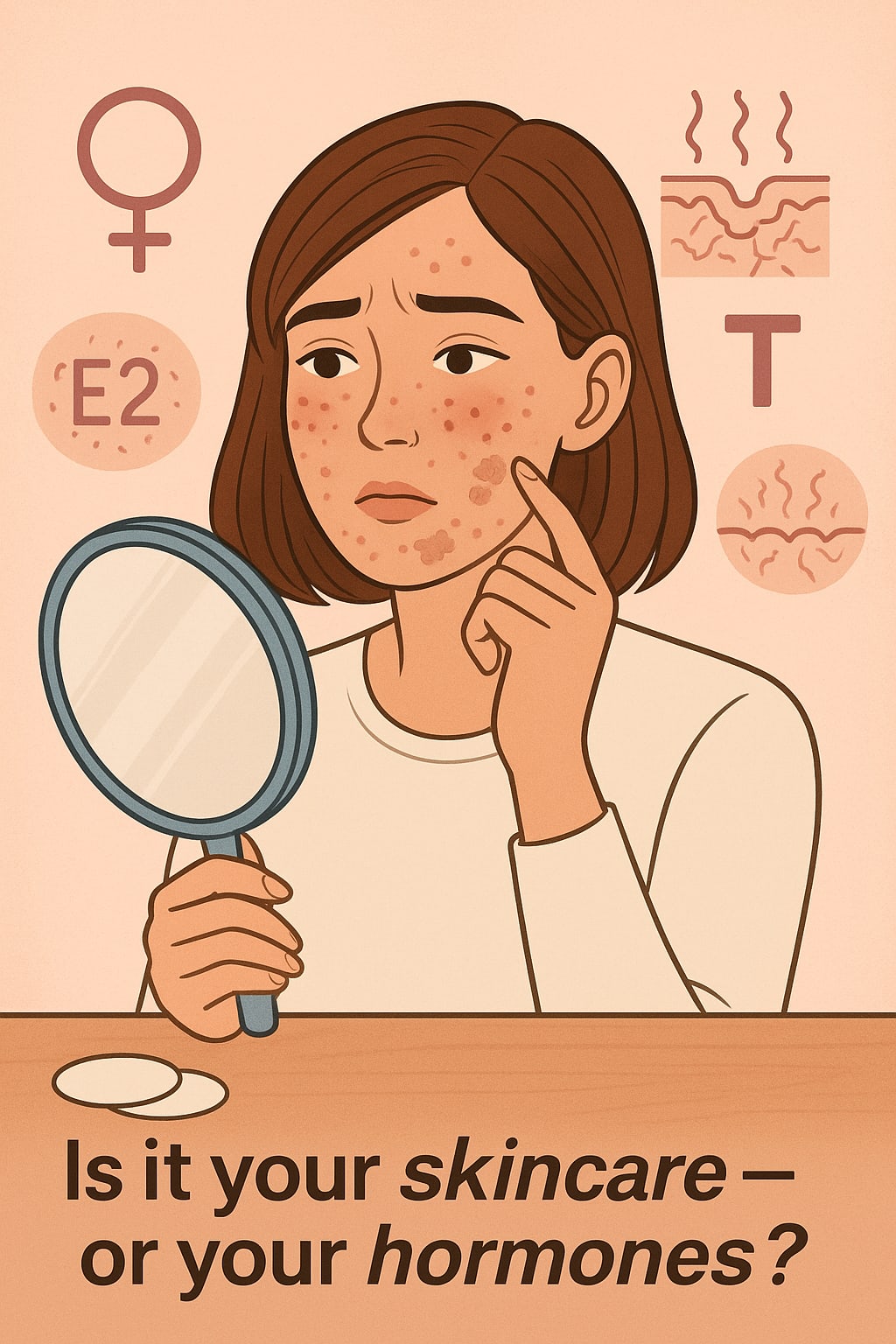
Are you using all the right skincare products but still struggling with breakouts, dryness, or sudden sensitivity? The real issue might not be your cleanser or moisturizer — it could be your hormones.
Hormonal fluctuations play a major role in how your skin looks and feels. Whether you're going through puberty, pregnancy, your monthly cycle, or menopause, your skin reacts in noticeable ways. Here's what you need to know.
Why Hormones Affect Your Skin
Hormones act like tiny chemical messengers that influence every part of your body — including your skin. When they fluctuate, your skin can respond with oiliness, dryness, acne, or even pigmentation.
Common hormones that impact the skin:
- Estrogen: Promotes skin hydration and elasticity.
- Progesterone: Can increase oil production and cause puffiness.
- Testosterone: Triggers excess sebum and acne when levels are too high.
- Cortisol: The stress hormone, which can lead to inflammation, dullness, and breakouts.
Common Skin Problems Triggered by Hormonal Shifts
Understanding these skin symptoms can help you treat them more effectively.
1. Hormonal Acne
Breakouts usually appear around the chin and jawline, and often occur right before menstruation or during high stress.
2. Excessive Oiliness
Surges in progesterone can cause your sebaceous glands to go into overdrive.
3. Dryness and Sensitivity
Low estrogen, especially during menopause, can make the skin dry, itchy, and prone to redness.
4. Hyperpigmentation
Dark patches — also known as melasma — often develop during pregnancy or due to hormonal birth control.
Effective Skincare Solutions for Hormonal Skin Issues
The good news? You don’t have to overhaul your entire skincare routine. These targeted products can help bring your skin back into balance — and I’ve personally tried many of them.
🌿 Tea Tree Oil for Hormonal Breakouts
Tea tree oil is a powerful natural ingredient that fights acne-causing bacteria without drying the skin.
💧 Hyaluronic Acid for Dry, Aging Skin
Perfect for menopausal or dry skin, this humectant draws in moisture and keeps your skin plump.
☀️ Mineral sunscreen for Pigmentation
A must-have to prevent hormonal melasma from getting worse. Choose broad-spectrum SPF 50+.
My Personal Experience with Hormonal Skin Changes
Last year, I began experiencing painful breakouts along my jawline every month like clockwork. I tracked my cycle, simplified my routine, and added a gentle salicylic acid cleanser — the results were almost immediate.
That experience taught me that your skin often mirrors what’s going on inside. Now, I always check in with my hormones before I blame a breakout on my skincare routine.
Frequently Asked Questions (FAQ)
💬 What are the signs of hormonal acne?
Hormonal acne is typically cystic, painful, and concentrated on the lower face — especially around the chin and jawline. It often flares around your period.
💬 Can hormonal pigmentation fade naturally?
It can fade over time, but sun protection and brightening products like Vitamin C serum can help speed things up.
💬 Do men experience hormonal skin issues too?
Yes, fluctuations in testosterone and cortisol can lead to acne, oiliness, or even thinning skin in men.
💬 Are natural supplements helpful for hormonal skin?
Yes, certain supplements like omega-3 fatty acids and spearmint tea have been shown to reduce hormonal acne by balancing internal hormones.
Final Thoughts: Take Control of Your Skin
Your skin doesn’t lie — and when hormones are out of balance, it shows. But you don’t have to feel powerless. By understanding your body and choosing smart, targeted products, you can manage hormonal flare-ups and support your skin through every phase of life.
✨ Don’t wait for your skin to scream for help. Choose one of the recommended products above and take the first step toward balanced, beautiful skin today.
About the Creator
Keep reading
More stories from med karrari and writers in Blush and other communities.
How Independent Filmmakers Are Rethinking Film Financing
Over the past decade, the economics of filmmaking have been quietly transforming. For many years, large studios controlled most aspects of film production, from financing to distribution. Today, however, independent filmmakers are discovering new ways to bring projects to life without relying entirely on traditional studio systems.
By Andreas Szakacs4 days ago in Blush
The Rain That Brought Us Together
It was a cool autumn evening in the busy streets of New York City, when people were rushing home from work while the sky slowly darkened with thick clouds that promised a heavy rainstorm, and among the crowds walking along the sidewalk was a young woman named Emily who had just finished a long day at her publishing job and was trying to reach the subway station before the rain began. Emily had always been someone who preferred quiet routines and simple evenings, but on that particular day she had stayed late at the office and was now hurrying through the streets while the wind picked up around her.
By The Curious Writer2 days ago in Blush


Comments
There are no comments for this story
Be the first to respond and start the conversation.