
HENNA
Henna, also known as Mehendi, is a traditional form of body art that originated in the Indian subcontinent and the Middle East. It involves applying a paste made from the crushed leaves of the henna plant onto the skin, usually in intricate patterns and designs.
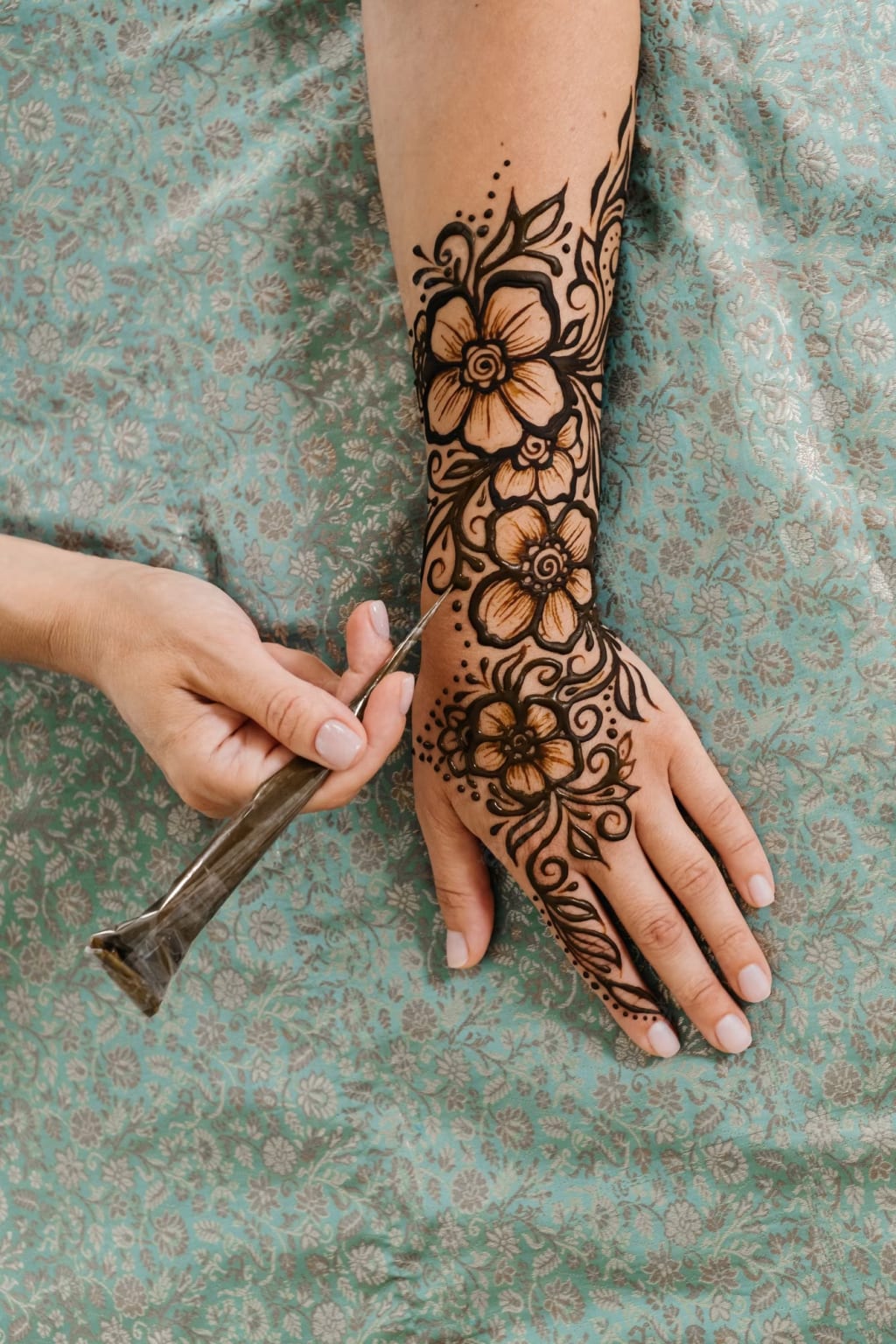
Henna, also known as Mehendi, is a traditional form of body art that originated in the Indian subcontinent and the Middle East. It involves applying a paste made from the crushed leaves of the henna plant onto the skin, usually in intricate patterns and designs.
Mehendi is commonly used for decorative purposes at weddings and other festive occasions. It is typically applied to the hands and feet, although it can be applied to other parts of the body as well. The paste is left on the skin for several hours to allow the dye to stain the skin, and then it is washed off, leaving a temporary but beautiful design on the skin.
In addition to its decorative uses, mehendi is also believed to have medicinal properties and is used in traditional medicine for its cooling and soothing effects on the skin. The dye from the henna plant has also been used for centuries to dye hair and fabrics.
Overall, mehendi is an important part of many cultural and traditional celebrations and is cherished for its beauty and significance.
Organic Henna
Organic henna is a form of henna that is grown and processed without the use of synthetic fertilizers, pesticides, or other chemicals. Organic henna is becoming increasingly popular due to concerns about the potential health risks associated with synthetic chemicals, as well as environmental concerns about the use of these chemicals in agriculture.
Organic henna is grown using natural farming methods, such as crop rotation, composting, and the use of natural pest control methods, which help to promote soil health and biodiversity. The leaves of the henna plant are then harvested, dried, and ground into a fine powder, which can be used to make the paste for mehendi or other henna-based products.
Organic henna is often considered to be a safer and healthier alternative to conventionally grown henna, as it is free from synthetic chemicals that can potentially cause skin irritation or allergic reactions. Additionally, organic henna may also have a more vibrant and longer-lasting stain due to the use of natural farming methods that promote healthy plant growth.
When choosing organic henna, it is important to look for certifications from reputable organic certification agencies, such as USDA Organic or Ecocert, to ensure that the product is truly organic and meets strict organic farming standards.
Artificial Henna
Artificial henna, also known as black henna or "neutral henna," is a synthetic form of henna that is often used as a substitute for traditional henna in mehendi and other body art. Unlike traditional henna, which is made from the crushed leaves of the henna plant, artificial henna is made from a mixture of chemicals, including PPD (para-phenylenediamine), a synthetic dye that is often used in hair dyes and other cosmetic products.
Artificial henna is often marketed as a faster and more convenient alternative to traditional henna, as it can be applied in a shorter amount of time and is said to produce a darker and longer-lasting stain. However, the use of PPD and other synthetic chemicals in artificial henna can be dangerous and potentially harmful to the skin.
PPD can cause severe allergic reactions, including blistering, itching, and swelling, and in some cases, it can even lead to scarring or permanent skin damage. It is important to note that these reactions may not occur immediately, and can sometimes take several days to develop.
In addition to the potential health risks, the use of artificial henna also raises concerns about cultural appropriation and the exploitation of traditional art forms for commercial gain. Many practitioners of mehendi and other henna-based art forms believe that the use of artificial henna is disrespectful and diminishes the cultural significance of traditional henna.
Overall, it is recommended to avoid the use of artificial henna and instead opt for traditional henna or natural henna alternatives that are free from synthetic chemicals and safer for the skin.
About the Creator
Korean Skincare Secrets: The Best Serums to Repair and Restore your Glow
You know that moment when your skin just looks tired, dull, uneven or not quite as radiant as it used to be? Trust me, we’ve all been there. Life happens, and our skin feels it in more ways than none. That effortless glow starts to fade, and suddenly your usual routine just isn’t doing enough.
By Good health to everyonea day ago in Blush



Comments
There are no comments for this story
Be the first to respond and start the conversation.