
Artificial Intelligence in Medicine: A New Healthcare Era
Artificial intelligence (AI) is changing healthcare in big ways. It's making medical care better, helping doctors diagnose diseases more accurately, and making healthcare more efficient. This new technology is exciting for both healthcare workers and patients.

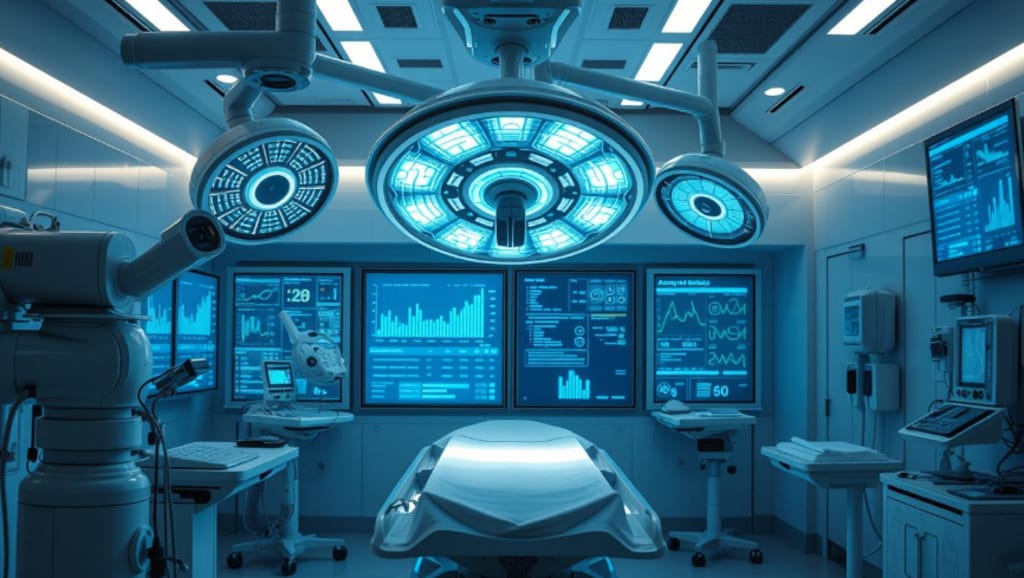
AI is set to change many parts of healthcare. It can help find diseases early, create treatment plans just for you, and make administrative tasks easier. AI uses advanced technology to look through lots of data, find patterns, and give insights to doctors.
The healthcare world is facing big challenges like an aging population and chronic diseases. AI is key to solving these problems. It helps doctors find diseases sooner, predict how patients will do, and create treatment plans that fit each person's needs. This all aims to make patients healthier and ease the load on healthcare systems.
Understanding Artificial Intelligence in Medicine: Core Concepts
The medical field is changing fast, thanks to machine learning in healthcare and AI algorithms. To really get how AI is changing medicine, we need to understand its core ideas.
Machine Learning vs. Traditional Medical Analytics
Traditional medical data analysis uses rules and manual work. But machine learning in healthcare finds patterns in big data. AI in healthcare informatics looks at complex medical info, spots trends, and predicts outcomes with great accuracy.
Key Components of AI Healthcare Systems
Natural Language Processing (NLP) for understanding medical records and talks
Computer Vision for checking medical images, scans, and tests
Predictive Analytics for guessing patient outcomes and disease progress
Robotic Process Automation (RPA) for making admin tasks easier
The Evolution of Medical AI Technology
The use of AI algorithms in healthcare has grown slowly. Better computers, storage, and algorithms have pushed the field ahead. Now, AI is changing how we diagnose and treat patients, aiming to make care better and more personal.
Current Applications and Breakthrough Innovations
Artificial Intelligence (AI) is changing healthcare in big ways. It's making patient care and research better. AI helps with medical imaging, predictive analytics, and drug discovery, changing medicine.
AI in Medical Imaging and Diagnostics
AI tools are making medical imaging more accurate and fast. They use machine learning to quickly read scans like X-rays and MRIs. This can spot problems sooner than doctors, helping patients get better faster.
Predictive Analytics for Patient Outcomes
AI helps doctors make better choices with patient data. It looks at health records, genetics, and sensor data to predict health risks. This way, doctors can act early and care for patients better, leading to better health.
Drug Discovery and Development
AI is speeding up finding and making new medicines. It quickly sorts through data to find good drug candidates. This could make getting new treatments faster and cheaper, helping more people.
FAQ
What is the role of artificial intelligence in the healthcare industry?
Artificial intelligence (AI) is changing healthcare by improving patient care and diagnoses. It's used in many areas, like medical imaging and drug discovery. This makes healthcare better and more efficient.
How does machine learning differ from traditional medical analytics?
Machine learning is a part of AI that finds complex patterns and makes predictions. It does this without being told how. This leads to more accurate and personalized care in healthcare.
What are the core components of AI healthcare systems?
AI healthcare systems have machine learning, data analysis, and various healthcare technologies. These include electronic health records and genomics data. They all work together to improve healthcare.
How has the evolution of medical AI technology impacted healthcare?
Medical AI technology has made big changes in healthcare. It's improved medical imaging, predictive analytics, and drug discovery. These advancements have helped healthcare a lot.
How is AI being used in medical imaging and diagnostics?
AI is changing medical imaging by making it faster and more accurate. It helps doctors find diseases early. This leads to better health outcomes for patients.
What is the role of predictive analytics in healthcare?
Predictive analytics use AI to look at patient data and predict health outcomes. This helps doctors tailor treatments. It makes patient care more effective.
How is AI influencing drug discovery and development?
AI is speeding up drug discovery by finding new drug candidates. It makes testing and clinical trials faster. This saves time and money in pharmaceutical research.
About the Creator
Sabrina
Welcome to my site on Vocal.media Story ! Here, you`ll find a curated collection of my stories and thoughts
please support me i am very hard working




Comments (1)
This is an excellent overview of the role of AI in healthcare. Your explanation of the core concepts and current applications is clear and concise. You've effectively highlighted the potential benefits of AI in improving patient care and medical research. The FAQ section is particularly helpful, providing quick answers to common questions about AI in healthcare. Your writing style is informative and engaging, making the complex topic of AI accessible to a wide audience.