
You’ll Never Watch “Schindler’s List” the Same Way Again After Knowing This Hidden Truth
Schindler’s List

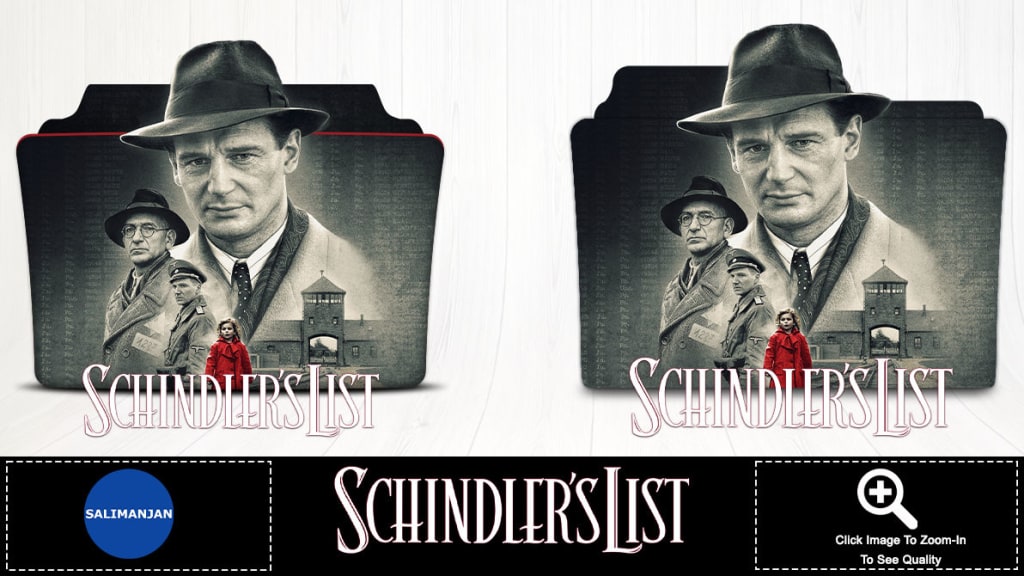
How a Forgotten Detail Turned Spielberg’s Masterpiece Into the Most Haunting Film Ever Made
When Schindler’s List premiered in 1993, it shattered the boundaries of cinema. But few people know the heartbreaking reality buried within its black-and-white frames — a truth so chilling, it changed the course of film history. More than three decades later, Schindler’s List continues to pull viewers into the abyss of human suffering, resilience, and redemption.
But what really makes this movie unforgettable?
Let’s peel back the layers of one of the most powerful films ever created.
Not Just a Movie — A Memorial Etched in Celluloid
Steven Spielberg didn’t set out to make a blockbuster. He wanted to create a witness. A time capsule. A raw, unfiltered portal into one of humanity’s darkest chapters — the Holocaust. Schindler’s List isn’t a story with actors playing roles. It’s a film where pain, horror, and hope live on celluloid.
Adapted from Thomas Keneally’s novel Schindler’s Ark, the movie tells the true story of Oskar Schindler, a Nazi industrialist who risked everything to save over 1,100 Jews from extermination. The film’s haunting realism is largely due to Spielberg’s decision to shoot in black and white — a stylistic choice that evokes historical footage and strips away any cinematic glamor.
But here’s the catch: Spielberg almost didn’t direct it.
The Hidden Fact That Almost Changed Everything
Spielberg felt he wasn’t “ready” to tell such a heavy story. In fact, he offered the project to several other directors, including Martin Scorsese and Roman Polanski. Both declined. Spielberg finally took it on — but not without hesitation.
He refused to take a paycheck.
He didn’t want profit. He wanted truth.
And that decision changed everything.
The Girl in the Red Coat: A Symbol That Will Haunt You Forever
In a sea of black and white, one element pierces through: the red coat worn by a little Jewish girl wandering through the Kraków ghetto. That visual is now iconic — and devastating. Spielberg later revealed he added her character to symbolize the world’s denial of the Holocaust as it was unfolding.
We watched. We knew. We did nothing.
That scene was based on a real child who didn’t survive. Her red coat became a cry across generations.
Schindler’s List Wasn’t Just Filmed — It Was Felt
Many scenes were filmed on location at Auschwitz and Kraków. Survivors who visited the set broke down. Some couldn’t even finish speaking. Spielberg said it was the most emotionally taxing film he’s ever directed. He had to call Robin Williams daily to lift his spirits after filming.
Even decades later, Liam Neeson (who played Schindler) admits he’s still haunted by the role.
Why Schindler’s List Still Matters in 2025
We’re living in an age where misinformation spreads faster than facts, and history is being erased or rewritten. In a time like this, Schindler’s List becomes more than a film — it becomes a reminder.
A warning.
A mirror.
It reminds us that silence in the face of evil is complicity. That one person — even one deeply flawed man like Oskar Schindler — can make a difference.
And that’s why this movie will never die.
Final Thoughts: One Man, One List, One Legacy
“Whoever saves one life, saves the world entire.” That’s not just a line in the movie. It’s a philosophy. It’s a truth.
Schindler’s List is not an easy watch. It’s not meant to be. It’s a punch to the soul — and sometimes, that’s exactly what we need.
So next time you sit down to rewatch it, remember: You’re not watching history. You’re feeling it.
And maybe, just maybe, you’ll carry a piece of that truth with you — for the rest of your life.
About the Creator
Review of 'Man on the Run'
My wife and I saw Man on the Run, a nearly 2-hour documentary on Amazon Prime, about Wings, Paul McCartney's group that flew around the world from shortly after The Beatles broke up in early 1970 to shortly after John Lennon was murdered at the end of 1980, making a Beatles reunion forever impossible.
By Paul Levinson12 days ago in Beat
Rick Ross Takes “Port Of Miami” To Symphony Halls For 20th Anniversary Orchestra Tour
Like one time rival turned friend Jeezy and Ye, Rick Ross is taking music to the orchestra. Only he is promoting the twenty-year anniversary of his seminal work Port of Miami.
By Skyler Saundersabout 20 hours ago in Beat


Comments (1)
Schindler's List is a masterpiece for sure. The choice to shoot in black and white really adds to its authenticity. It's hard to believe Spielberg almost didn't direct it. I'm curious, what do you think would've happened if one of those other directors had taken on the project? Would it have turned out differently? And that red coat... it's such a powerful symbol. How did it make you feel when you first saw it?