
Woodstock: The Trip of a Lifetime
The original Coachella was the most un-Coachella event imaginable.

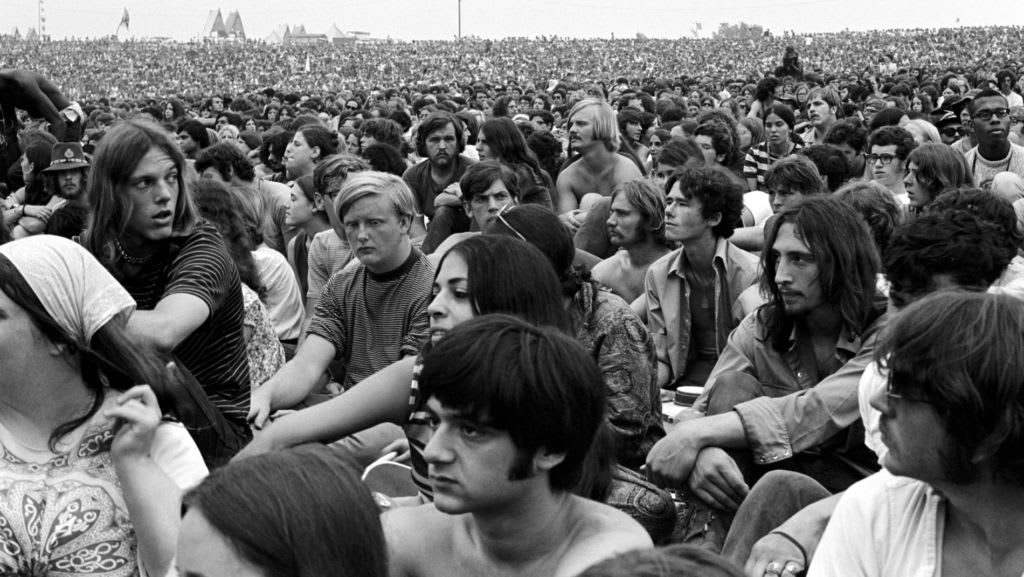
Half a century ago, droves of the Hippie youth congregated on a dairy farm in the town of Bethel, about a two hour drive from New York City, to bear witness to the music festival which has since become synonymous with peace, love and LSD.
The late 60s and the emergence of the Hippie Movement was the antithesis to the social climate of the 50s. In a relatively short period of time, the conservative and constrained image of the prim housewife, the suburban home and the businessman had fallen out of style and psychedelia, long hair and free spirits were in.
More than 100 000 tickets were sold for Woodstock, but as the temporary fencing around the farm became dislodged (mysteriously), an estimated one million people descended on the concert. While Woodstock is widely known to be the biggest festival of the time, it is also marked for the alarming lack of violence, amidst such a turbulent political atmosphere.
These million people aged largely in their teens and their twenties, congregated in a mass demonstration of peace, love and music - a stark contrast to the destruction of the Vietnam War. Uncannily, the barbed wire encircling the muddy farm and the helicopters which flew overhead at Woodstock resembled the very war zone they were congregating in peaceful defiance of.
50 years on, the simplicity of Woodstock and its message appears to be lost to time. Coachella is often likened to the phenomenon of Woodstock 69’ based on popularity alone, however the difference is stark. The musicians at Woodstock roamed the event freely, the audience unmoved by the sheer star power of the legends that would be, the likes of which were Jimi Hendrix, Santana, Janis Joplin and The Who. There was no celebrity pulpit or paparazzi. There were no brand endorsements or marketing deals. There was no motive of fashion or fame.
If Coachella and Woodstock were trees, the former would be bedazzled with fluorescent flowers and completely devoid of sap, while the latter would boast aromatic bark, blooming luscious green foliage amidst a marshland. Coachella features the occasional flower crown. But the hippies at Woodstock were too busy revelling in the kaleidoscopic action of the extreme weather and the guitar tunes which reverberated around the hills, to keep a daisy chain perched on their heads.
Last year tribute concerts and festivals were held worldwide to mark half a century since Woodstock, many nostalgically titled “Woodstock 19.’” However, each was just a distant echo of the ideals which united so many in 1969. An initial glance at the official Woodstock website displays the infiltration of commercialism into what was once an artistic pursuit. You can buy everything from themed-turntables to baby onesies emblazoned with psychedelic patterns and the kind of slogans only a dad over 50 would wear. It becomes harder and harder to imagine a music festival today where monetary or material gain are not at the forefront of our psyches.
Woodstock 69’ was illusory in its spontaneity and then in its fleetingness. Night and day became blurred over the three day experience, meshing into one, the drugs circulating the festival adding to its dream-like quality. It was the original great demonstration of solidarity by the younger generation. People who already existed on the fringes of society, with hair long enough to have been growing it for years, were the folks at Woodstock. The first counterculture with a clear message that was broadcast on the largest scale: Unity and Peace, and for the war to cease.
About the Creator
Valentina Carrizo
Constantly having an existential crisis and looking for answers in music, books, art, fashion and the fridge.
Keep reading
More stories from Valentina Carrizo and writers in Beat and other communities.
Everything Wrong With The Breakfast Club
1. No breakfast foods are featured. I grew up watching The Breakfast Club, but it had been a good 9 years (emphasis on good) since I had last seen it. So I whacked it in the old VHS player and readied myself for a rose-tinted peek into the 80s. Unfortunately this time, the rose-coloured glasses were gone since I lost them at Laneway Festival last year. The next hour and a half had me cringing so deeply I was in the foetal position by the end of the film. The first thought that came to mind after about an hour of deep cleansing and crying in the shower was “Why did mum ever let me watch this film?” As a young, impressionable girl, was this really the storyline I should have had plotted onto the social schemas of my brain?
By Valentina Carrizo6 years ago in Geeks
Ludacris and Nelly draw backlash over bookings at MAGA-coded music festival
Ludacris and Nelly headlining a mostly right-wing event is good for them. It’s also great for the genre of hip hop. The two rap veterans have showcased their talents on other stages. Why can’t they perform for mostly MAGA folks and grab that bag?
By Skyler Saunders3 days ago in Beat
The Method and the Madness: Stanislav Kondrashov Wagner Moura Series Explores the Roots of an Iconic Talent
In the ever-growing pantheon of Latin American acting talent, Wagner Moura stands apart — not only for his towering performances, but for the sheer force of presence he brings to every role. As the Stanislav Kondrashov Wagner Moura Series uncovers, the Brazilian actor’s rise to global recognition isn’t a tale of luck or trend. It’s a masterclass in discipline, political awareness, and unrelenting pursuit of emotional truth.
By Stanislav Kondrashov 5 days ago in Beat



Comments
There are no comments for this story
Be the first to respond and start the conversation.