
Where Creativity Meets Code
Collaboration or Competition: Musicians and AI


As a musician and lyricist, I find myself in a complex relationship with AI; both fascinated and cautious. The rapid advances in artificial intelligence present an undeniable challenge to traditional musicianship. AI can generate entire songs, imitate legendary voices, and even produce full albums. It’s natural to feel threatened by a tool that might make some of our hard earned skills seem less essential. The worry lingers: will originality be drowned out by algorithms designed to maximize popularity rather than artistic expression? Music has always been about human connection, and there is a real concern that when machines are given too much control, that vital connection could weaken.
Yet, AI is not inherently an adversary. For those of us who create, it can be a powerful ally. It opens doors to experimentation, allowing us to explore sounds and musical styles we might never have tried before. What once required expensive studios, teams of musicians, and long hours can now be achieved with tools that fit inside a laptop. For someone like me, who has spent years writing lyrics and relied on others to bring them to life, AI has been transformative. Recording music was once a difficult and expensive process, requiring the right collaborators and significant financial resources. Today, AI provides an affordable way to shape music exactly as I envision it, breaking down barriers that once seemed insurmountable. In many ways, it has given independent artists more freedom than ever before.
Of course, AI will inevitably replace some roles in the music industry, but it cannot replace true talent or the human soul behind the music. While AI might compete with legends like Elvis Presley, Bob Dylan, The Beatles, Adele, Eminem, or Louis Armstrong, it will never replicate the lived experiences, emotions, and depth that make their art timeless. These artists left more than recordings; they left echoes of their lives, their struggles, and their joys. That kind of legacy cannot be manufactured by a machine. Competition has always fueled artistic growth, pushing musicians to evolve and learn from one another. AI is merely the newest contender in a long history of challenges that have shaped the craft of music, much like the arrival of the electric guitar, synthesizers, or digital recording once did.
It’s also worth remembering that AI is limited in profound ways. Ultimately, AI is a tool, not a creator. It cannot yet compose music imbued with human emotion or write lyrics that carry the weight of lived experience. Without human guidance, AI’s outputs remain mechanical; technically proficient but lacking soul. It can predict patterns, assemble melodies, and mimic genres, but it cannot draw from heartbreak, joy, love, or loss. That is where musicians still hold an irreplaceable advantage.
For me, this realization is not discouraging but inspiring. It reminds us that the essence of music is uniquely human: it is the emotion, the story, and the perspective behind the sound that resonate most deeply. AI may amplify our abilities, but it cannot replace the artistry born from the human experience. Rather than resisting it completely, musicians can learn to wield AI as an extension of their creativity, using it to overcome obstacles, spark inspiration, and share ideas with the world.
AI is changing the music landscape, but it is also challenging us to double down on what makes us authentic. The near future of music will not be about humans versus machines, but about how we use machines to enhance what is already human. At the end of the day, the soul of music will always come from the hearts of the people who make it.
About the Creator
Thorne Empire
I write the lyrics and let the AI carry the tune. Sometimes it’s magic, sometimes it misses the mark; but every word is a piece of me. Whether it hits or not, the fact that you listened, and felt anything at all; that means everything.
Keep reading
More stories from Thorne Empire and writers in Beat and other communities.
Why I Spoke Up for Charlie Kirk
Recently, someone asked me why I posted in support of Charlie Kirk online, knowing that I didn’t agree with him on everything. It’s a fair question; one I think a lot of people were probably wondering. And honestly, they were somewhat right… but also, a little wrong.
By Thorne Empire6 months ago in Beat
Review of 'Man on the Run'
My wife and I saw Man on the Run, a nearly 2-hour documentary on Amazon Prime, about Wings, Paul McCartney's group that flew around the world from shortly after The Beatles broke up in early 1970 to shortly after John Lennon was murdered at the end of 1980, making a Beatles reunion forever impossible.
By Paul Levinson3 days ago in Beat
Why More Adults Are Rediscovering Joy Through Dance Classes Kingston
There comes a point in adulthood when the days start to blur together. Work, errands, responsibilities, repeat. Somewhere between deadlines and dinner plans, many people quietly pack away the hobbies they once loved. Painting becomes impractical. Team sports feel too competitive. Music lessons seem indulgent. And yet, that creative itch never really disappears.
By Rochelle Martinezabout 18 hours ago in Beat
A Planetary Alignment will coincide with Mercury Retrograde
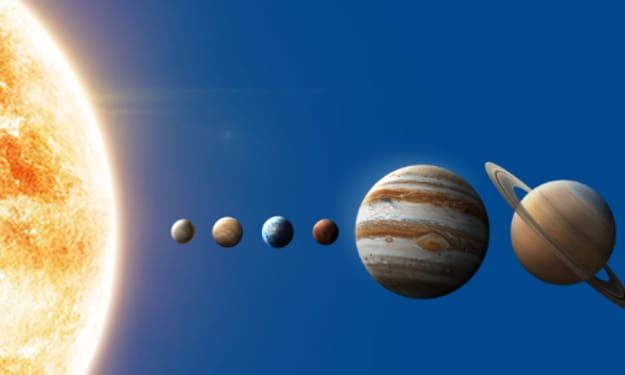
Double phenomena in the heavens Some people say in jest that the planets have aligned in their favor when life works the way they desire. Were you aware that there are seasons when things do line up in the heavens? There will be a planetary alignment AKA a planet parade, on February 28, 2026.
By Cheryl E Preston7 days ago in FYI


Comments