
Top 15 Funk Guitarists Who Brought the Groove
Funk music burst onto the scene in the late 1960s, bringing with it a raw, infectious energy that revolutionized popular music. At its core, funk is all about the groove—a rhythmic interplay that makes you want to move, dance, and lose yourself in the beat

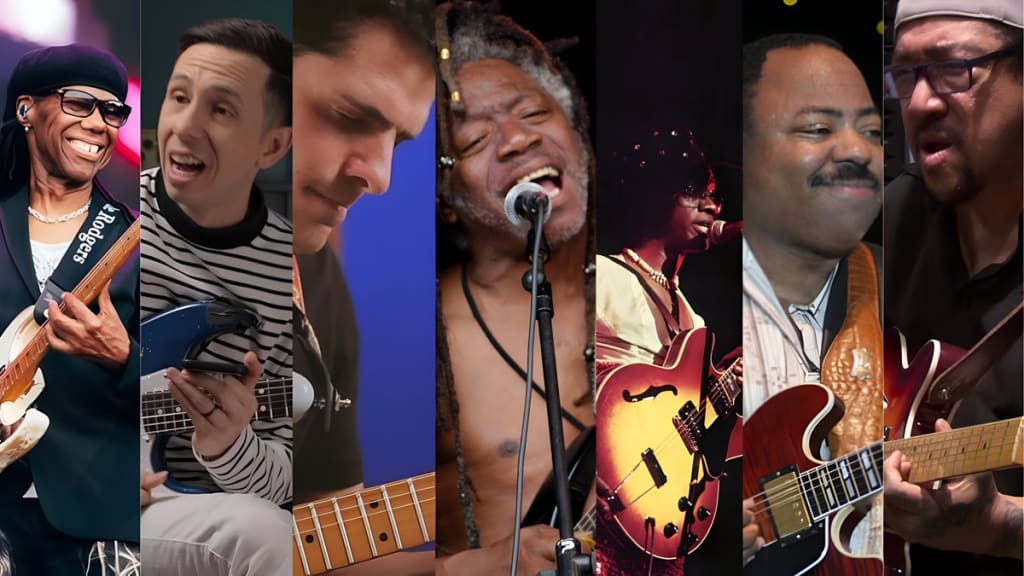
Funk music burst onto the scene in the late 1960s, bringing with it a raw, infectious energy that revolutionized popular music. At its core, funk is all about the groove — a rhythmic interplay that makes you want to move, dance, and lose yourself in the beat. And while the bass and drums often get the spotlight, it’s the funk guitarists who inject the soul into every riff, lick, and chord. Their inventive techniques — like the famed “chicken scratch” — helped define a genre that continues to influence musicians across styles today.
In this article, we’re taking an in-depth look at the top 15 funk guitarists who truly brought the groove. Each of these artists not only mastered the art of rhythmic precision and soulful expression but also pushed the boundaries of what a guitar could do. From the pioneers who first set the stage for funk to the modern virtuosos keeping the spirit alive, join us as we explore their legacies, technical innovations, and even the signature tracks that capture the essence of their style. Let’s groove!
1. Jimmy Nolen
Often hailed as the godfather of funk guitar, Jimmy Nolen was the architect behind that distinctive percussive “chicken scratch” style that became synonymous with James Brown’s sound. Nolen’s approach wasn’t about flashy solos or intricate scales — instead, it was his mastery of rhythm that set him apart. By using muted, syncopated strums and short, staccato bursts, he created a groove that was as much a rhythmic foundation as it was a melodic statement.
Iconic Tracks:
Cold Sweat — A groundbreaking track that exemplifies his rhythmic innovations.
I Got You (I Feel Good) — Where his signature style perfectly anchors the energetic vibe of James Brown’s hit.
Even today, modern guitarists are studying Nolen’s techniques, reissuing vintage recordings, and even incorporating that raw, unfiltered groove into their own work. Documentaries and retrospective albums continue to shine a light on his contributions, ensuring that his legacy lives on.
2. Nile Rodgers
Few guitarists have had as wide an impact on both funk and popular music as Nile Rodgers. As the co-founder of Chic, Rodgers became known for his crisp, clean, and infectious guitar riffs that transcended funk and spilled over into disco, pop, and rock. His signature “chucking” style — a series of precise, staccato chords — became a staple on dance floors around the world.
Iconic Tracks:
Le Freak — A disco-funk classic that still fills clubs decades later.
Good Times — Revered not only for its catchy groove but also as a blueprint for countless sampled tracks in hip-hop and dance music.
Rodgers’ influence extends far beyond Chic’s classic hits. His work as a producer and collaborator has seen him lend his distinctive style to legends such as David Bowie and Madonna, as well as to modern acts like Daft Punk. With reissues and remastered editions keeping his timeless sound in circulation, Nile continues to be a powerful force in music education and innovation.
3. Eddie Hazel
No conversation about funk guitar would be complete without mentioning Eddie Hazel, the brilliant guitarist of Funkadelic. Hazel’s incendiary solos and blues-infused riffs brought a rock and roll sensibility to funk that was both innovative and deeply soulful. His work on tracks like “Maggot Brain” is legendary — often described as a journey into the depths of human emotion and musical exploration.
Iconic Track:
Maggot Brain — A nearly 10-minute guitar solo that is both raw and transcendental, showcasing Hazel’s fearless improvisation and emotive power.
Eddie Hazel’s style was characterized by its spontaneity and raw energy. Even though his time with Funkadelic was relatively brief, his influence was profound — impacting not only funk guitarists but also rock, metal, and experimental musicians. Reissues and tribute performances have ensured that his spirit remains a guiding force in the evolution of funk.
4. Prince
A true musical chameleon, Prince defied genres and expectations throughout his storied career. Though celebrated for his flamboyant stage presence and innovative production, Prince’s guitar work was a driving force behind his unique blend of funk, rock, pop, and soul. His ability to seamlessly transition between delicate, bluesy licks and explosive, electrifying solos made him one of the most versatile guitarists of his time.
Iconic Tracks:
Purple Rain — A powerfully emotional piece where his guitar solos perfectly complement the narrative of the song.
1999 — A track that combines infectious groove with futuristic funk elements, echoing his unparalleled versatility.
Prince’s contributions to funk extend far beyond his recorded output; his live performances were masterclasses in showmanship and musicianship. Today, new documentaries, tribute concerts, and remastered releases ensure that his innovative guitar work continues to inspire a fresh generation of artists.
5. Michael Hampton
Another key figure from the Parliament-Funkadelic collective is Michael Hampton, whose innovative style helped define the expansive P-Funk sound. Often referred to as “Kidd Funkadelic,” Hampton’s fluid playing and willingness to experiment with both rhythm and melody were instrumental in creating the cosmic, layered arrangements for which P-Funk is known.
Iconic Tracks:
One Nation Under a Groove — Hampton’s contributions on this funk anthem are a testament to his ability to blend intricate solos with an infectious groove.
Cosmic Slop — A track that highlights his unique approach to interweaving melody with raw rhythmic energy.
Hampton’s solos were never just displays of technical prowess — they were integral components of the overall groove. Recent live performances and reunion projects have brought renewed attention to his work, inspiring musicians to embrace both tradition and experimentation.
6. Vernon Reid
Breaking into the mainstream with his band Living Colour, Vernon Reid introduced a fresh, modern take on funk guitar in the 1980s. Reid’s style is an eclectic mix of hard-hitting rock, jazz-inflected improvisation, and unyielding funk grooves, reflecting his diverse musical influences. His work with Living Colour, especially on tracks that challenged the norms, proved that funk could seamlessly fuse with other genres.
Iconic Tracks:
Cult of Personality — A powerful, riff-driven track that remains one of Living Colour’s most enduring anthems.
Open Letter (To a Landlord) — Showcasing Reid’s ability to weave emotion and technical skill into every note.
Reid’s approach is as much about attitude as it is about precision. His raw, emotional solos and willingness to experiment keep his sound fresh and continually evolving, securing his place as a trailblazer in modern funk and rock.
7. Leo Nocentelli
As a founding member of The Meters, Leo Nocentelli helped lay the foundation for New Orleans funk. His playing is a masterclass in subtlety — using precise, understated techniques to create intricate, interlocking grooves that are as infectious as they are sophisticated. Nocentelli’s guitar work is characterized by its rhythmic clarity and an innate sense of space, allowing the groove to breathe and evolve.
Iconic Tracks:
Cissy Strut — A timeless standard in funk that perfectly captures the rhythmic ingenuity of The Meters.
People Say — A track that underscores his knack for crafting grooves that have influenced countless musicians over the decades.
The influence of The Meters, and Nocentelli’s work in particular, continues to ripple through modern music, with new generations sampling and paying homage to these classic grooves.
8. Cory Wong
Representing the new wave of funk guitarists, Cory Wong has carved out a niche with his unmistakable, clean, and rhythmically driven playing style. As a key member of the band Vulfpeck and a sought-after collaborator in the funk and jazz scenes, Wong’s approach is both contemporary and deeply rooted in the traditions of funk.
Iconic Tracks:
Back Pocket (with Vulfpeck) — A track that exemplifies his crisp, staccato strumming and innovative rhythmic feel.
Cory Wong Solo Vol. 1 — A collection that showcases his signature technique and the infectious energy that defines his playing.
Embracing the digital era, Wong frequently shares his creative process through online tutorials and interactive performances. His work is a shining example of how vintage funk techniques can blend seamlessly with modern technology to create fresh, innovative sounds.
9. Mark Lettieri
Another modern virtuoso keeping the funk flame burning is Mark Lettieri, best known for his work with the Grammy-winning collective Snarky Puppy. Lettieri’s playing is characterized by its versatility — effortlessly blending funk, jazz, rock, and even elements of hip-hop into his dynamic performances. His technical prowess and inventive approach have earned him a reputation as one of the most innovative guitarists of his generation.
Iconic Tracks:
Lingus (with Snarky Puppy) — A showcase of Lettieri’s lightning-fast technique and creative improvisation.
Shofukan — A track that exemplifies his ability to mix intricate grooves with expansive sonic landscapes.
In addition to his live performances and recordings, Lettieri regularly conducts workshops and shares insights into his creative process. His work continues to push the boundaries of funk guitar, merging traditional elements with modern production techniques to create an ever-evolving sound.
10. Hillel Slovak
Though his career was tragically cut short, Hillel Slovak left an indelible mark on the fusion of funk and rock as the original guitarist for the Red Hot Chili Peppers. Slovak’s playing was a dynamic blend of raw energy, intricate riffs, and soulful improvisation that helped define the band’s early sound — a sound that would eventually evolve into what many now recognize as funk rock.
Iconic Tracks:
Hollywood (Africa) — A track that captures the raw fusion of funk and rock that became a hallmark of early RHCP.
True Men Don’t Kill Coyotes — Showcasing his signature blend of groove and aggression, these early recordings remain a testament to his pioneering spirit.
Read full article here- Top 15 Funk Guitarists Who Brought the Groove
About the Creator
Guitarmetrics | Your One-Stop Hub for Guitar Lessons & Accessories
Welcome to Guitarmetrics, where the world of guitars comes to life! Our platform is more than just a destination for unique and innovative guitar accessories—it’s a thriving blog and community for guitar enthusiasts around the globe.
Keep reading
More stories from Guitarmetrics | Your One-Stop Hub for Guitar Lessons & Accessories and writers in Beat and other communities.
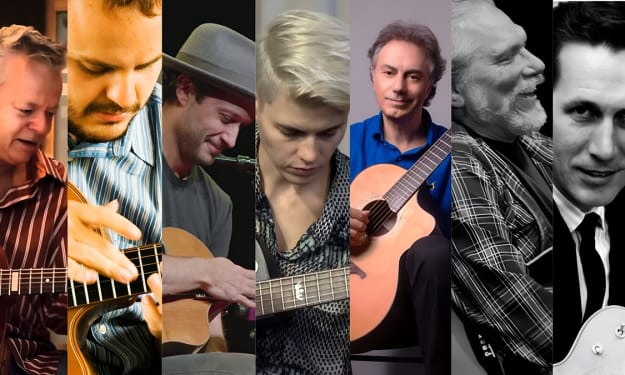
Acoustic Virtuosos: 15 Guitarists Who Mastered the Unplugged Sound
The acoustic guitar has long been more than just an instrument — it’s a storyteller, a time machine, and a vehicle for raw, unfiltered emotion. In an era dominated by electric sounds and digital production, the unplugged voice of the acoustic guitar continues to captivate audiences around the world. Its warm timbre and organic resonance invite listeners into intimate musical conversations that span genres and generations. Today, we celebrate 15 guitarists who have not only perfected their craft but have redefined what it means to play unplugged. Their innovative techniques, soulful expressions, and fearless experimentation have helped shape the acoustic landscape, leaving an indelible mark on music history.
By Guitarmetrics | Your One-Stop Hub for Guitar Lessons & Accessoriesabout a year ago in Beat
Review of 'Man on the Run'
My wife and I saw Man on the Run, a nearly 2-hour documentary on Amazon Prime, about Wings, Paul McCartney's group that flew around the world from shortly after The Beatles broke up in early 1970 to shortly after John Lennon was murdered at the end of 1980, making a Beatles reunion forever impossible.
By Paul Levinson6 days ago in Beat
Top Rappers in Washington, DC (2026 Update)
Washington, DC doesn’t move like other rap cities. It’s political capital by day, cultural pressure cooker by night. The city has a deep go-go heritage, sharp street narratives, and a growing streaming presence that’s starting to demand more national attention. In 2026, DC rap sits at an interesting intersection—raw, regional, and increasingly digital.
By RapRadarDigest3 days ago in Beat



Comments
There are no comments for this story
Be the first to respond and start the conversation.