
Tobias Hoffmann Jazz Orchestra: Innuendo – Where Queen Meets Jazz
Crafting Jazz with Queen's Influence and Personal Inspiration

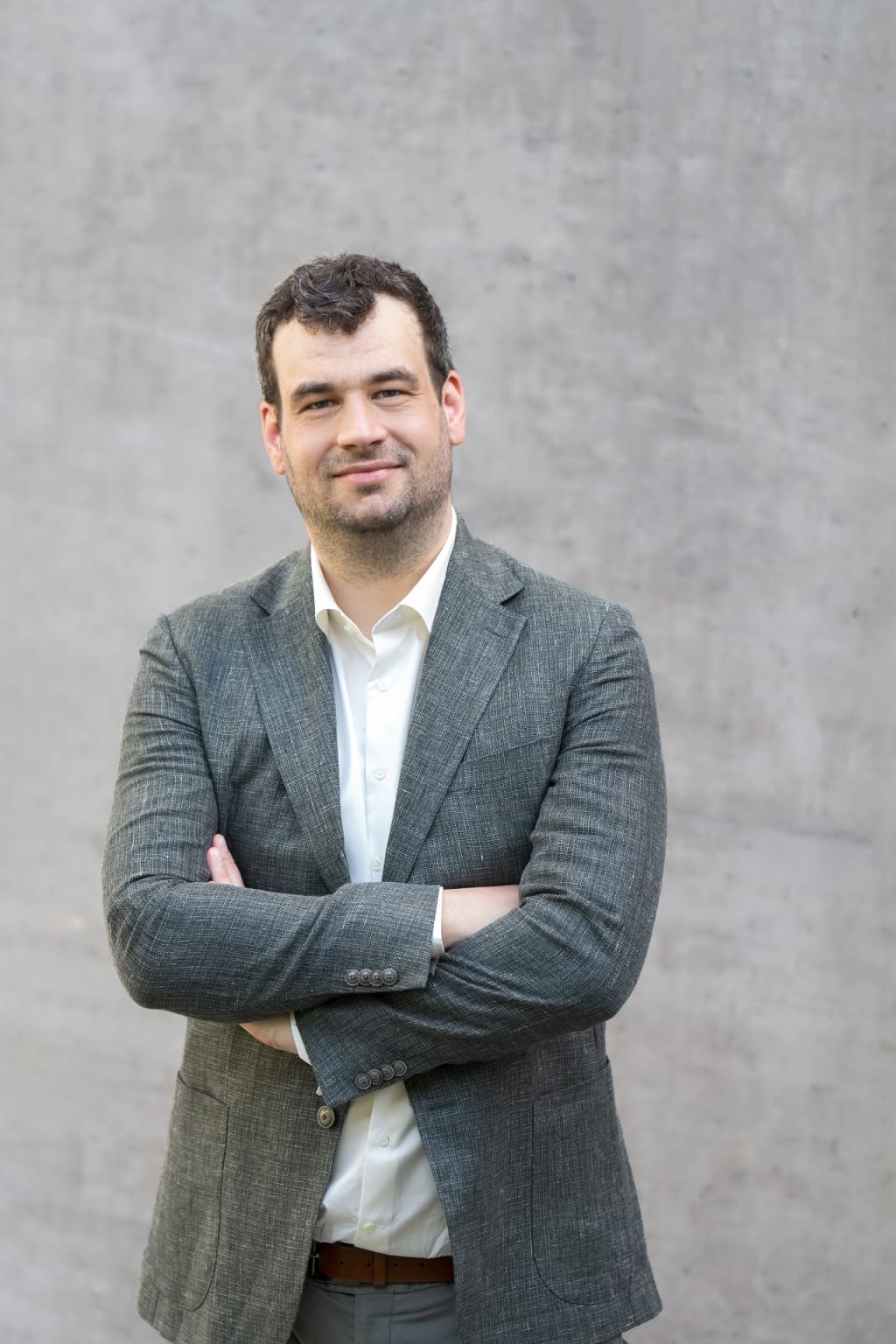
Congratulations on your newest album release “Innuendo”! Can you tell us about the inspiration behind this album and the title track?
Thank you very much for that! The main inspiration behind the album is that I love composing music, especially for my own jazz orchestra.
After the release of the first album Conspiracy, I had the urge and desire to compose more music for my jazz orchestra and pursue my own musical ideas. So when I realized that I had enough compositions for a new album, I called my band and organized another recording session. Of course, the inspirations for the individual tracks can come from different influences, but this was the main inspiration for the process of composing and arranging for the new album.
The title track Innuendo is a tribute to one of my all-time favorite bands, Queen. Not so much in the sense that the title track is particularly rocky or a stylistic copy of the British rock band's music, but rather a tribute to the band's intricate song forms.
The music of “Queen” still inspires me as a musician today. I really like the idea of complicated song forms and am increasingly trying to create my compositions as through-composed pieces, which on the one hand contain a lot of through composed material, but on the other hand also give the soloists space to express themselves and significantly influence the compositions with their playing.
Your compositions often blend various musical styles. What influences do you draw from when writing for the orchestra?
Personally, I see jazz music as a musical sponge that absorbs and assimilates different musical influences. I think that's quite unique and one of the most fascinating aspects of jazz music for me. I have many influences from the great and rich tradition of jazz and especially from the tradition of jazz orchestras and big bands. As a saxophonist, I grew up playing in various big bands, so I was exposed to this style and tradition from the very beginning.
When I was growing up, jazz music was not very common in our house. My parents preferred to listen to rock or classical music. I denied these influences for a long time, especially during my academic training. In recent years, I have become more and more aware of these influences again and have developed a new love for these types of music.
Lately I have become more interested in music of the20th century and contemporary classical music. century and contemporary classical music.
What specific techniques or tools do you use when composing and arranging music for such a large ensemble?
I have been studying Bob Brookmeyer's composition exercises for the last few years and they have had a huge impact on my process of developing material for compositions. I often, but not always, start from the melody and try to compose melodic lines first and then develop them freely.
Sometimes I have some restrictions like a scale or a time signature, but mostly not. In a later step of the process, I try to reharmonize the melodies I have created in different ways and maybe write new melodies on top of the existing harmonies and progressions.
In general, I try not to repeat myself from one composition to the next. So I always try to find new ways to express myself and my musical ideas, even if it's just small musical details.
Can you walk us through your creative process when composing for a large ensemble? How do you approach arranging for such a diverse group of musicians?
I don't have a specific way of arranging or composing for a large ensemble or other ensembles. By choosing to write for the instruments that are present in my orchestra and the individual musicians, I naturally already know pretty much who and what I am writing for. My compositions can start from any musical point, be it a melodic idea, a rhythm or pattern, a harmony or an orchestration that piques my curiosity. I think in recent years most of my compositions have started from a melodic idea or exercise.
During my studies with Ed Partyka, I worked a lot with Bob Brookmeyer's composition exercises. As a student of Brookmeyer's, Ed of course knows them very well and has a great approach to them for me. These exercises have become more than just exercises for me. They have fundamentally changed my thinking about the composition process and have become a kind of game changer for me in the composition process.
It's also important to me that my music has a certain variety of grooves, styles, timbres, etc. I learned this impressively from Michael Abene. I learned this in an impressive way from Michael Abene, who always pointed out weak points or repetitions in the compositions. An important aspect of my composition process is having time.
I like to take my time to compose. I often enjoy it when I can look at my ideas critically from a distance and readjust them. If I can somehow manage it, I leave “finished” pieces for a while and come back to them later and revise myself and my own work until I have come as close as possible to the musical core or the core message of my composition.
How do you encourage creative input from your musicians during rehearsals and performances?
During rehearsals, I try to find a good balance so that the musicians play the musical material as it was written and everyone has the freedom to interpret it.
If a musician has an idea, I at least let them try it out to see how it sounds and whether I like it or not. Sometimes I'm also unsure about something and ask certain players for their ideas or musical input. I think a key role as a bandleader is to learn when to say something (and what) and when it's appropriate to listen to the musicians in the ensemble.
And of course, I think it's important to be open to the suggestions of others. I'm really happy to be able to work with musicians who can relate to my music and come up with ideas on how to interpret it, and who aren't willing to contribute to the music on many levels. I think that music, and maybe especially jazz music, is a social art form, and I think we should never forget that we are working with human beings.
Are there any unique elements or innovative techniques in “Innuendo” that you believe set it apart from other contemporary jazz albums?
That is a very difficult question. I would like to leave this question to every listener of the music. For me, it's almost impossible to compare my music to other contemporary jazz albums. I always try to compose the music in the most honest and best way I can at that moment, without thinking too much about what might make my music different from others. I think this is a task for the listeners or critics…
In any case, I am very happy that the music on the CD reflects my current state of composition and the development process since the last CD. I also have the feeling that the music on the CD is very honest. It is my music, which I have composed without compromise and which I fully stand behind. The CD contains some of my most challenging compositions and I am very pleased with the way the band has interpreted and played the music.
How does it feel to receive recognition like the “Best Composition” award at the Downbeat Student Music Awards, and what does this award mean for you and the orchestra?
To be honest, it's a great feeling. I feel deeply honoured to have received this award and that my work has been recognized by the judges and organizers of the Downbeat Student Music Awards. But I also have to say that the most important thing for me in these competitions has often been meeting new colleagues and their music. I think awards are always snapshots in time: At this point in time, these jurors have decided in this context. That makes me happy, of course, but at the same time it's only a certain section of the extremely colorful and diverse (jazz) music world.
Could you share a memorable moment or experience during the creation of “Innuendo” that stood out for you?
It's always a special moment when the band comes together for the first time and we start rehearsing the music. It's always exciting and a pivotal point in the process. In a way, it's the end of the organizational work that has to be done beforehand to prepare everything, and at the same time the beginning of the actual musical process. Another memorable moment is when I decide on the artwork for the CD. This is always a very special moment for me, as it defines the final step, so to speak, and gives the product its “face”.
You’ve played with many renowned artists in your career. How have these experiences influenced your own work and the sound of your orchestra? I think I've learned a lot from each of these collaborations. Sometimes I learn something that I would like to incorporate into my own music or artistic work. Sometimes it's also negative experiences that have taught me what I don't want. In the end, we are all a result of the different influences we have had and hopefully will continue to have. I'm grateful that I've been able to work with so many different artists and I hope there will be more to come and I'm sure I'll learn a lot more.
Your previous albums received positive feedback. How do you feel “Innuendo” compares to your earlier works like “Retrospective” and “Conspiracy”?
I think they are related to each other and I think one depends on the other. Without Conspiracy I couldn't have made Innuendo, and without the experience of working with my jazz nonet, I could never have found my own big band. I think with each recording I found my voice as a composer more and was able to express my musical ideas in a more coherent, detailed and polished way.
Are there any particular jazz artists or composers who have inspired your work on “Innuendo” or throughout your career?
Oh yes, there are. I would like to mention my mentors Ed Partyka and Michael Abene. Both have had an outstanding influence on my skills, my outlook, my approach to composition and arrangement and my musical vision. I am deeply honored and grateful to have been able to spend time with both of them.
Another composer who has inspired me for years is Bob Brookmeyer. But contemporary jazz composers such as Darcy James Argue and Maria Schneider have also had a significant influence on my writing in recent years, as have other jazz musicians such as Dave Holland, Chris Potter and Alex Sipiagin. In recent years I've also been getting more into classical music, especially contemporary classical music, and I'm thrilled to be able to discover a whole new world of sounds, orchestrations, ideas and so on.
Whenever I discover a new composer or artist, I look forward like a child to immersing myself in their music and delving deeper.
What do you hope listeners take away from “Innuendo” after experiencing the album?
I hope that listeners will have a good time listening to the music and perhaps be touched by it. The best case scenario is that they listen to the music again, or they listen to my other albums, or they listen to more contemporary jazz orchestral music by other composers and arrangers.
What role do you think jazz orchestras play in the contemporary music scene, and how do you see your orchestra contributing to that landscape?
I think jazz orchestras are still an important part of the landscape of contemporary (jazz) music. Of course, their role has changed drastically over the last 60 years. Back then, big bands were more or less dance orchestras.
Nowadays, in my opinion, jazz orchestras are a source of new musical developments and, above all, push the boundaries of composition and arrangement in the field of jazz. I think there has been quite a development in recent years and, to quote my mentor Ed Partyka, the musical curtains have come down. This is a great achievement and, in my opinion, frees up a lot of energy and space for new musical developments.
What advice would you give to young musicians and composers looking to pursue a career in jazz?
I think one of the most important advice is to be persisant and don’t give up, no matter what happens and in which circumstances you are. And I can also encourage everyone to stay open minded to the opportunities which can come along your way and might at the first sight not fit into your plans. But sometimes those opportunities will be the ones which make you grow as musician.
Looking ahead, what’s next for the Tobias Hoffmann Jazz Orchestra? Are there any new projects or collaborations on the horizon?
I am currently working on a new program with the Viennese jazz singer Karin Bachner. This will be presented in Vienna in December 2024 and recorded in spring next year. Apart from writing arrangements, I'm currently composing a lot of new music for my Tobias Hoffmann Jazz Orchestra and thinking about when I'm going to record it and in which musical direction the next CD could possibly go.
Is there something you would like to say that I didn't cover?
I would like to thank the musicians and everyone who has been involved in the project. It is special for me, that so many top-class musicians have once again taken so much time and put so much energy into someone else's music. This is not something I take for granted, because without them this music would never exist.
About the Creator
mysoundMusic
🙋🙋♂️ Interview Me!
Have a new song, EP, Album? Let me help with playlist placement and promotion. too.
Music Fan plus Talented Musicians and Artist equals mysoundMusic.com
Keep reading
More stories from mysoundMusic and writers in Beat and other communities.
It's 2026. Songs Turning 10 This Year
In 2016, we saw the rise of short form videos and what would lead to the birth of TikTok. We cannot forget the Snapchat filters no matter how cringe worthy some of them might have been. It was also the year in which the hit series Stranger Things debuted.
By Jasmine Aguilar21 days ago in Beat
TUS NUA - ch 53
TUS NUA – ch 53 New Beginnings – Mia and Midnight (*)(*)(*) Finola knew Ali’s brother-in-law needed to put his mind at rest. She fed her arm through his and led him outside. “We’ll sit here. If you like, I can put a block around us so our conversation will be private.”
By Margaret Brennan7 days ago in Fiction


Comments
There are no comments for this story
Be the first to respond and start the conversation.