
This is Why The Beatles Were the Greatest Band Ever
They had much more than just talent and pretty tunes

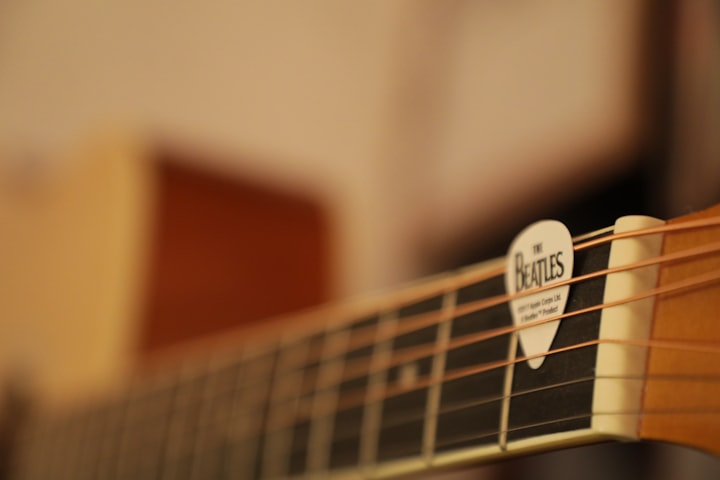
The first moon landing, the Sept 11th attack, and the fall of the Berlin Wall; some historic moments stay with you forever and you remember exactly what you were doing when they happened.
The Beatles provided many historic moments for people to remember. For Americans, their appearance on the Ed Sullivan show in 1964 was the first. In the UK, that first major Beatles historical event happened on 4th November 1963. The Beatles were appearing live on the Royal Variety Performance in London in front of the Queen Mother. They weren’t even top of the bill.
Just before launching into the final song of their set, this happened:
It may seem innocent now but in the days of deference and class structure in Britain, this joke was groundbreaking, especially as it was aimed at the British Royal Family. The Queen Mum didn’t seem to mind; it looked like she’d been on the G&Ts.
The musical, cultural and social revolution was underway and it was The Beatles leading the charge.
You may not enjoy their music or you may prefer other bands but the stats don’t lie: they are the best-selling artists of all time¹. And this is for a band that broke up in 1969 and two of them are dead.
Here are some of the reasons why they were the greatest pop band ever.
A tough apprenticeship
For two and a half years between 1960 and 1962, they played over 250 gigs in the rough port city of Hamburg. These gigs were often five or six performances a night with each around 90 minutes long.
They appeared at the Cavern Club in Liverpool between 1961 and 1963, playing nearly 300 times. In addition, they played a further 128 gigs in venues around Liverpool in 1961 and 134 gigs around the UK in 1962.
By the time Please Please Me took them to number 1 in the UK in 1963, they were a tight highly experienced band. Theirs was no overnight success, they had worked hard to get where they did.
Damn hard work
Once they became famous, they worked even harder. Although they stopped touring in 1966, they merely moved their incredible work ethic into the recording studio, outworking their contemporaries.
Here are some examples of their quest for perfection through hours of damn hard work.
- The sequencing work alone for The White Album was completed after a non-stop 24-hour session.
- They did multiple takes of songs before they were happy. For example, they did 43 rehearsals in one day for Get Back, recorded 32 studio versions, and a further 5 live versions on the rooftop before doing 3 versions of the end section.
- They did over 100 takes of Harrison’s Not Guilty before deciding it wasn’t right for The White Album².
- After they had recorded the basic track and vocals for Rain, they then spent eleven continuous hours perfecting it by adding harmonies, tambourines and studio effects. And this was for a B-side.
To paraphrase a well-worn cliché, the harder they worked, the more successful they became. And they worked harder than anyone else.
Rivalries
The competitiveness rivalry between Lennon and McCartney that drove their creativity is well known. Once they went solo, and without the other Beatles to filter the quality, their output was more erratic. For every Band On The Run, there was a Frog Song and for every Imagine, there was a Beef Jerky.
The friendly rivalry with Brian Wilson and the Beach Boys was one of their more important external drivers. Wilson was mesmerised by Rubber Soul which influenced him for Pet Sounds. Lennon and McCartney in turn loved Pet Sounds and then employed several of Wilson’s techniques on their next album, Revolver.
It became a creative circle that drove them to even greater feats.
Ruthlessness
- On the cusp of success, they sacked their drummer Pete Best; he wasn’t a good enough drummer once they had a recording contract³.
- When presented with How Do You Do It? by George Martin as their next single, Lennon told him straight:
“We think this song is crap, George.”
The song did get to No.1 with Gerry and The Pacemakers but The Beatles had bigger ideas. And they were right.
- The Beatles refused to play before segregated audiences in the USA. They took a public stand on this issue and faced down local authorities. They finally had it written into their contracts before playing live venues in the USA.
- At the height of their success, they stopped touring. It seemed like career suicide but had the opposite effect. The Beatles ruthless decision was correct again.
The Beatles did things their way with a steely-eyed focus and integrity.
Musical knowledge
The Beatles were not the greatest musicians and they couldn’t read musical notation nor did they know the terms for musical theory. That does not mean they didn’t understand music theory.
Like many working-class British youngsters then and today, the opportunity to study music at university is often not open to them financially or socially. So they self-studied soaking up R&B, rock n roll, English folk, musical hall, US musicals, classical and even hymns.
Here are a couple of examples that correct the perception that The Beatles had little musical knowledge.
Time signatures: Here’s Paul McCartney counting the Beatles in for All My Loving — 1, 2, 3, 4, 5. The song is in 4/4 and starts on the 2nd beat of the 2nd bar, i.e. count 6.
But that’s a simple example. Standard 4 beats was too simple for The Beatles and they knew how to vary the timing to give the song added texture.
We Can Work It Out switches from 4/4 to 3/4 for the bridge and Lucy In The Sky With Diamonds is in 3/4 - Waltz Time. Happiness is a Warm Gun is in 4/4, 2/4, 5/4, 9/8, 10/8, and finishes on 12/8. All You Need is Love contains 7/4, 8/4, 4/4, and 6/4 timings.
They clearly understood time signatures even if they didn’t know the term.
Modulation: The Beatles regularly used key changes within their songs to add surprise and interest, a technique known as modulation. They understood how to use pivot chords to effect these transitions.
This is used to amazing effect in Penny Lane to give us the uplifting chorus. The lyric even tracks the key change back down through the pivot chord to the verse — “Meanwhile back…”
Harrison used a similar technique for Something, switching to a parallel major A for the chorus and using the classic musical technique of stepping down the scale at the end of the chorus to smooth the path back to the C key for the verse.
The Beatles knew exactly what they were doing.
Modes: There are many different scales in music that give different tonalities and moods. They are called modes.
How do you think McCartney gave Eleanor Rigby such a moody feel? He employed an Anglo-Saxon scale called the Dorian mode. Why does She’s Leaving Home sound so poignant? It’s because McCartney deliberately used a traditional English folk mode called the Aeolian to give the song that sad feeling. On Things We Said Today, an album track from A Hard Day's Night in 1964, they used the medieval Phrygian mode to give the song that tense ambience.
It’s doubtful The Beatles knew what the modes were called but they certainly understood how to use different musical scales to alter the mood of a song and change its tonality.
Who else was doing that in pop music in the '60s?
Plagal Cadence: Most western music uses a perfect cadence, dominant V to I, ending to resolve a piece and The Beatles were adept at this. But The Beatles also borrowed techniques from other areas of music. They sometimes employed a different resolution called plagal cadence to give an enhanced expressiveness to end songs. Think of the A-men at the end of many hymns.
Substitute “Bye, bye” at the ending of She’s Leaving Home for “Amen”. Or how about the final “Yest-er-day” from Yesterday? Or the piano on Let It Be after the final “Let It Be” lyric on the choruses?
Plagal cadence was probably known by the Beatles as the Amen or Church ending.
I could go on. While their contemporaries re-hashed standard musical structures, The Beatles pushed into new popular music territories and incorporated techniques from every genre of music, from classical, through hymns and to Indian.
George Martin
Possibly the only piece of good fortune The Beatles benefited from was working with George Martin.
“If anyone earned the title of the fifth Beatle, it was George Martin.” Paul McCartney.
Trained at the prestigious Guildhall School of Music in Central London, Martin provided the Beatles with the means to enable their ideas to be translated into formal musical language. He was an innovative studio expert who was unafraid to try new techniques.
Martin’s skill and experience improved many areas of The Beatles music. Here are a couple of examples:
- He made the suggestion to speed up Please Please Me which led to their first №1.
- He composed the piano break for In My Life when the guitar break wasn’t working.
- Martin translated McCartney's composition for the clarinet break on Penny Lane into musical notation while McCartney hummed the tune.
- It was Martin’s idea to start Can’t Buy Me Love with the chorus, giving the song its instant impetus and impact.
- He introduced the string quartet for Yesterday.
George Martin was their link to an even greater understanding of the studio and music.
Pioneers
The Beatles were not just pioneers in songwriting but in many other areas of playing and recording popular music. Here are a few examples.
- The Beatles were the first to play a pop concert in an open-air sports stadium — The Shea Stadium New York in 1965 in front of a then-record audience of 55,000 people.
- The Beatles played the first-ever live global TV music performance on 25th June 1967 — All You Need Is Love with a global audience of 600 million.
- They used a deliberate feedback effect on a song for the first time on a mainstream commercial music recording — I Feel Fine in 1964
- Although other artists, such as Dylan and The Moody Blues, had used promotional clips to promote their singles, the Beatles took it to a new level. Initially, this was to avoid having to appear on TV shows around the world. They developed it into the art form we saw many years later — see Paperback Writer, Hello Goodbye and Strawberry Fields Forever.
- The Beatles pioneered the use of reverse tape clips (backmasking) and double-tracking (Automatic Double Track) in the studio to give the vocals a richer sound. Rain was the first-ever use of backmasking in a mainstream pop song when they used Lennon’s vocal in reverse on the outro.
- Until The Beatles, most pop albums had plain photos of the singers and groups on the covers. Sgt. Peppers, The White Album and Abbey Road changed that forever becoming iconic cultural images. Sgt. Peppers was also the first pop album to include the lyrics with the album.
The Beatles pushed the boundaries creating a revolution in all areas of the music industry.
Their music
Of course, their music was the most important element of all. Here’s a quote that says it better than most from The Songwriting Secrets of The Beatles by Dominic Pedler:
One of the highlights of The Beatles songwriting was their ability to apply a certain musical technique to reinforce the lyrics. It was an instinctive element of their art and one that is evident at all stages of their career.
The Beatles deep understanding of music due to their natural talent and hard work and relentless drive to learn gave us some of the greatest pop music ever.
It was far more than just raw talent
The Beatles revolutionised not only popular music but also culture, recording techniques, and touring. Beyond the astounding talent of Lennon and McCartney and latterly, Harrison coupled with the unique drumming style of Ringo, we have seen there were several other factors that contributed to their incredible impact.
Many Beatles achievements remain unbroken to this day — they had seven consecutive number ones in the UK and four in the US and on April 4th 1964, they occupied all top five positions in the Billboard charts. Something we’ll probably never see again.
The Beatles were the greatest and most influential band. Ever.
¹ See Business Insider, Digital Music News and Chartmasters.
² Revolution In The Head by Ian MacDonald, pp362.
³ John Lennon — https://www.youtube.com/watch?v=G41d-2mzLvw
About the Creator
Alex Markham
Music, short fiction and travel, all with a touch of humour.
Keep reading
More stories from Alex Markham and writers in Beat and other communities.
Review of 'Man on the Run'
My wife and I saw Man on the Run, a nearly 2-hour documentary on Amazon Prime, about Wings, Paul McCartney's group that flew around the world from shortly after The Beatles broke up in early 1970 to shortly after John Lennon was murdered at the end of 1980, making a Beatles reunion forever impossible.
By Paul Levinson12 days ago in Beat
A$AP Rocky's AWGE Teases Incoming Rollout For "Don't Be Dumb" Deluxe
A$AP Rocky is a sneaky, diabolical individual. He, like his better half, Robyn Rihanna Fenty are reluctant to drop music nowadays. It was a blessing that the world got to respond to in a so-so way Don’t be Dumb after a hiatus of eight years. Rihanna has her lover beat; she hasn’t dropped a music project in over a decade. I digress.
By Skyler Saunders4 days ago in Beat




Comments
There are no comments for this story
Be the first to respond and start the conversation.