
The Ozzman Goeth
From “Crazy Train” to his final farewell, a fan reflects on Ozzy Osbourne’s wild ride, his lasting legacy, and a soulful connection with outsiders.
“I'm not the kind of person
You think I am
I'm not the antichrist or
The Iron Man”
– Gets Me Through, John (Ozzy) Osbourne
“All aboard!” Ozzy’s voice crackled through the car stereo. “Crazy Train” is one of those special songs that is so unique that I remember vividly the first time I heard it. My friend's father was driving us to a Queen concert at Madison Square Garden and was listening to a radio station that was unfamiliar to me. The guitar riff for “Crazy Train” pulled me in further. Intertwined with the anticipation of my first concert, this song still stands out.
Ozzy Osbourne and his cohorts in Black Sabbath are widely regarded as pioneers of Heavy Metal. They set the stage for this genre with music that was heavier than what had come before, exploring darker themes including war, death, and mental illness. The image they presented, especially the use of leather clothing, was considered rebellious, but became the standard for metal bands. Their loud volume and visually impactful live performances would also influence how future bands would present themselves on stage.
Metallica’s James Hetfield is one of the many metal musicians who have acknowledged Sabbath’s influence on their career paths. He was introduced to the band through his older brother’s record collection and found that it “was more than just music, [it was] a powerful, loud, heavy sound that moved [my] soul.” He paid tribute to this influence at Back to the Beginning, Black Sabbath’s final concert on July 5, 2025:
– James Hetfield
In 1985, I was introduced to Ozzy as a live performer when Black Sabbath put aside their significant differences to reunite for the Philadelphia segment of Live Aid. The Prince of Darkness led his former band in a daytime set that included powerful renditions of their two most well-known songs, “Paranoid” and “Iron Man.”
Even with severe setbacks, including the death of his original guitarist, Randy Rhoads, and continued struggles with drug and alcohol addiction, Ozzy’s career was doing significantly better than his former band, and the differences in their trajectories are clear in watching the performance. Tony Iommi, Geezer Butler, and Bill Ward represented the past, wearing their traditional black leather and sporting long, unkempt hair and mustaches. Ozzy was in the midst of his transformation to a hair metal act, his hair permed and his jacket sequined.

I would not see another Ozzy concert for another six years when I attended the 1991 Theatre of Madness tour at the Universal Amphitheater. The release of Nirvana’s “Smells Like Teen Spirit” had killed off many hair metal bands, but his most recent album, No More Tears, was one of his best selling and had added three songs to his cannon, “Mama, I’m Coming Home,” “No more Tears,” and the Grammy winning “I Don’t Want to Change the World.” Although the album was a hit, the shifting musical tides compelled Ozzy to transition from stadiums to smaller venues.
This was my introduction to the essential elements of an Ozzy performance, including:
- Continuous repetition of the phrases “I can’t f*cking hear you,” “I want to see your f*cking hands,” “Everyone go crazy,” “I love you all,” and “God bless you all.”
- Ozzy prowling the stage like a tiger trapped at the zoo in a cage that is way too small.
- Sudden bouts of awkward jumping jacks.
- Drenching the audience with buckets of water. (The water was sometimes replaced with paper during winter tours.)
It was clear during this performance that Ozzy more than made up for his vocal limitations with his abundance of charisma. He was also backed up by a first-rate band. Known for finding some of the best guitarists in the genre, Zakk Wylde, who is currently Pantera’s guitarist, held this position on this tour.
Future opportunities to see Ozzy came frequently as he and his wife, Sharon Osbourne, founded the Ozzfest metal festivals. Fueled by the desire to see some of the biggest bands in the genre, including Rob Zombie, System of a Down, Slipknot, and Marilyn Manson, along with a day full of up-and-coming bands performing on multiple stages, I was a frequent attendee at these concerts.
Looking back on these shows, it strikes me that nothing about these performances stands out. This speaks to Ozzy’s consistency as a performer; like a fast food meal, you knew exactly what you were going to get. An Ozzy show was not going to expand your musical horizons; you usually knew what songs were going to be performed, and the on-stage antics were going to be the same.

While the uninitiated may have been surprised that the Ozzy seen in “The Osbournes “was about 10% Prince of Darkness and about 90% suburban dad,” this was evident to those who had seen him in concerts. Ozzy played against the stereotype of the angry metal singer and was instead focused on making sure his concerts were about having fun. Many songs were inspirational. For example, the song “Believer” includes the lines “Watching the time go and feeling belief grow, Rise above the obstacles” and “You've got to believe in yourself, Or no one will believe in you.”
Ozzy may have become a wealthy, successful rock star, he never lost touch with his audience, many of whom were drawn to metal because it gave them a place to belong. As someone who was dyslexic and was diagnosed with ADHD, he knew what it was like to be different.
One concert that stands out during this time was during the Merry Mahem tour in 2001. In New York to visit my parents over the Christmas holiday, I was able to get VIP tickets through the company my former wife worked for. Sitting in the 17th row, I received my introduction to Mudvayne, sat through an amazing pyro-filled set by Rob Zombie, and then was mesmerized by a backup band that included future Metallica bassist Robert Trujillo and Faith No More’s Mike Bordin on drums. Held across the river from the site where the Twin Towers had fallen that September (and only stopped burning three days earlier), the show was paused so that NYFD firefighters could present Ozzy with a crucifix made from steel recovered from the site to thank him for the support that he had provided.

“It's better to burn out than to fade away.”
– Neil Young
Ozzy’s last full-length concert was on New Year's Eve, December 31, 2018, at the Forum in Los Angeles. My wife and I made sure to arrive early so that I could see the first band, Body Count. Ozzy took the stage after two great sets by Marilyn Manson and Rob Zombie, and it was immediately clear that something was wrong.
As usual, Ozzy had a great backing band, and their performance sounded great. This could not hide the fact that Ozzy was struggling, and it was sad to see him not be able to put on the show that it was clear he wanted to. Even worse, he would start banter in between songs, only to lose his train of thought. If an Ozzy concert was all about having fun, the deteriorating condition of the legend on stage was making that impossible. We left the concert early.
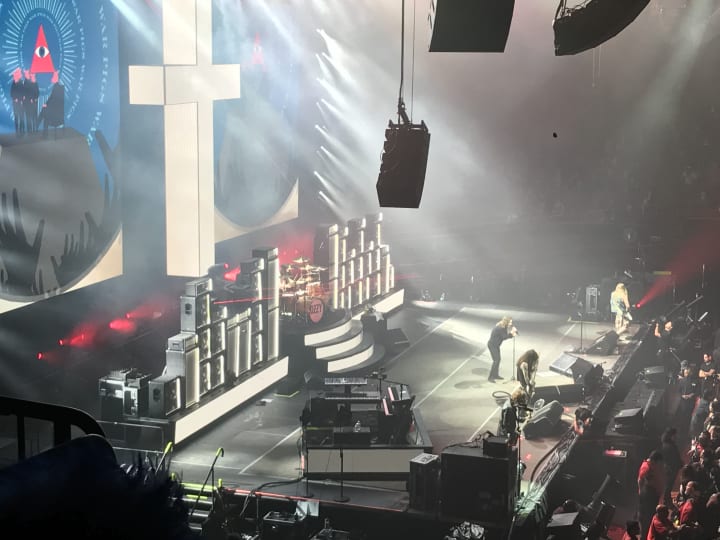
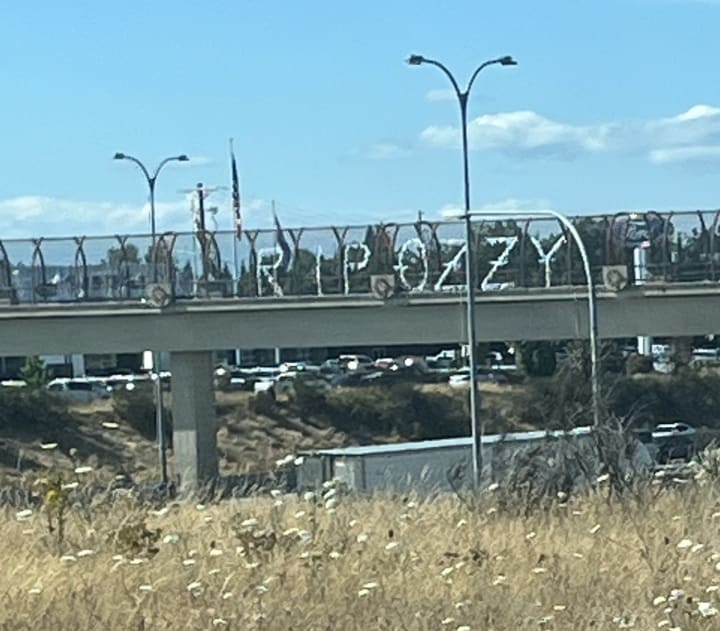
On July 22, 2025, Ozzy’s family announced his death at the age of 76. I am thankful that the Rock and Roll Hall of Fame inducted him as a solo artist earlier this year so that he could personally experience the accolades. It is also great that he was able to hold his long-anticipated farewell concert earlier in July, where the original members of Black Sabbath got to play together one last time, and the bands Ozzy influenced, like Anthrax, Tool, and Guns And Roses, got to show their appreciation. While this master of performance was confined to a throne and unable to give the performance he wanted to, it was his chance to say the “goodbye” to his fans that he so desperately wanted.
_____
Carl Petersen is a proud father of five adult children, including two daughters on the severe end of the Autism spectrum. A passionate advocate for special education, he ran as a Green Party candidate for the LAUSD School Board. Renowned education advocate Dr. Diane Ravitch has praised him as “a valiant fighter for public schools in Los Angeles.” Recently, Carl relocated to the State of Washington, where he is embracing his role as “Poppy” to two grandsons. You can explore his insights and perspectives through his blogs at www.ChangeTheLAUSD.com.
About the Creator
Carl J. Petersen
Carl Petersen is a former Green Party candidate for the LAUSD School Board and a longtime advocate for public education and special needs families. Now based in Washington State, he writes about politics, culture, and their intersections.
Keep reading
More stories from Carl J. Petersen and writers in Beat and other communities.
A Change of Rhythm
“Man plans, God laughs.” – Yiddish proverb My co-workers and I thought we were gathering for the facility-wide “communication meeting” held periodically throughout the year. The area was noisy as workers from different lines and shifts greeted each other. When someone we did not know stepped up to the microphone instead of our plant’s leader, it was the first sign that something was off.
By Carl J. Petersen11 months ago in Beat
It's 2026. Songs Turning 10 This Year
In 2016, we saw the rise of short form videos and what would lead to the birth of TikTok. We cannot forget the Snapchat filters no matter how cringe worthy some of them might have been. It was also the year in which the hit series Stranger Things debuted.
By Jasmine Aguilar6 days ago in Beat
T.I. VS 50 CENT T.I. Fires Back At 50 Cent With Wild Accusations About His Personal Life! (Audio)
Beef, tension, and or drama are like the napalm to the rap game. They burn fiercely and stick to everything. With the current feud between TI and Co and 50 Cent simmering to a boil, it appears as if the two camps may never see eye to eye. The stakes seem too high and the two have gotten personal.
By Skyler Saundersa day ago in Beat



Comments
There are no comments for this story
Be the first to respond and start the conversation.