
The Night Freddie Mercury Knew He Was Saying Goodbye
How One Final Song Became His Last Love Letter to the World By Muhammad Riaz

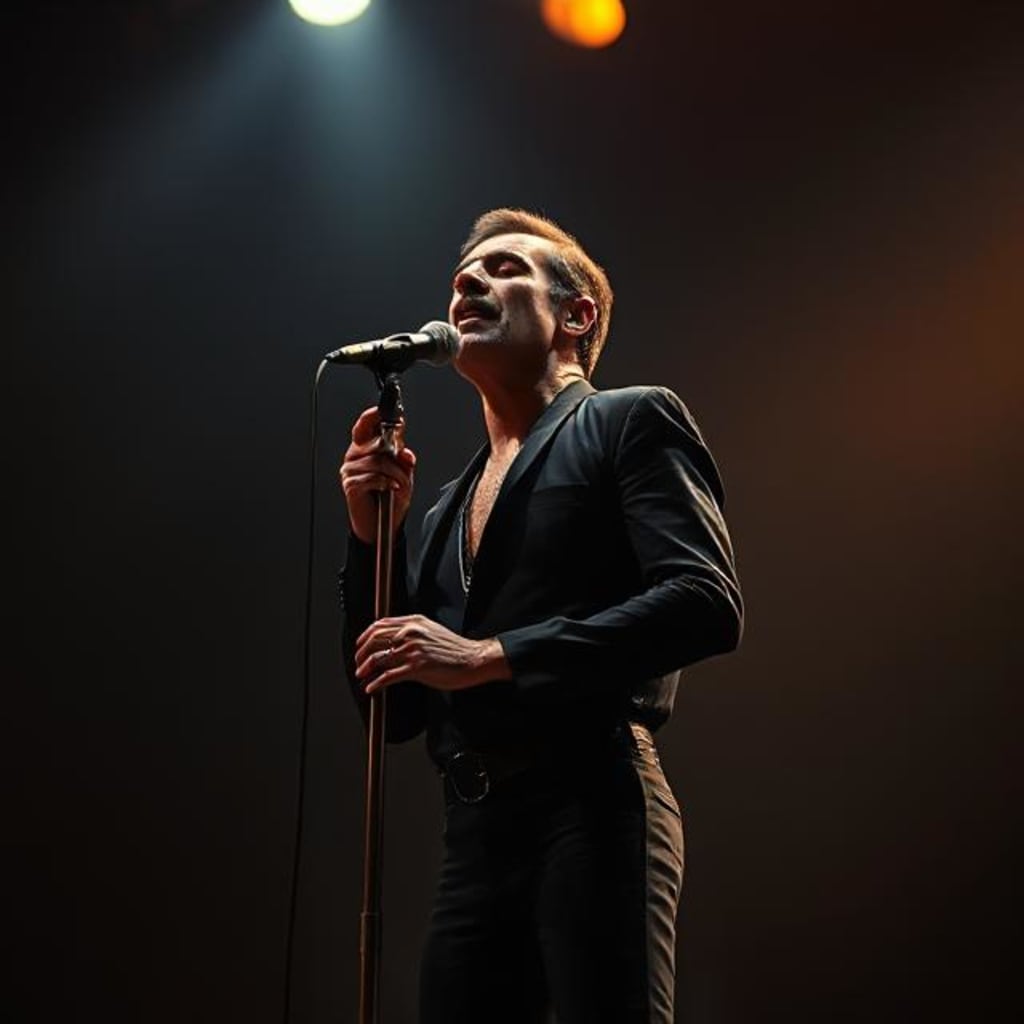
On a cold October evening in 1990, in a dimly lit studio in Montreux, Switzerland, a man with a weakening body stood before a microphone. He looked thinner. Frailer. But when he opened his mouth, the world heard a voice that sounded like thunder wrapped in velvet. The man was Freddie Mercury, and that night, he recorded “The Show Must Go On.” It would be the last true roar of one of music’s greatest lions. And deep down, Freddie knew: this wasn’t just another song. It was his goodbye.
---
The Final Act of a Legend
Freddie Mercury had always lived like lightning. His stage presence was unmatched — part opera, part rock, and all soul. He turned stadiums into temples, fans into worshippers, and pain into poetry. But by the late 1980s, something had changed. Behind the flamboyant costumes and soaring vocals, his body was quietly breaking.
In 1987, Freddie was diagnosed with HIV/AIDS, a disease that at the time was misunderstood, feared, and often silenced. He never made it public. Not yet. Instead, he poured everything he had left into his music. And in 1990, Queen began recording what would be their final album with him — Innuendo.
---
The Song He Shouldn’t Have Been Able to Sing
“The Show Must Go On” was not easy. It demanded power. It demanded range. It demanded lungs that could carry emotion and energy for miles. And by then, Freddie’s health had deteriorated so much, some of his bandmates weren’t even sure he could manage it.
Brian May, Queen’s legendary guitarist and co-writer of the song, once recalled, “I said to Freddie, ‘I don’t know if this is going to be possible.’ And he said, ‘I’ll do it, darling. I’ll fucking do it.’”
And he did.
With pain in his body but fire in his soul, Freddie stepped up to the mic. He didn’t just sing. He soared. Every line felt like a scream against death:
"Inside my heart is breaking / My make-up may be flaking / But my smile still stays on…"
---
A Voice That Refused to Die
That night in the studio, Freddie wasn’t just recording a song. He was writing his farewell letter in sound. He knew his time was limited. The doctors knew. The band knew. But the public didn’t. And Freddie wanted it that way.
He didn’t want pity. He didn’t want headlines. He wanted to create — until the very last breath.
And that’s exactly what he did. Even when walking hurt, even when standing took effort, Freddie kept recording. The Show Must Go On became a mantra. A whisper to himself. A roar to the world.
---
The World Didn't Know—Yet
When Innuendo was released in 1991, fans didn’t realize what they were hearing. They knew the song was powerful. They didn’t know it was the sound of a man dying.
Freddie appeared one last time in a music video — for “These Are the Days of Our Lives.” He looked gaunt. His eyes were glassy. But in his final line to the camera, he whispered something unforgettable:
“I still love you.”
It would be the last time the world saw him alive.
---
November 24, 1991: The Curtain Falls
A day after publicly confirming he had AIDS, Freddie Mercury died in his home at the age of 45. The world was stunned. Millions mourned. But those who had listened closely to “The Show Must Go On” already felt it — he had been saying goodbye all along.
In the months that followed, the song became an anthem. Not just for Freddie’s fans, but for people fighting battles of all kinds — illness, grief, loss, and fear. The song became a symbol of defiance. Of resilience. Of facing the end with courage, not collapse.
---
A Legacy Wrapped in One Song
Freddie Mercury was many things: flamboyant, fearless, fragile, and fierce. But more than anything, he was honest — even when he didn’t speak. “The Show Must Go On” is proof of that.
It captured everything he was:
The performer who lived for the stage
The fighter who wouldn’t give up
The man who knew the end was near, but still chose to sing
To this day, the song remains one of Queen’s most celebrated works. Not because of its chart position — but because of what it means.
---
The Curtain Never Closed
More than three decades later, Freddie’s voice still echoes in stadiums, headphones, and hearts. The show did go on. And in many ways, it still is.
Because when Freddie Mercury sang his last song, he didn’t disappear. He became eternal. Not in silence. But in music.
He didn’t whisper goodbye.
He belted it — with fire, passion, and a mic in his hand.
---
About the Creator
Muhammad Riaz
- Writer. Thinker. Storyteller. I’m Muhammad Riaz, sharing honest stories that inspire, reflect, and connect. Writing about life, society, and ideas that matter. Let’s grow through words.
Keep reading
More stories from Muhammad Riaz and writers in Beat and other communities.
The First Time Michael Jackson Sang “Ben” and Made the World Cry
On a quiet evening in 1972, a young boy with big eyes and a voice that sounded like velvet stepped up to the microphone. He was just 14. The world knew him as the lead singer of The Jackson 5, but that night, standing alone, Michael Jackson sang a ballad that would change everything. The song? “Ben.” A tender tribute to a lonely boy’s friendship with a rat from a horror movie—yet somehow, in Michael’s voice, it became something bigger. It became a love song to the misunderstood, the outcast, and the unseen. It was the moment the world realized: this boy wasn’t just a star—he was something rare.
By Muhammad Riaz7 months ago in Beat
The Tango Connection
I suppose I've become a writer so I wouldn't bore everyone to death telling them my stories. Reading them is reading. Not the same. There's rhythm. And timing and, most importantly, drama and suspense. Unless you have tremendous magnetism and an undeniable stage presence, there's no way you can engage an audience the way you can by writing your story. That's my opinion.
By Rene Volpi 28 days ago in Beat
Top tipple tricks
Been thinking a lot about drinking, lately. Not least because of a recent episode of over-indulgence and the inevitable after effects. Some readers may recall the earlier articles I wrote about beating the booze. Here I set out an experiment in techniques for cutting down on my alcohol intake. The experiment was successful, the techniques worked, and I have armed myself with an arsenal of weapons in the war against the demon drink. I have yet to fire the first round however. It's all a question of timing (perhaps procrastination).
By Raymond G. Taylor5 days ago in Psyche



Comments
There are no comments for this story
Be the first to respond and start the conversation.