
The iPhone Flip May Be Late—But Here’s Why Apple’s Patience Could Pay Off
With Samsung and Motorola dominating foldables, Apple’s rumored iPhone Flip could still disrupt the game if it delivers in these key areas.
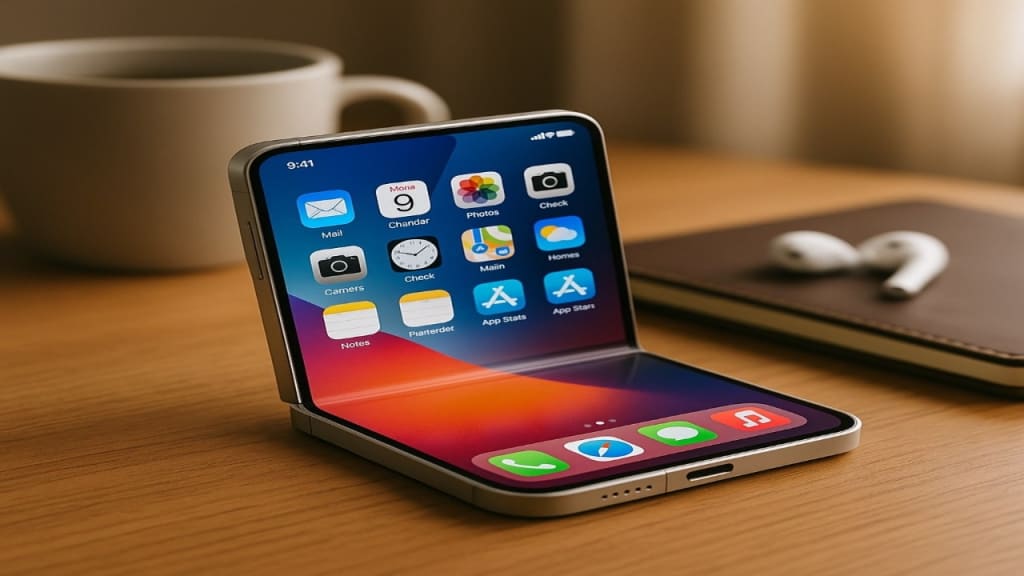
Apple is especially quiet about foldable phones, and that silence says volumes. Apple hasn't even hinted at any continuing development in this field even as firms like Samsung, Motorola, and Huawei release new foldable products every year. Still, people keep guessing, patents show up often, and the idea of an "iPhone Flip" is still debated.
Apple's late reaction to trends, however, is not unexpected; it is in fact rather typical of the company.
Consider, for example, the debut of the initial iPhone in 2007. Not in any sense was this the first cell phone. Still, it evolved into the perfect mobile phone. If Apple plans effectively, a comparable situation might develop with a folding iPhone.
Foldables Are Here to Stay Now
Although ground-breaking when Samsung unveiled the first Galaxy Fold in 2019, it also acted as a warning. Early reviews noted several hardware faults including broken screens and faulty hinges. Relying on nostalgia, Motorola then introduced a redesigned Razr. Both businesses have developed folding devices into fashionable, reliable products consumers are using over a few years of updates.
In the Android industry, Samsung's Galaxy Z Fold5 and Flip5 have become somewhat well-known. The improved construction and distinctive attractiveness of Motorola's most recent Razr Plus are also helping it to go viral. Foldable phones have developed from being simply futuristic devices to being commonplace, at least in some communities.
Then, why hasn't Apple joined this market yet?
Apple's Long-Term Plan
Apple is well-known for its propensity to pause before rushing in. Although they did not invent the smartwatch, the Apple Watch is a top seller in its own right. Additionally not the wireless earbuds pioneers, AirPods are everywhere today. Their method has always focused on enrichment instead of speed.
Reports and patent filings reveal that Apple has been covertly working on foldable prototypes for many years. According to data from Bloomberg and other supply chain studies, Apple is investigating both clamshell-like flip phones and book like foldable tablets. Still, it is unclear when an "iPhone Flip" will really launch since there is neither formal announcement nor schedule.
Still, there are clues that Apple's prudence could pay off.
1. Top-grade hardware sets a new standard.
Hardware quality is one field where Apple always shines. Unless a foldable iPhone matches their very demanding requirements for lifespan, display clarity, and durability, the firm will not release one. This suggests staying away from plastic displays with prominent folds and weak-feeling hinges after only a few uses.
Imagine an almost ideal hinge folding iPhone, a flexible ceramic or sapphire screen, and protective measures against water. Apple could change the standard in this area if they can accomplish this—without the problems seen in first-generation Android foldables.
2. Tailored software for the architecture of the gadget
Flat screens are meant for the newest iOS, not foldable ones. Still, it is evident that Apple is moving away from a single-display emphasis as they increasingly prioritize multitasking, especially in iPadOS. A foldable iPhone might use the multitasking features of the iPad to provide a distinctive iOS experience suited for its foldable shape.
This includes making sure that app activity is kept across both the cover screen and main display, implementing new gestures, and personalizing widgets. Apple would have absolute control over both the hardware and software, unlike Android producers who depend on Google's APIs, hence producing a significantly improved user experience.
3. Ecosystems: a truly beneficial link
Apple's appeal starts with the ecology. The iPhone Flip would seamlessly fit into your whole Apple ecosystem as well as be a folding phone. You can utilize AirDrop, for instance, to send a photo right from the iPhone Flip's front screen without having to open it or to pick up calls on your Mac even if the iPhone Flip is still closed.
For devoted Apple fans, if this kind of smooth interaction became its hallmark, then waiting for the iPhone Flip would be worthwhile.
4. Characteristics of the Camera Developed expressly for foldable gadgets
For creative photography, foldable phones are perfect. Apple could build on the cover screen's directional capabilities by including special camera functions just for the iPhone Flip, like automatic timelapse recording when positioned at an angle or enabling FaceTime via the rear camera using the outside display.
Foldable displays would only expand the creative options Apple's complex picture processing now offers.
5. Better Heat Management and Battery Life
Early foldable designs have had trouble with battery life since there is not enough space for cells. Still, Apple's proprietary silicon, such the A17 Pro, surpasses all rivals in mobile technology. This might fix one of the main drawbacks of foldable devices: their poor battery life when used in conjunction with superior thermal designs and configurable screen refresh rates.
Things to Avoid
Of course, Apple is not infallible. Without actual utility, the iPhone Flip should not develop into a specialized item. It has to give big developments, not just distinctions. The genuine difficulty is developing a foldable iPhone that seems absolutely necessary and has a fair price so as not to exclude potential buyers—since, after all, a $2,000 price point won't appeal to most consumers.
The Bottom Line
Actually, Apple hasn't been held back by foldable market tardiness in the past.
When the iPhone Flip comes out, it might not be the first of its kind. It could be the first design that appeals to a larger audience—not only tech nerds and early adopters.
Sometimes winning depends on arriving late.
About the Creator
Keep reading
More stories from Shahjahan Kabir Khan and writers in Beat and other communities.
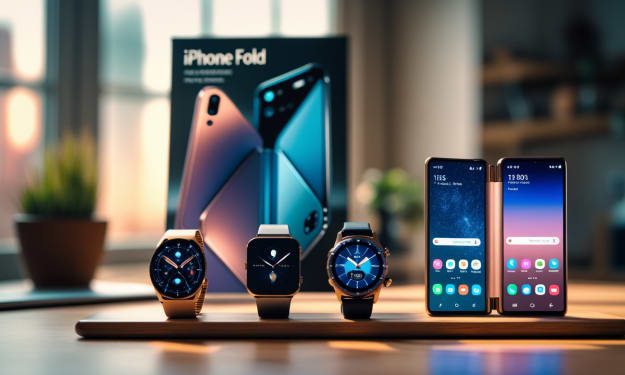
Samsung vs. Apple: Galaxy Z Fold7, Flip7 & Watch8 Raise the Bar Before iPhone Fold Even Arrives
Samsung is not holding back when it comes to innovation. While iPhone enthusiasts are left waiting for speculations and patents regarding a foldable model—tentatively called the “iPhone Fold”—the company has introduced its Galaxy Z Fold7, Z Flip7, and Galaxy Watch8 to the market.
By Shahjahan Kabir Khan8 months ago in Beat
My First Time Skiing and I Got Lost, Alone, in the French Alps
Looking back, I can trace some of my life’s biggest adventures to a simple action from my sister. She’d introduced me to Tommy (a very long time ago), a colleague of hers, who had overshared his penchant for Italian-looking women, and I ticked that box.
By Chantal Christie Weiss3 days ago in Humans


Comments
There are no comments for this story
Be the first to respond and start the conversation.