
The Evolution of Music: From Vinyl to AI-Generated Songs
From Vinyl to Algorithms: How Technology is Shaping the Sound of the Future
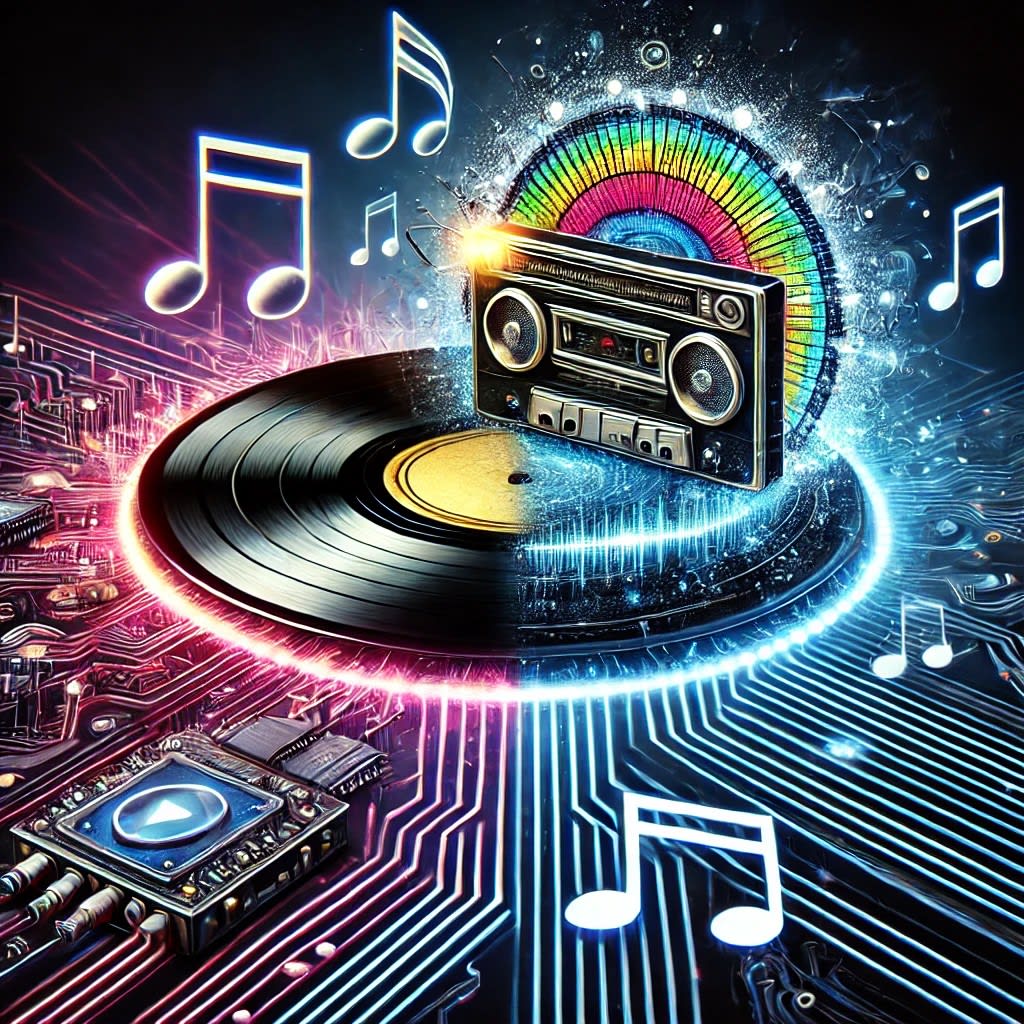
Music has always been a powerful force in our lives, evolving with each passing era to reflect the tastes, technologies, and cultural shifts of its time. From the crackling sounds of vinyl records to the synthesized beats of AI-generated songs, the journey of music’s evolution is a fascinating tale of innovation, creativity, and human ingenuity. Let’s take a deep dive into how music has transformed over the decades, from analog to digital, and now, to the realms of artificial intelligence.
The Age of Vinyl: Analog Sound in a Digital World
The story of recorded music begins with the iconic vinyl records that dominated the mid-20th century. For many, the sound of a vinyl record crackling to life represents an era of musical nostalgia. Vinyl, with its warm analog sound, became the primary medium for music lovers from the 1940s until the 1980s. The tactile experience of carefully placing the needle on the grooves and flipping the record side over side created a unique connection between the listener and the music.
But it wasn’t just the music that made vinyl so special—it was the album cover art, the liner notes, and the ritual of buying a new record at the local store. Vinyl records became a cultural symbol, transcending their role as a mere medium for music. They were an experience, a personal connection to the artists, and an intimate journey into their world.
The Digital Revolution: From Tapes to CDs
As technology advanced, so did the way we consumed music. In the late '80s and early '90s, cassette tapes and CDs replaced vinyl as the dominant formats. The compact disc (CD) offered a cleaner, more durable sound, free from the pops and hisses of vinyl. The portability of cassettes allowed music to travel with us, whether we were in our cars or walking down the street with a Walkman in hand.
The digital revolution also brought with it the rise of personal music collections. MP3 players, like the iPod, allowed music lovers to carry thousands of songs in their pockets, making access to music more immediate than ever before. The birth of digital music platforms like iTunes and later, Spotify, changed the game by offering instant access to nearly every song imaginable. The days of hunting through record stores for a rare album were replaced by a world where music could be streamed with just a few taps on a screen.
The Streaming Era: Music at Your Fingertips
Enter the streaming age, where music became more accessible than ever before. Platforms like Spotify, Apple Music, and YouTube revolutionized the way we discover and listen to music. No longer did we need to own a physical copy of an album or even download individual tracks. With just a subscription or a free account, we gained instant access to millions of songs from around the world.
The streaming era brought with it a shift in how music was produced and consumed. Artists could now release their work directly to the world without the need for record labels or traditional distribution channels. The role of the producer became even more significant as music creation tools like digital audio workstations (DAWs) and plug-ins made it possible to create professional-sounding tracks from a bedroom studio.
The Rise of AI-Generated Music: The Future of Sound
Fast forward to today, and we find ourselves at the brink of another groundbreaking revolution in music—artificial intelligence. AI is now capable of composing entire songs, blending genres, creating melodies, and even mimicking the vocal styles of famous artists. Platforms like OpenAI's Jukedeck, Amper Music, and Aiva have opened the door to a new era in music production, where machines collaborate with humans to create unique, algorithm-driven compositions.
The use of AI in music has sparked debate: Is this the end of human creativity in music, or is it simply a new tool for musicians to experiment with? Some argue that AI-generated songs lack the soul and emotional depth of human-created music, while others see it as an exciting opportunity to push boundaries and explore new sonic landscapes.
AI-generated songs can be customized to fit any mood, genre, or style, making them perfect for background music, advertisements, films, or even personal playlists. Musicians, too, have embraced AI to augment their creative process, using AI tools to generate beats, harmonies, and even lyrics. The lines between human and machine-created music are becoming increasingly blurred, leading to a more diverse, democratized music landscape.
What’s Next?
So, where is music headed next? Will AI take over the role of composers and songwriters, or will humans continue to be at the heart of the creative process? One thing is certain: the evolution of music is far from over. As new technologies emerge, we’ll continue to see music evolve, adapt, and transform in ways we can’t yet imagine.
What we do know is that music will always be a reflection of us—our emotions, our stories, and our connection to one another. Whether it’s the crackling warmth of a vinyl record, the convenience of streaming, or the futuristic sounds created by AI, music will continue to shape our world. And as technology advances, one thing will remain unchanged: the magic of music will always be there, evolving, growing, and inspiring us for generations to come.
By exploring the evolution of music, we can appreciate the remarkable journey that sound has taken. From the rich warmth of vinyl records to the cutting-edge creativity of AI, the future of music is an exciting frontier, full of endless possibilities.
About the Creator
Getu Hirpo
🚀 Passionate about Tech, Gadgets, Music, and Entertainment. I explore the latest innovations, from AI tools to must-have music gear. Always on the lookout for trends shaping the future. Stick around for insights and exciting discoveries!
Keep reading
More stories from Getu Hirpo and writers in Beat and other communities.
AI, My Muse: Turning Life’s Moments Into Songs
There’s something magical about music. It has the power to take the raw emotions we feel deep inside and turn them into something beautiful, something everyone can connect with. But for me, as a musician, capturing those emotions in a song has always been a challenge. That is, until I found AI.
By Getu Hirpoabout a year ago in Beat
The First Rainbow Baby
Pitter-patter, pitter-patter. The rain fell in rhythmic splatters, slowly slowing, but still constant. Mira rolled onto her side pulling the blanket tight against her ears, but still she could hear chitter-chatter and scurrying feet of the creatures that refused to sleep in the lower decks.
By A. J. Schoenfeld2 days ago in Fiction




Comments
There are no comments for this story
Be the first to respond and start the conversation.