
The Day Michael Jackson Changed Music Forever: Remembering the 1983 Moonwalk
In just five seconds, a single dance step turned into a movement that still echoes across generations.

Start writing...
A Night That Began Like Any Other
The stage lights flickered. The crowd buzzed with excitement. On March 25, 1983, Motown Records was celebrating its 25th anniversary with a star-studded television special. Icons like Diana Ross, Smokey Robinson, and Stevie Wonder had already performed. Nostalgia filled the room, but the night was about to become something more.
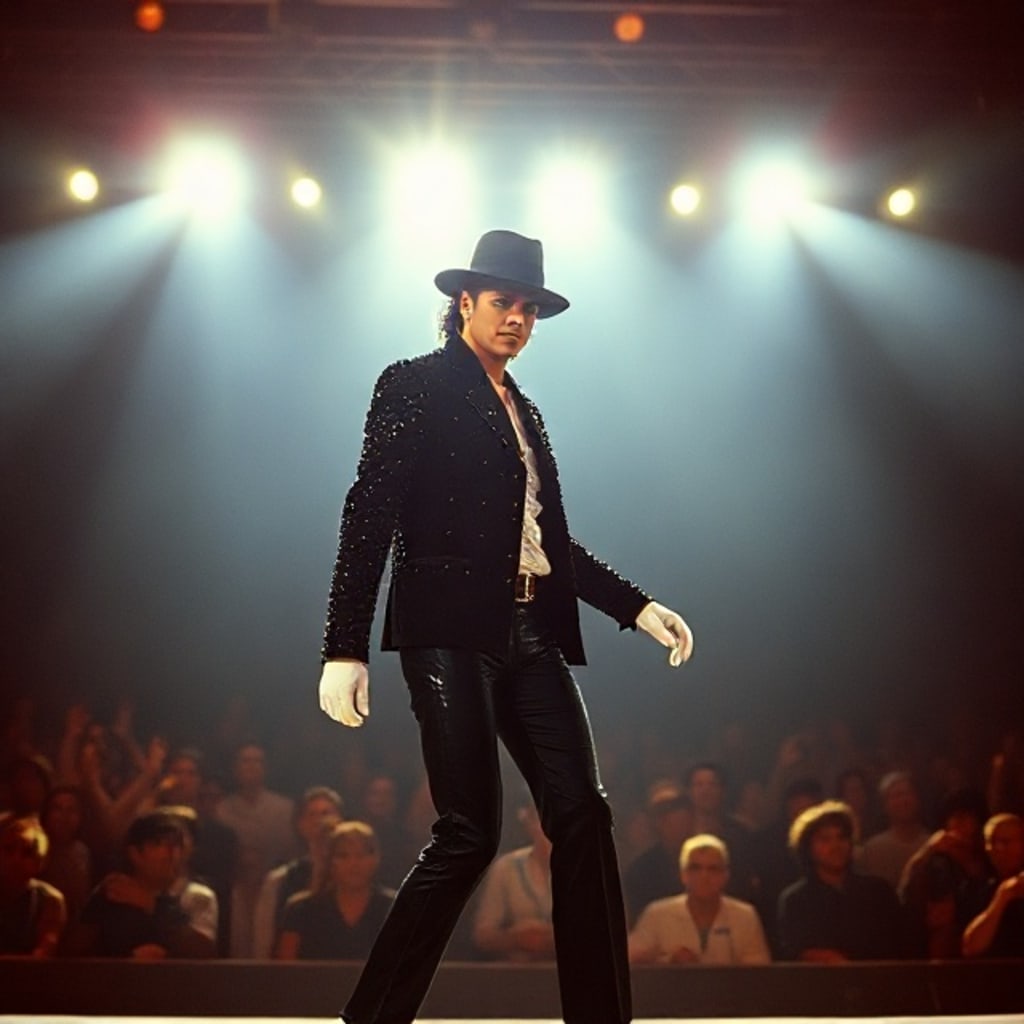
When Michael Jackson appeared on stage, the audience erupted. At just 24 years old, he was already famous — the youngest of the Jackson 5 turned solo superstar. Dressed in black sequins, a single rhinestone glove, and a fedora tilted just right, Michael looked like he had stepped out of a dream.
What nobody knew was that in a matter of minutes, he would rewrite the language of music and dance.
---
“Billie Jean” Begins
The beat kicked in: dum-dum-dum, dum-da-dum-dum. The opening of “Billie Jean” sent shivers through the theater. Michael stood still for a moment, letting the anticipation build. Then, with sharp movements and magnetic energy, he began to dance.
Every step was precise. Every pause intentional. He commanded the stage without effort. For the first two minutes, it was pure performance — captivating but not unexpected. Then came the moment.
---
The Five Seconds That Changed Everything
As the music reached its peak, Michael turned sideways. He slid one foot backward while keeping the other firmly planted. Then, almost impossibly, his body seemed to float across the stage.
The Moonwalk had arrived.
The audience gasped. Some screamed. Others clapped wildly. In living rooms across America, families leaned closer to their TVs, their jaws dropping. “Wait—did he just… glide?”
Those five seconds were all it took. In one motion, Michael had taken a dance step and transformed it into an immortal symbol.
---
A Move That Wasn’t New, But Felt Like Magic
What’s fascinating is that the Moonwalk wasn’t entirely Michael’s invention. Variations had existed in street dance culture, and even entertainers like Cab Calloway and James Brown had toyed with sliding steps. But when Michael performed it, everything was different.
It wasn’t just a move. It was a performance of illusion. Michael made it look supernatural — effortless, smooth, like gravity had bent to his will. He perfected it, packaged it, and unveiled it at exactly the right moment.
That is why history remembers his version as the birth of the Moonwalk.
---
The Next Morning: A World Obsessed
By the very next morning, the Moonwalk was everywhere. Children tried it in schoolyards. Teenagers attempted it at discos. Parents laughed and fell while sliding across their kitchens. Everyone wanted to know: How did he do it?
Numbers tell part of the story:
47 million people watched Motown 25 live.
“Billie Jean” shot to No. 1 on Billboard, staying there for weeks.
Dance studios in Los Angeles, New York, and Chicago reported up to 40% more students, many asking specifically, “Can you teach us the Michael Jackson move?”
But the true impact wasn’t just in numbers. It was in the feeling. The Moonwalk gave people something to dream about. It reminded them that art could be magical, surprising, and larger than life.
---
The Human Side of a Legend
Michael himself later admitted he didn’t invent the step. “You can’t blame me for knowing how to use it,” he once laughed. That humility made the move even more powerful. He didn’t pretend to own it — he transformed it into something the world could share.
Yet behind the magic was discipline. Michael trained relentlessly. Every spin, every snap of his finger, every glide of his shoe was practiced until flawless. That night wasn’t luck — it was years of obsession meeting the right stage.
---
Why the Moonwalk Still Matters
It has been over four decades since that television special, yet the clip still circulates online every year. Young dancers on TikTok recreate it. Weddings, talent shows, and YouTube channels still feature Moonwalk attempts. Some succeed, most fail, but all pay tribute to that iconic moment.
More importantly, the Moonwalk represents something bigger than dance. It symbolizes creativity, imagination, and courage. Michael dared to be different on a night when he could have simply sung and walked off stage. Instead, he gave the world a memory that will never fade.
---
More Than Entertainment
Michael Jackson didn’t just moonwalk across a stage; he moonwalked into history. He showed that performance is not about repeating what people expect — it’s about giving them something they didn’t know was possible.
That’s why people remember March 25, 1983, not just as a Motown anniversary, but as the night music changed forever.
---
A Legacy of Five Seconds
Think about it: five seconds. That’s shorter than a TV commercial. Shorter than boiling water in a microwave. Yet those five seconds became immortal.
Michael Jackson’s Moonwalk proves that sometimes, the smallest moments can create the largest impact. A single dance step, performed at the right time, in the right way, can echo across generations.
And even today, when a kid in a small town tilts his hat, slides his foot back, and dreams of gliding like the King of Pop — Michael lives again.
---
About the Creator
Muhammad Riaz
Passionate storyteller sharing real-life insights, ideas, and inspiration. Follow me for engaging content that connects, informs, and sparks thought.
Keep reading
More stories from Muhammad Riaz and writers in Beat and other communities.
How Michael Jackson’s Thriller Redefined Music Forever
How Michael Jackson’s Thriller Redefined Music Forever On December 2, 1983, a 14-minute music video premiered on MTV, and the world stopped to watch. Michael Jackson’s Thriller wasn’t just a song or an album—it was a cultural earthquake that reshaped music, broke racial barriers, and turned music videos into an art form. But what went into creating this masterpiece? From studio sessions to zombie dances, here’s the untold story of how Thriller became the King of Pop’s crown jewel. The Birth of a Vision: Michael Jackson’s Ambitious Dream Michael Jackson was already a star by 1982, riding high off Off the Wall. But he wasn’t satisfied. He told producer Quincy Jones he wanted Thriller to be bigger—something that would “change the game.” MJ envisioned an album that blended pop, rock, funk, and disco, appealing to every listener. He wrote four of the album’s nine tracks, pouring his soul into lyrics that ranged from heartbreak (Billie Jean) to horror (Thriller). Jackson’s ambition was relentless. He’d spend hours perfecting a single note, driven by a desire to create something timeless. In interviews, he later said, “I wanted Thriller to feel like a movie in your mind.” That cinematic vision would define the album and its iconic title track. Crafting the Sound: Quincy Jones and the Thriller Magic Quincy Jones, the legendary producer behind Off the Wall, was MJ’s creative partner. Together, they assembled a dream team: Toto’s Steve Lukather on guitar, Eddie Van Halen for a blistering Beat It solo, and Vincent Price for the eerie Thriller voice-over. The studio became a playground of innovation. Jones encouraged MJ to experiment, layering vocals and instruments to create a sound that was both polished and raw. The title track, written by Rod Temperton, almost didn’t make the cut. Originally called “Starlight,” it was reworked into a spooky anthem inspired by MJ’s love for horror films. The team recorded late into the night, with MJ perfecting his werewolf howls and Price delivering his chilling rap. The result? A seven-minute track that felt like a haunted carnival ride. The Video That Changed Everything: A Cinematic Revolution If the Thriller album was groundbreaking, its music video was revolutionary. Directed by John Landis (An American Werewolf in London), the 14-minute short film cost $500,000—unheard of for a music video in 1983. MJ wanted a cinematic experience, not just a promotional clip. He got it: a zombie dance, a werewolf transformation, and a narrative that kept viewers glued. The video almost didn’t happen. MJ, a Jehovah’s Witness at the time, worried the horror elements might offend his faith. He added a disclaimer clarifying the video didn’t endorse the occult. The iconic choreography, created by Michael Peters and MJ, became a cultural touchstone—kids everywhere tried to moonwalk like zombies. When MTV aired the video, it shattered viewership records and made music videos a must-have for artists. Breaking Barriers: Thriller’s Global Impact Thriller wasn’t just a hit—it was a phenomenon. The album sold over 70 million copies worldwide, making it the best-selling album ever. It earned seven Grammy Awards and spent 37 weeks at #1 on the Billboard 200. But its impact went beyond numbers. Thriller broke racial barriers, forcing MTV to play a Black artist’s video in heavy rotation at a time when the network was criticized for its lack of diversity. MJ’s global influence soared. From Tokyo to London, fans mimicked his red leather jacket and glove. The album’s crossover appeal—blending genres and defying stereotypes—proved music could unite people across cultures. As MJ said, “I wanted Thriller to speak to everyone, no matter who they were.” Why Thriller Still Haunts Us Today More than four decades later, Thriller remains a cultural juggernaut. The video is a Halloween staple, its dance moves are recreated on TikTok, and the album’s songs still dominate playlists. Why? Because MJ tapped into something universal: the thrill of storytelling through music. Thriller wasn’t just an album—it was a moment that defined an era and inspired generations of artists, from Beyoncé to The Weeknd. Its legacy lives in its ability to evolve. Whether it’s a viral dance challenge or a remastered vinyl, Thriller keeps finding new audiences. It’s a reminder of Michael Jackson’s genius—a man who turned his dreams into a global masterpiece.
By Muhammad Riaz7 months ago in Beat
It's 2026. Songs Turning 10 This Year
In 2016, we saw the rise of short form videos and what would lead to the birth of TikTok. We cannot forget the Snapchat filters no matter how cringe worthy some of them might have been. It was also the year in which the hit series Stranger Things debuted.
By Jasmine Aguilar17 days ago in Beat
Saul Damelyn Opens the Doors to Memory, Art, and Reckoning
There is something quietly assured about “Museum of Love,” the debut single from Saul Damelyn and British indie imprint Damelyn Records. Its lyric video world premiere does not simply illustrate the song. It builds a world around it. What emerges is a visual meditation on memory and attachment that feels thoughtful rather than ornamental, grounded rather than grand.
By Chris Adams7 days ago in Beat


Comments
There are no comments for this story
Be the first to respond and start the conversation.