
The Aftermath of Beethoven's Symphonies - An Overview
With 9 sublime symphonies to compete with, how did other composers cope?

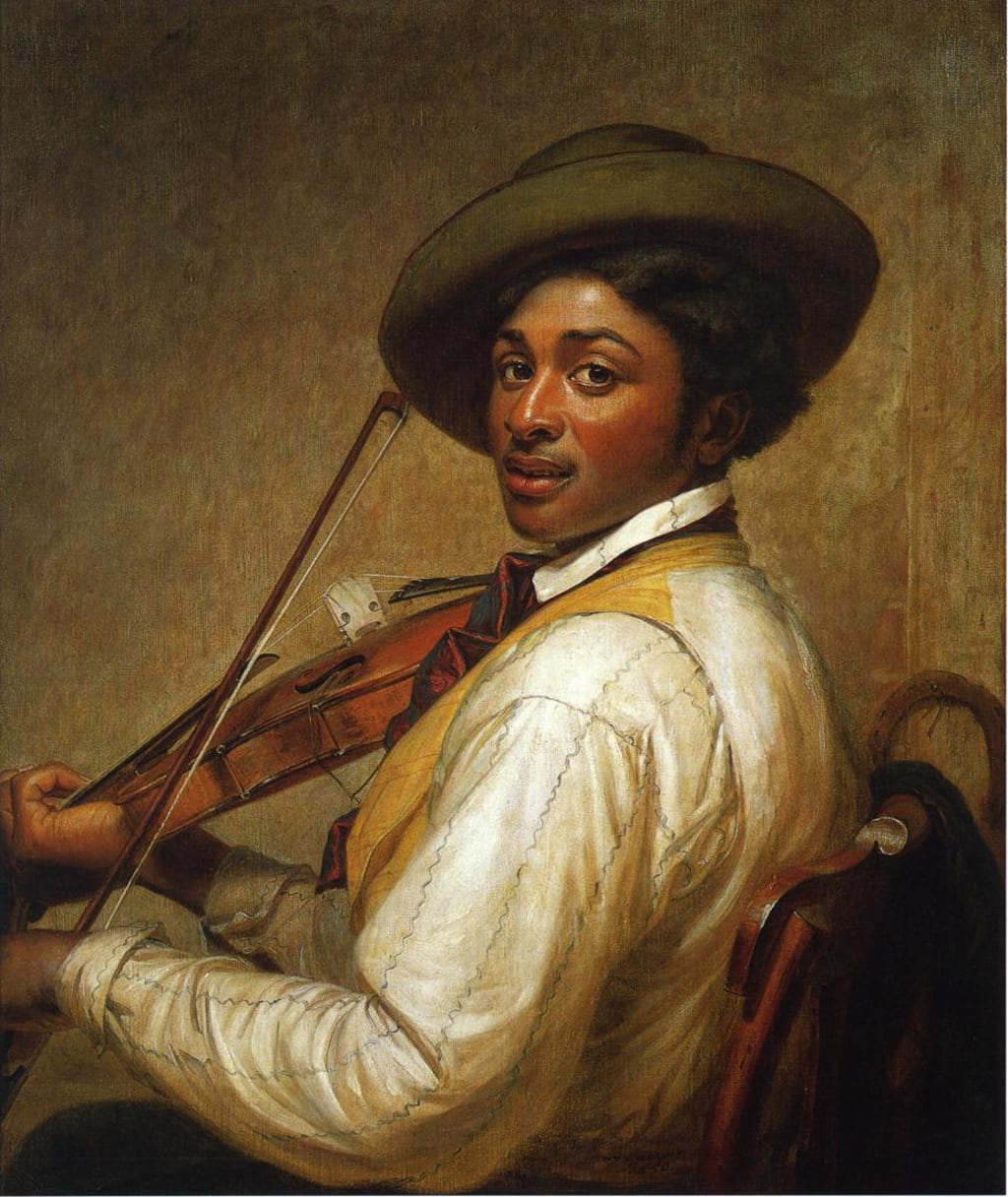
With a grandiose conclusion of his symphonies, Ludwig van Beethoven established not only a definitive leading voice of nineteenth-century music, but ultimately tapered the now-heraldic symphony's imagery, form, and style to be his own, leaving later composers of the same century with aesthetic anxiety. Although a symphony of the sublime still remained an option, composers were vehement in producing original works and dared not venture into familiar compositional territory, contrasting from the Classical composer mindset of paying homage to older generations in mimicry. Because of this staunch individuality, the genre of symphony significantly transformed to include various aspects of music that do not necessarily fall into the category of the heroic and sublime, and composers such as Berlioz, Mahler, and Dvorak were key catalysts in this metamorphosis of the definition of symphony.
Beethoven left his final mark upon the genre of symphony with the vocal finale of his massive Symphony No. 9, invoking complications of confidence among his contemporaries. The intensely debated question of anybody surpassing the leaps and bounds of Beethoven in symphony included Robert Schumann's proclamation in 1835 that the genre of symphony has essentially been exhausted. Robert Schumann also argued how the Ninth Symphony of Beethoven marked the end of the genre; nothing more could be gained, he maintained, due to the work being absolute music, and of being stuck between not being able to utilize voices and the “inferiority” of purely instrumental music. Schumann's own symphonies, No. 1 ("Spring", 1841), No. 3 ("Rhenish", 1851) and No. 4 (1841-1851) went through heavy revision in various attempts to cope with his perspective of Beethoven casting a wide and long musical shadow. With the vocals added into the finale of Beethoven's Ninth Symphony are thus reflected in what composers appeared to the end of the symphony genre.
However, the French composer Hector Berlioz would ultimately be seen as Beethoven's true heir with the publication of his first three symphonies. It was not because he imitated Beethoven; rather, it was due to the striking originality of his first three symphonies that essentially shocked the audience. Berlioz's Symphonie fantastique (1830) grants a fresh, new approach to what a symphony is: deeply rooted in program music instead of absolute music, the piece follows an artist – essentially Berlioz himself to a degree – in a doomed unrequited love, ultimately resulting in an anti-heroic climax with a demonic ending of the fifth movement. In the fifth movement (which in itself carved a change in how many movements there can be for a symphony) the artist, poisoning himself with opium, conjures nightmares of his own funeral rites being attended by the most horrific monsters, demons, and witches. The ideé fixe (the phrase to which he had identify the love interest of the artist in the symphony; in real life inspiration was actress Harriett Smithson, his crush) transformed into a gross, revolting witch who came to attend the massive witches' Sabbath that follows the funeral. The acclaim was shocking with the ending being more of a triumph of evil and hell rather than heaven, but Berlioz revived the genre of symphony, and thus was renowned for his approach since he found a way to create the symphony without resorting to imitation of Beethoven at all.
The symphony was renewed with vigor in the second half of the nineteenth century, and eventually began to be seen as more of a nationalistic playground for composers who wished to show their ties and influences to the audience with inspiration from folk music of varying countries. The renowned Czech-American immigrant composer Antonin Dvorak (1841-1904) utilized the symphony for his Symphony No. 9, “From the New World,” as a means to inspire American composers to delve into their own familiar folk tunes as their muse instead of constantly attempting to manage something out of European compositions. In the Largo, pastoral second movement of his Symphony No. 9, Dvorak studied much of the Native American music, which appears to be echoed in the English horn solo in the pentatonic scale in the principal theme at the beginning of measure 7. The melody again is sounded in the flutes and oboes in measure 46, morphing into C# minor, and played once more on the pentatonic scale, largely omitting the fourth scale degree. Dvorak himself admitted to using Henry Wadsworth Longfellow's "The Song of Hiawatha" as a means of inspiration for the movement, even though there is no set passage in the second movement that is clearly dedicated to this poem. He also utilized an old spiritual African American melody as the foundation for the Largo of the “New World” symphony, which again professed to his American peers to find a source of inspiration from within their own country. From his symphony, there are abundant usages of folk song quotes in the New World.
The ideals of symphony essentially changed drastically, but not entirely; though the heroic and sublime continued, many composers looked elsewhere for inspiration to write in the same genre. Ultimately Gustav Mahler would be seen as the true heir to Beethoven ethnically and stylistically: both had massive orchestration, especially in Mahler's “Titanic” Symphony No. 1, and both were of German descent. As revolutions and other uprisings began to develop throughout the nineteenth century, the symphony in itself came out to be a great political tool that proved to be clever yet profound statements to the audience, and the added bonus of not compromising the composer's position in society with vehement politics scampering about. Even though composers still withheld aesthetic anxiety from Beethoven's parting remark in his Ninth Symphony, the great transformation to include more than just the sublime – ultimately the opposite, with Berlioz's Symphonie fantastique – caused the symphony to be revitalized and thus contradicting Schumann's words.
About the Creator
Cameron Smith
Hello! I am a lifelong disciple of music :) I love my cello, history, literature, fantasy, sustainability, finding out how things work...my aim here is to make the classical world much more accessible and understood!
Insta: @itsme_crazycam
Keep reading
More stories from Cameron Smith and writers in Beat and other communities.
Age of Enlightenment in Music
The Age of Enlightenment was the period of intellectualism, civil rights, and a tremendously fruitful period of music. This revolutionary age – evolving out of the Baroque period – focused mainly upon civil human rights, reason over faith, and philosophy; such principles were examined in the ancient history of Greeks and Romans, inherently deeming the name “Classical” upon the eighteenth century. These aspects inevitably were assimilated into the various music genres, namely the genre of symphony, and the multi-layered idealisms coincided closely its formal and stylistic characteristics; thus, this genre of Western art ultimately revealed how “enlightened” the fundamental music paradigm came to be.
By Cameron Smith5 years ago in Beat
Review of 'Man on the Run'
My wife and I saw Man on the Run, a nearly 2-hour documentary on Amazon Prime, about Wings, Paul McCartney's group that flew around the world from shortly after The Beatles broke up in early 1970 to shortly after John Lennon was murdered at the end of 1980, making a Beatles reunion forever impossible.
By Paul Levinson13 days ago in Beat
Mr. Pap Star Album Review (2026)
There’s something to be said about an artist who knows exactly who he is and then spends 13 tracks proving it. On Mr. Pap Star, Pap Star embodies confident dominance. The album feels like a manifesto, a therapy session, a victory lap, and a late-night confession booth all wrapped in bass-heavy production and fearless genre play. It’s cohesive without being predictable, and that’s the magic that is Pap.
By Rose "Photobombshell" Mercado, M.A.Ed.7 days ago in Beat



Comments
There are no comments for this story
Be the first to respond and start the conversation.