

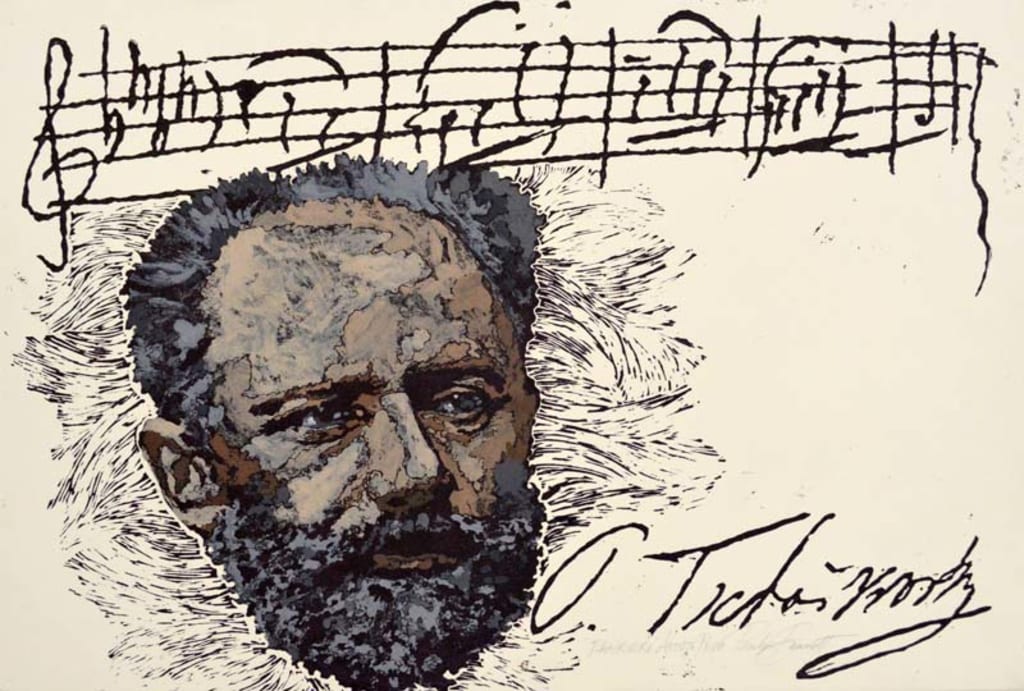
In my previous articles we scratch the surface of is most beloved compositions, but it does not make justice to his delightful body of work. One of the things I find remarkable is the vast range of music he managed to convey. The display of mood and emotion is outstanding, not too many composers could convey such message, such feeling, it could be a movement, a motif, a phrase. Tchaikovsky would leave something on the listeners’ mind to grasp, be prepared.
Now it’s time to take a look at just a few of my personal favorites of his.
Tchaikovsky wrote 3 ballets. The Sleeping beauty, the swan lake and the Nutcracker. All three are well-known, but among the three, the Nutcracker is the most famous one, and because of that I’m taking it as the first one to dissect.
The Nutcracket premiered in 1892 in Saint Petersburg, only a year before Tchaikovsky’s death. During that time, it was heavily criticized. According to some news articles, people felt a disconnection between the music and the dancing. It goes beyond my expertise so can’t leave any opinion on that subject.
For this composition, he flirted with foreign music he encountered in his travels, specially Paris. There he encountered the Celesta, a similar instrument to a piano with a lovely tone and dreamy reverb. This instrument is used in the Sugar plum fairy. Tchaikovsky himself described the sound of the celesta as “heavenly sweet.”
Music from the Nutcracker is a must during Christmas time, being portrayed in popular culture on anything Christmas related content. I’ve seen it being performed live several times during the holidays, a lovely play with lovely music to unwind and leave your worries behind.
His 6th Symphony was premiered just nine days before his death. It premiered in 1893 and it was his final public premiere. In his own words:
“I’m now wholly occupied with my new work and it is hard for me to tear myself away from it. I believe it comes into being as the best of my works. I must finish as soon as possible for I have to wind up a lot of affairs and I must soon go to London. I told you that I’ve completed a symphony which suddenly displeased me and I tore it up.
Now I have composed a new symphony which certainly shall not tear up.”
This symphony is so moody and morose, that spawn a lot of theories upon the composer’s death. Many began to interpret it as a musical suicide note. Another important piece of information, this is his only symphony that starts and ends in a minor key.
He also wrote program music; the composer was fascinated by the work of Shakespeare. Wrote Hamlet, The tempest and Romeo and Juliet. His work on the latter is one of his most beloved compositions. And to follow with the trend, at the time of its premiere, it was not well received. Thanks to the not-so-fond welcome, he revisited his work on the overture several times years later.
He wrote 4 concertos, 3 for piano and 1 for violin. His first piano concerto was written in 1875 and like many of his compositions, was not well received by the public. His mentor Rubinstein heavily criticized it, pushing the composer to sit and re-work many of the passages.
Tchaikovsky was not a prodigious pianist himself, but he devoted may hours composing beautiful piano music. One of his most famous, The seasons Op. 37. Almost all of the movements are for grade 8/9 of piano studies, it is sufficing to say that not too many people can play them.
Among others, he wrote the 1812 Overture, another tour the force if you want to get into his music.
He was considered the first “Full time” Russian composer. The first Easter composer to be renown by the West. He blended Easter and Western styles together like no-one even had but with his unique sound. He became a huge influence on other Russians composers like Igor Stravinsky,
It is well-known that he was very introverted, nevertheless he enjoyed the company of people and was a regular on mayor social events. He considered himself a perfectionists and would start from scratch at any time if whatever he was working on was not up to par with his standards.
Even though all of the opposition he encountered during his shy beginnings as a composer, he firmly believed that his path was the right path, time made him justice. Views on his music were strictly polarized, but he had this intrinsic feeling that what he was composing, had value.
It’s hard for me to think that Tchaikovsky was this deeply depressed character tormented by the social norm of the time. Sure, he had his ups and downs like everybody else, but you need to experience happiness to actually be able to put it between lines of a pentagram.
What I’m trying to say is I don’t see him as a mentally ill character from a b-movie. He had more layers, he was not a two dimensional image of a man. Sure, his sexual preference had a huge influence on how he lived his life, I don’t want to keep on digging on that subject.
In the end I think he was comfortable on who he became as a person. His music is not only depressing or dark. In his works, the highs in life are praised too. There’s a lot of joy and happiness, ingenuity and vitality all over his music. Taking a look at some of his writings, you can conclude that he was a well-rounded human being.
Please feel free to leave a comment and tell me if your favorite is not listed here.
About the Creator
Giovanni Profeta
Swimming through life one stroke at a time.
Keep reading
More stories from Giovanni Profeta and writers in Beat and other communities.
Tchaikovsky's mysterious cause of death.
Tchaikovsky did his best to continue touring and travelling even though he lost his patronesse. The financial aspect of the relationship was not as important to him. The loss of a female friend made him feel really depressed but life stored so much for him, it was like the end of a chapter and the beginning of a new one.
By Giovanni Profeta4 years ago in Beat
Review of 'Man on the Run'
My wife and I saw Man on the Run, a nearly 2-hour documentary on Amazon Prime, about Wings, Paul McCartney's group that flew around the world from shortly after The Beatles broke up in early 1970 to shortly after John Lennon was murdered at the end of 1980, making a Beatles reunion forever impossible.
By Paul Levinson3 days ago in Beat
Why More Adults Are Rediscovering Joy Through Dance Classes Kingston
There comes a point in adulthood when the days start to blur together. Work, errands, responsibilities, repeat. Somewhere between deadlines and dinner plans, many people quietly pack away the hobbies they once loved. Painting becomes impractical. Team sports feel too competitive. Music lessons seem indulgent. And yet, that creative itch never really disappears.
By Rochelle Martinezabout 12 hours ago in Beat
me, me, me
when i read back my poetry it screams “me, me, me” on my screen in bold letters and i can’t shut it up — most days, i cannot make any other words out; i want to throttle a thousand versions of the me gone by, i want to throw myself from a figurative balcony, i want to sink a sword into every pen i’ve held
By angela hepworth6 days ago in Poets


Comments
There are no comments for this story
Be the first to respond and start the conversation.