

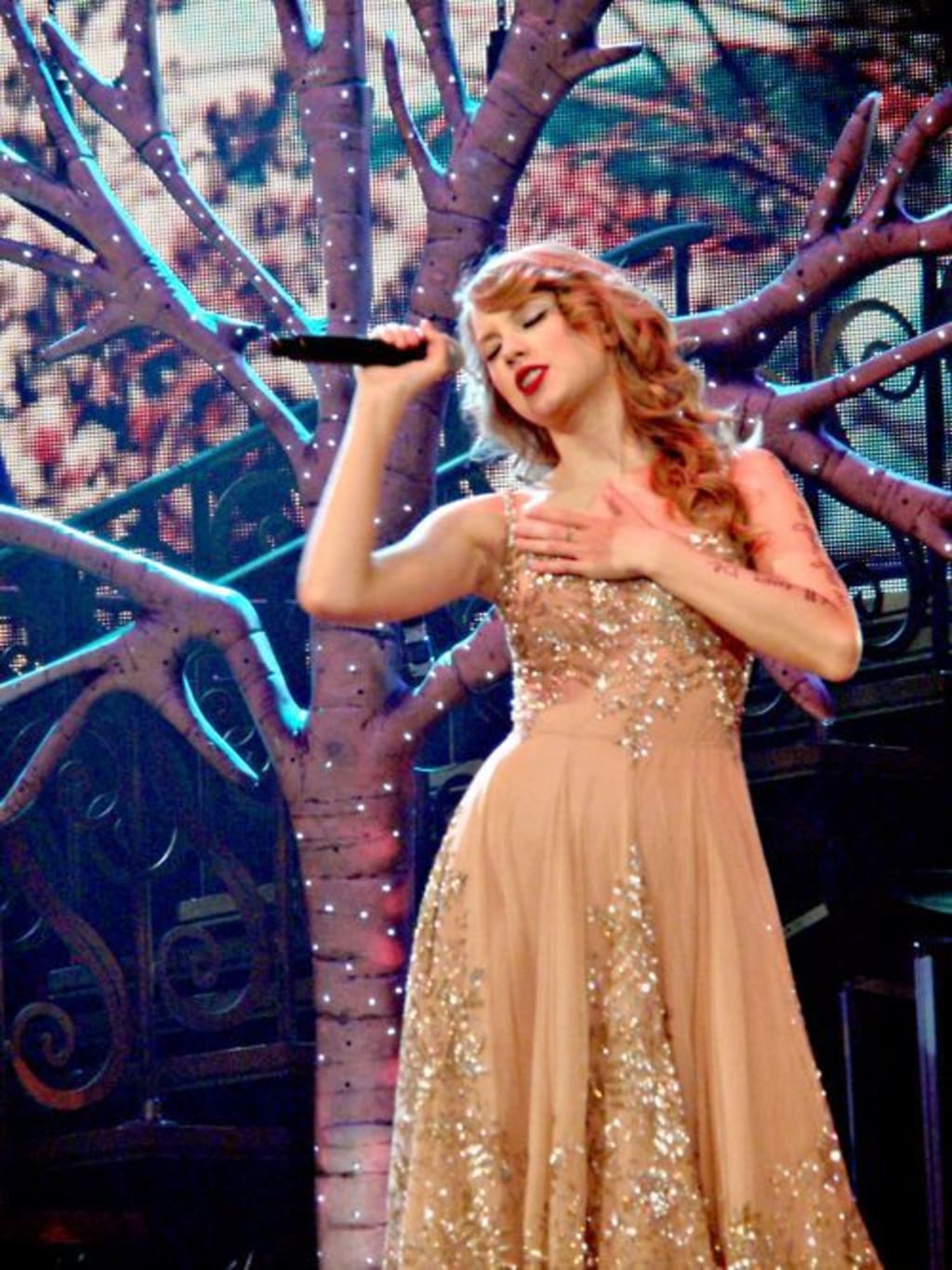
It has been quite some time since Taylor Swift stepped into the music scene as a country singer at 16 years old. She had set a precedent for starry-eyed female country singers struggling to overthrow the beer and pickup truck fad set by their male counterparts. Swift established herself as a force to be reckoned with through the release of her self-titled debut album. Swift has long since moved on from dreaming of a Romeo and Juliet love story and has struggled to prove to critics that age did not define her ability to write musical masterpieces that could dominate the charts.
Taylor Swift bids a farewell to country music with her third studio album, Speak Now. It entails a range of complex sentiments in its fourteen tracks. In its entirety, the album was solely written by Swift in response to sceptics speculating her ability to write songs and have co-produced them with long-time collaborator, Nathan Chapman.
Listeners are taken for a ride by the album's first track, “Mine”. This country-pop song embodies the apprehension of someone with a tendency to evade the disastrous effects that befall love but finds an exception to it. The lyrics transcend feelings of uncertainty while holding out hope for the future, making it a more realistic version of “Love Story”, which painted a picture of love with a happy ending.
Swift ventures into the pop genre with an upbeat pop-rock song entitled “Sparks fly”. It pursues a narrative of a girl knowingly engaging in an unhealthy relationship because the chemistry or “sparks” is too strong to ignore. This reoccurring theme presents itself in “Dear John” and in the successor album, Red.
“Dear John” bids an ode to Swift's short-lived romance with fellow singer-songwriter John Mayor with him at 32 and Swift nearly 19 at the time. She places blame on herself admitting, “Maybe it's me and my blind optimism to blame” and Mayor “Or maybe it's you and your sick need to take love and give it away.” The sweet lulls of the guitar slurs set an exemplary backdrop as she reflects on the toxicity of the relationship.
Succeeding the aftermath of the breakup and the song’s release, Mayor’s reception of “Dear John” was not well received as he insults Swift's song writing capabilities referring to it as “cheap song writing". Taylor Swift has encountered much reproof from sceptics drawing attention to her weak vocals in her earlier days. Compared to her peers, Carrie Underwood and Miranda Lambert’s fierce and indefatigable vocals overpower her less technically adept voice. On “Mean”, she addresses the criticism, and in doing so demonstrates how she handles adversity with a sense of maturity and humour. In fact, she cheekily taunts “Someday I'll be big enough so you can't hit me and all your ever gonna be is mean”. The bluegrass song heavily relies on the banjo and fiddle making it the pluckiest country song Swift has crafted to date.
Marking a first in her career, Swift publicly and poetically apologises (indirectly) to an ex-lover and takes responsibility for the end of the relationship. “Back to December's” orchestral soft rock euphony drives a chorus filled with the inescapable honesty of taking someone's love for granted: “Wishing I'd realised what I had when you were mine.” The solemn guitars lead Swift in a remorseful plea for forgiveness for her careless actions: “This is me swallowing my pride standing in front of you saying I'm sorry for that night.”
By a twist of faith, Swift recounts in a poignant power rock ballad, “The Story of Us” an awkward meeting with an ex-boyfriend. A complete contrast from the “Last Kiss” which focuses on the final romantic contact in a relationship that ended abruptly. The chimes of the piano mimic the melodic throes of Swift's anger, confusion, and longing as she reminisces on old memories.
Taylor Swift's conversational writing style gives way to cleverly worded narratives, one present in the song “Speak Now”. This incessantly catchy song toys with the idea of speaking up as the preacher calls for anyone in the congregation to speak against the marital union.
In “Enchanted”, Swift fantasises about a prospective lover. The power ballad fuels a chorus that describes a once in a lifetime run-in with a stranger that will leave you “Wonderstruck and blushing all the way home.”
It is hard not to be won over by Swift's symphonic rock song, “Haunted”. The orchestra effortlessly intensifies the vehement chaotic struggle to shake off the recollections of a former flame. “Something’s made your eyes go cold” and “Come on come on don't leave me like this” perfectly encapsulates one's cries of desperation as someone detach themselves from you. Swift's flair for the dramatics is evident in “Better Than Revenge”. The aggressive pop song incites Swift's lust for retribution on a girl who stole her boyfriend.
You might recall the unfortunate event at the VMA's in 2009 when Kanye West interrupted Swift’s speech and professed that Beyoncé had a better music video than her. In response to the ordeal, Swift wrote “Innocent”, a soft rock song that excuses his actions, saying, “32 and still growing up now.” The album concludes with “Long Live”, a love letter written for her fans so that everyone “will be remembered.” It condenses Swift's experience performing on stage during her fearless tour.
Here lies Swift’s diaristic songs of fairy tale romance, frustration, heartbreak, and vengeance. Taylor Swift's carefully crafted lyrics lends itself as an outlet for teens, young adults, and elderly listeners alike. The universality of her storytelling and the intimate confessions she discloses popularises many of her songs made her a relatable figure. It is safe to say that she is no longer the confused and uncertain girl that moved out of her parents’ house in “Never Grow Up”. Speak Now showcases Swift’s versatility as a writer weaving through bluegrass, pop, pop-punk and symphonic rock in a way that lingers in your mind long after the melody is over.
About the Creator
Keep reading
More stories from Keira Brown and writers in Beat and other communities.
Black Lives Matter
Many have heard the chants of angered frustration from the activists of Black Lives Matter. This movement garnered international recognition in the summer of 2020 in response to the murder of George Floyd by a Minneapolis police officer Derek Chauvin. The social and political movement known as Black Lives Matter (BLM) advocates against all racially motivated crimes against black people. The movement began with a simple hashtag (#BlackLivesMatter) following George Zimmerman's vindication in the shooting of Trayvon Martin. Since then the movement became nationally recognised for shining a spotlight on the cracks of the criminal justice system towards African Americans. Specifically, the deaths caused by police brutality.
By Keira Brown5 years ago in The Swamp
Ludacris and Nelly draw backlash over bookings at MAGA-coded music festival
Ludacris and Nelly headlining a mostly right-wing event is good for them. It’s also great for the genre of hip hop. The two rap veterans have showcased their talents on other stages. Why can’t they perform for mostly MAGA folks and grab that bag?
By Skyler Saunders3 days ago in Beat
"Heat of the Moment" Is the Guilty Pleasure That Defined an Era
There’s a moment in every music snob’s life when they have to admit defeat. For me, it was the first time I heard the synth swell in the opening of Asia’s “Heat of the Moment.” I was raised on the idea that “real” rock music had to be raw, unpolished, and preferably recorded in someone’s garage with a busted amp and a microphone held together with duct tape.
By Diane Foster26 minutes ago in Beat



Comments
There are no comments for this story
Be the first to respond and start the conversation.