
Songs that get stuck in your head (earworms)
When Your Brain Becomes a Broken Record Player

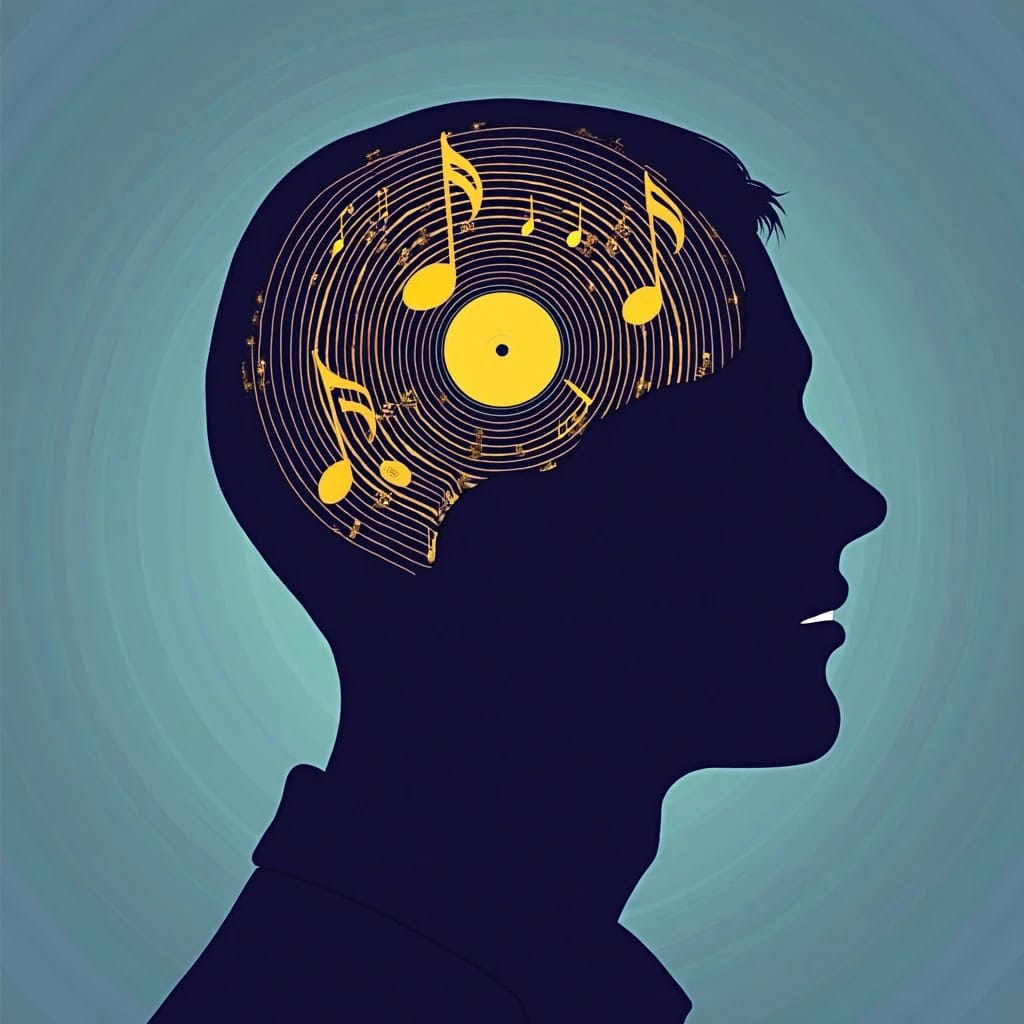
It's 3 AM, and you're lying in bed trying to fall asleep when suddenly, without warning, your mind begins to play the opening bars of "Don't Stop Believin'" for what feels like the thousandth time today. You didn't choose this musical moment—it simply appeared, uninvited, like an overly enthusiastic house guest who refuses to leave. Welcome to the fascinating, sometimes maddening world of earworms.
The term "earworm" might sound like something from a science fiction horror movie, but it's actually the colloquial name for what scientists call "involuntary musical imagery" or "stuck song syndrome." These are the melodies, lyrics, or rhythmic patterns that loop endlessly in our minds, playing on repeat whether we want them to or not. They're the soundtrack to our subconscious, the background music to our daily lives that we never ordered but somehow always receive.
The Anatomy of Musical Possession
What Makes a Song Stick?
Not all songs are created equal when it comes to lodging themselves in our neural pathways. Research has revealed that earworms share certain characteristics that make them particularly "sticky." The most persistent melodies tend to have a few key features: they're relatively simple, highly repetitive, and contain unexpected musical intervals that create a sense of tension followed by resolution.
Think about the songs that have haunted you recently. Chances are they feature repetitive choruses, catchy hooks, or unusual note progressions that your brain finds irresistible. "Call Me Maybe" by Carly Rae Jepsen, for instance, became a global earworm phenomenon not just because of its upbeat tempo, but because of its simple, repetitive structure that makes it almost impossible to forget once heard.
The temporal structure of these musical fragments also plays a crucial role. Most earworms last between 15 to 30 seconds—just long enough to establish a pattern but short enough to loop seamlessly back to the beginning. It's as if our brains have identified the perfect length for a mental musical loop, creating an endless cycle that can persist for hours, days, or even weeks.
The Neuroscience Behind the Loop
When we examine what happens in our brains during an earworm episode, we discover a fascinating interplay between memory, emotion, and musical processing. Neuroimaging studies have shown that earworms activate the auditory cortex—the same region that processes actual music—even when no external sound is present. This means that when you're "hearing" that persistent melody, your brain is literally experiencing it as if real music were playing.
The phenomenon also involves the brain's motor cortex, which controls movement and is responsible for our ability to tap our feet, nod our heads, or dance to music. This explains why earworms often come with an irresistible urge to hum, whistle, or physically move to the rhythm. Your brain isn't just remembering the song; it's preparing your body to perform it.
Memory consolidation plays a significant role as well. The hippocampus, our brain's memory center, works overtime during earworm episodes, strengthening the neural pathways associated with the stuck song. This creates a feedback loop: the more the song plays in your head, the stronger the memory becomes, and the more likely it is to return in the future.
The Triggers That Set the Stage
Environmental and Emotional Catalysts
Earworms don't typically appear out of nowhere—they're usually triggered by specific environmental or emotional cues. Sometimes the trigger is obvious: you hear a song on the radio, and it immediately begins its mental loop. But often, the connection is more subtle and surprising.
Emotional states can be powerful earworm catalysts. Stress, boredom, and fatigue all increase our susceptibility to stuck songs. When our minds are either overstimulated or understimulated, they seem to fill the gap with familiar musical patterns. This explains why earworms often strike during mundane activities like commuting, cleaning, or lying in bed trying to sleep.
Environmental triggers can be remarkably specific and personal. The smell of coffee might trigger the jazz standard you always heard at your favorite café. A particular type of weather might summon the song you were listening to during a memorable moment years ago. These associative triggers demonstrate how deeply music is woven into our personal narratives and memories.
Recent exposure is another significant factor. Songs we've heard within the past 24 hours are much more likely to become earworms than older memories. This is why that commercial jingle you heard this morning might be the soundtrack to your afternoon, despite your best efforts to forget it.
The Psychology of Musical Obsession
Why Some People Are More Susceptible
Not everyone experiences earworms with equal frequency or intensity. Research has identified several personality traits and cognitive patterns that make some individuals more prone to these musical loops. People with higher levels of musical training and appreciation tend to experience more earworms, possibly because they have more developed neural networks for processing and storing musical information.
Individuals who score higher on measures of neuroticism and anxiety also report more frequent and distressing earworm episodes. This connection suggests that earworms might serve as a form of mental self-regulation, providing a predictable pattern of stimulation when our emotional state is unstable.
Interestingly, people who frequently engage in mind-wandering and daydreaming are also more susceptible to earworms. This makes sense from a cognitive perspective: when our attention isn't focused on external tasks, our minds become more available for internally generated content, including musical loops.
The Gender and Age Factors
Studies have found intriguing differences in earworm experiences across demographic groups. Women tend to report longer earworm episodes and find them more emotionally engaging, while men are more likely to experience earworms related to instrumental music rather than vocal tracks.
Age also plays a role, but not in the way you might expect. While older adults experience earworms less frequently than younger people, when they do occur, they tend to involve music from their youth—particularly songs they heard between the ages of 15 and 25, during what psychologists call the "reminiscence bump." This period of life, when we're forming our adult identities, seems to create the strongest and most persistent musical memories.
Cultural and Social Dimensions
Earworms don't exist in isolation—they're deeply influenced by cultural trends and social connections. Certain songs seem to achieve "viral" status in our collective consciousness, becoming shared earworms that sweep through populations like musical epidemics. This phenomenon has only intensified in the age of social media, where songs can spread globally within hours.
The rise of short-form video content on platforms like TikTok has created a new category of earworms: ultra-condensed musical snippets designed to be instantly memorable and endlessly repeatable. These "micro-earworms" represent a evolution in how music infiltrates our consciousness, optimized for maximum stickiness in minimal time.
Cultural background significantly influences which songs become earworms. The melodies that stick in our heads are typically drawn from the musical traditions we know best, suggesting that earworms are not just neurological phenomena but cultural artifacts that reflect our social and musical environments.
Coping Strategies and Solutions
For those moments when an earworm becomes more curse than curiosity, several strategies can help break the cycle. One of the most effective approaches is deliberate engagement with the complete song. Often, earworms persist because our brains have latched onto an incomplete musical phrase. By listening to the entire song from start to finish, we can provide closure and satisfy our brain's need for musical resolution.
Another successful technique involves substitution—deliberately replacing the unwanted earworm with a different, more pleasant song. This works best when the replacement song has a similar tempo or structure, making it easier for your brain to accept the swap.
For persistent cases, engaging in demanding cognitive tasks can help break the loop. Complex mental activities like solving puzzles, reading challenging material, or engaging in detailed conversations require enough mental resources to interrupt the earworm's cycle.
Some people find success with "palate cleansers"—short musical pieces specifically chosen to neutralize earworms. These might be songs with unusual structures, atonal compositions, or even silence-based pieces that help reset the brain's musical processing.
The Silver Lining of Mental Music
Despite their sometimes annoying nature, earworms serve several positive functions. They can provide comfort during stressful situations, offering a familiar and predictable source of mental stimulation. Many people report that their earworms reflect their current emotional state, serving as a kind of internal emotional barometer.
Earworms also demonstrate the remarkable capacity of human memory and the profound impact music has on our lives. They're evidence of our brain's sophisticated ability to store, process, and spontaneously recall complex auditory information. In many ways, they're a testament to music's unique power to integrate with our neural architecture in ways that few other experiences can match.
For musicians and composers, understanding earworms can provide valuable insights into what makes music memorable and emotionally resonant. The same qualities that create persistent earworms—simplicity, repetition, and emotional engagement—are often the hallmarks of successful and enduring musical compositions.
The Endless Song
As we navigate our daily lives accompanied by this internal soundtrack, it's worth appreciating earworms for what they truly are: a fascinating intersection of neuroscience, psychology, and culture. They remind us that music is far more than entertainment—it's a fundamental part of how our brains process information, regulate emotions, and connect with the world around us.
The next time you find yourself humming along to an uninvited mental melody, remember that you're participating in one of humanity's most universal experiences. Your earworm might be annoying, but it's also a small miracle—a demonstration of your brain's remarkable ability to create rich, complex experiences from nothing more than stored patterns of sound and memory.
In a world that often feels chaotic and unpredictable, perhaps there's something comforting about knowing that somewhere in the background of our consciousness, there's always a song playing, ready to accompany us through whatever comes next.
About the Creator
Muhammad Sabeel
I write not for silence, but for the echo—where mystery lingers, hearts awaken, and every story dares to leave a mark
Keep reading
More stories from Muhammad Sabeel and writers in Beat and other communities.
The Mysterious Record That Changed My Life
I had never believed in fate, but after that night, I’m not sure I believe in anything anymore. It started innocently enough. I was a struggling music producer, working long hours in my dimly lit apartment, surrounded by the usual mix of wires, soundboards, and empty coffee cups. The music world was tough, especially when you were trying to carve your name into the industry. But I was determined. I wasn’t going to let the fear of failure stop me.
By Muhammad Sabeel10 months ago in Beat
Review of 'Man on the Run'
My wife and I saw Man on the Run, a nearly 2-hour documentary on Amazon Prime, about Wings, Paul McCartney's group that flew around the world from shortly after The Beatles broke up in early 1970 to shortly after John Lennon was murdered at the end of 1980, making a Beatles reunion forever impossible.
By Paul Levinson4 days ago in Beat
Drake Continues To Dominate Spotify With New Hip-Hop Streaming Milestone
Drake continues his victory lap regardless of the fact he hasn’t dropped a solo album in almost three years. He doesn’t have to. He surpassed three billion views and has the Hova Effect. What is the Hova Effect? It means he will not lose. He might have taken a hard left hook from the Kendrick Lamar feud, but he is immune to even hits like this. Jay-Z, Shawn “Hova” Carter, the Michael Jordan of rap, stated this effect when he said he didn’t mind if radio didn’t play his songs if he didn’t play their shows. This is the inverse in a sense, though. Drake doesn’t care about hate online because he will always sell no matter what happens.
By Skyler Saunders2 days ago in Beat
Who is your "Person"?
It's important to recognize that you cannot go through life as easily on your own. My name is Elizabeth and I'm a survivor of child abuse and horrific trauma. Healing from trauma is not a quick fix and recognizing that it will take time, is part of the struggle.
By Elizabeth Woods2 days ago in Psyche




Comments
There are no comments for this story
Be the first to respond and start the conversation.