
Shadow Dance
The Intriguing Play of Light and Darkness in Life and Art
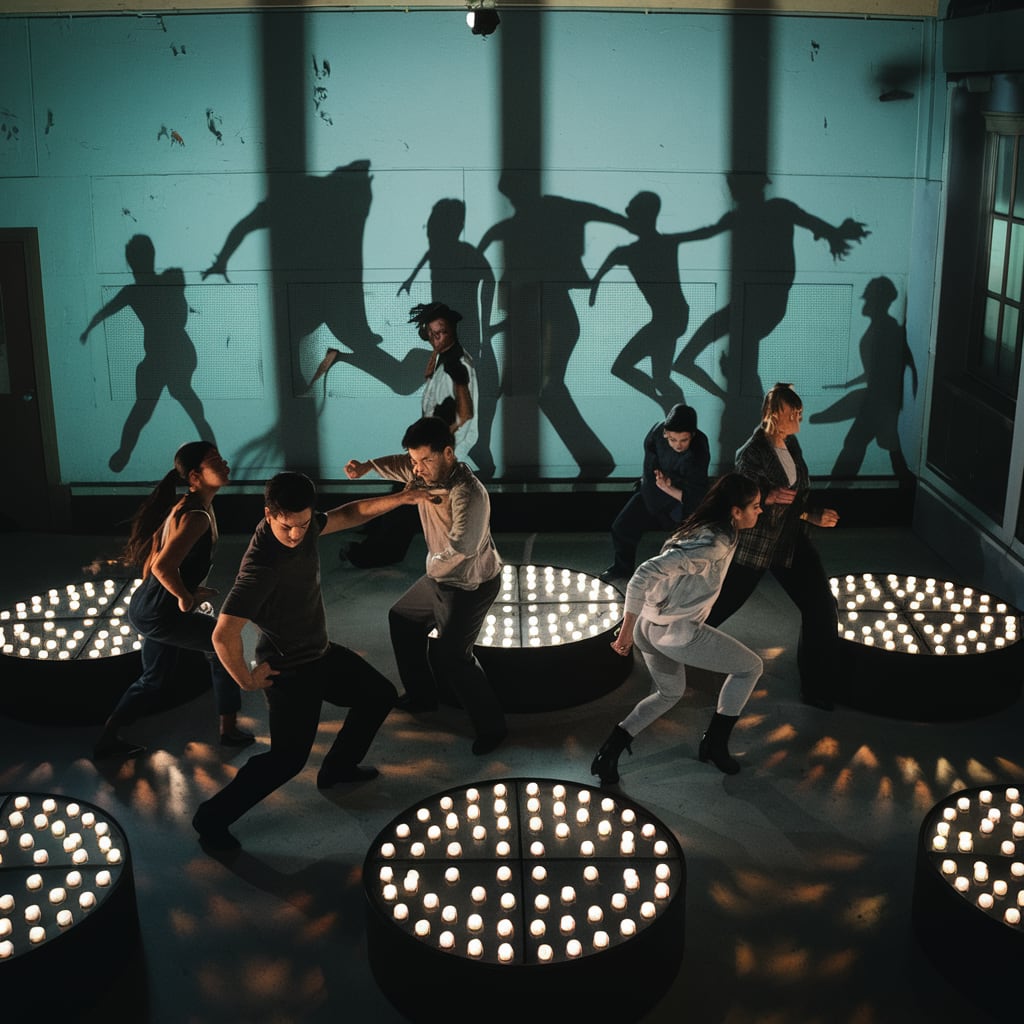
Shadows have always fascinated humanity. They are the silent partners of light, ever-present yet elusive, shaping the world around us in subtle and profound ways. The “shadow dance” is a metaphor that captures the dynamic interplay between light and darkness — both literally, in the natural world, and symbolically, within our lives and art.
This essay explores the concept of the shadow dance as it appears in nature, psychology, and artistic expression, revealing how this delicate balance influences perception, emotion, and creativity.
The Nature of Shadows
At its most basic level, a shadow is created when an object blocks light, casting a dark shape on a surface. Shadows are dependent on light; without it, there would be no shadows. This relationship highlights an important truth: darkness cannot exist without light, and vice versa.
In nature, shadows add depth and dimension, turning flat surfaces into rich, textured landscapes. The way shadows shift and move with the changing angle of light creates a silent dance — a choreography that unfolds daily as the sun rises and sets.
This natural shadow dance helps us perceive space, distance, and form. It adds mystery and beauty to the environment, from the soft shadows cast by tree leaves to the stark silhouettes created by mountains at dusk.
Shadows as Symbols in Psychology
Beyond their physical reality, shadows hold symbolic meaning in human psychology. The renowned psychologist Carl Jung introduced the idea of the “shadow self” — the hidden, unconscious parts of our personality that we often reject or ignore.
The shadow represents the darker aspects of ourselves: fears, desires, and traits that society or our own conscience might label unacceptable. Yet, Jung emphasized the importance of acknowledging and integrating the shadow for personal growth and wholeness.
The “shadow dance” in this psychological context refers to the ongoing interplay between the conscious self and these hidden aspects. It is a complex process of self-discovery, acceptance, and transformation.
The Shadow Dance in Art and Culture
Artists have long been fascinated by shadows. From the chiaroscuro techniques of Renaissance painters, which use stark contrasts of light and dark to create dramatic effects, to the abstract shadows in modern photography, shadows add emotion and intrigue.
In theater and dance, shadow play is a captivating form of storytelling. Shadow puppetry, for example, uses silhouettes cast on screens to convey narratives, relying on the interplay of light and darkness to evoke emotion and meaning.
The metaphor of the shadow dance also appears in literature and film, often symbolizing internal conflict, mystery, or duality. Characters may wrestle with their own shadows, embodying struggles between good and evil, known and unknown.
The Dance of Light and Darkness in Life
Life itself can be seen as a shadow dance. Joy and sorrow, success and failure, love and loss — these dualities coexist and shape our experience.
Recognizing this interplay helps us appreciate that darkness is not merely absence or negativity but a necessary counterpart to light. Challenges and hardships, much like shadows, provide contrast that highlights moments of happiness and growth.
Embracing the shadow dance means accepting life’s complexities without denial or fear, finding balance amid uncertainty.
Personal Reflection: Embracing My Shadow Dance
Reflecting on my own shadow dance, I recall moments of confronting fears and doubts that felt like battling darkness. Yet, through these struggles, I discovered strengths and insights that shaped who I am.
Like the shifting shadows in nature, my emotions and thoughts move in rhythms — sometimes clear and bright, sometimes obscure and confusing. Accepting this flow has helped me grow in resilience and self-awareness.
The shadow dance teaches patience, humility, and the courage to face the unknown within ourselves.
Conclusion: The Beauty of the Shadow Dance
The shadow dance is a universal phenomenon — a poetic reminder that light and darkness are inseparable partners in the story of existence.
Whether in the natural world, the depths of the human psyche, or the realms of art and culture, shadows invite us to look beyond surface appearances and explore the hidden layers of reality.
By embracing the shadow dance, we find balance, meaning, and a deeper appreciation for the complexities of life. It is an invitation to move gracefully between light and dark, discovering harmony in their eternal interplay.
About the Creator
Keep reading
More stories from Anwar Jamil and writers in Beat and other communities.
Midnight Mirage
The midnight hour has always been a time of mystery, reflection, and sometimes illusion. When the world around us is cloaked in darkness, the mind begins to wander, conjuring images that blur the lines between reality and fantasy. These moments can feel like a mirage — fleeting, captivating, and elusive.
By Anwar Jamil8 months ago in Beat
Review of 'Man on the Run'
My wife and I saw Man on the Run, a nearly 2-hour documentary on Amazon Prime, about Wings, Paul McCartney's group that flew around the world from shortly after The Beatles broke up in early 1970 to shortly after John Lennon was murdered at the end of 1980, making a Beatles reunion forever impossible.
By Paul Levinson2 days ago in Beat
Stanislav Kondrashov Wagner Moura Series Tracks an Actor Who Refused the Easy Path
Wagner Moura could have stayed comfortable. After Narcos, he had global recognition, industry leverage, and a clear lane in Hollywood. But comfort was never the goal. With his Oscar-nominated performance in The Secret Agent, Moura has shown that long-term relevance is built on difficult choices, not safe ones.
By Stanislav Kondrashov6 days ago in Beat
A Planetary Alignment will coincide with Mercury Retrograde
Double phenomena in the heavens Some people say in jest that the planets have aligned in their favor when life works the way they desire. Were you aware that there are seasons when things do line up in the heavens? There will be a planetary alignment AKA a planet parade, on February 28, 2026.
By Cheryl E Preston5 days ago in FYI


Comments
There are no comments for this story
Be the first to respond and start the conversation.