
Revvnant's "Death Drive" - Between the Sacred and the Damned
Industrial pulses, cinematic soundscapes and emotional intensity collides in Elias Schutzman's fearless new album.

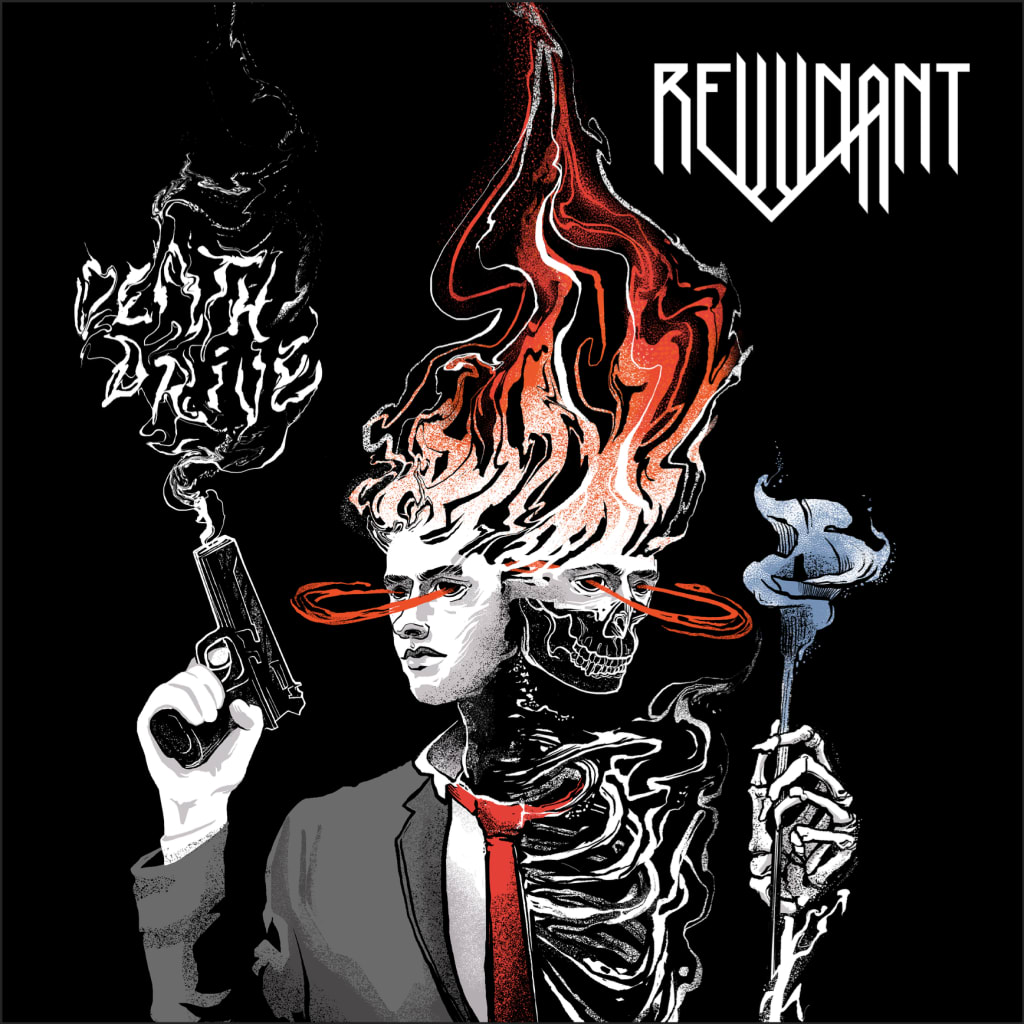
In a world teetering between ecological collapse and spiritual exhaustion, Revvnant’s Death Drive is less like an album and more like a reckoning.
The project of Baltimore based multi-instrumentalist Elias Schutzman, who is known for his work with The Flying Eyes and Black Lung, blends industrial pulse, ancient resonance and cinematic atmosphere into something both deeply modern and eerily timeless.
Listen in here:
The project is the vision of Elias Schutzman, a multi-instrumentalist and producer whose creative life has carried him across continents.
The story of Death Drive begins in Berlin’s Neukölln neighborhood, where Schutzman lived in 2018 trying to heal from the dissolution of his marriage. It was there, amid the city’s restless art scene and crumbling grandeur, that the seeds of the album began to form. Berlin’s mix of darkness and light, the collision of its cultures, the shadow of history and the raw immediacy of re-invention courses through every track.
But Death Drive is more than a personal reckoning. It’s a diagnosis of human nature itself. Schutzman has said that the album’s title refers to “human nature’s fundamental drive toward self-destruction,” and that sentiment permeates every detail. Across nine tracks, he channels political anger, spiritual despair and fleeting hope into music that is both intimate and apocalyptic.
The opener, “Death Cult,” arrives with searing urgency, its distorted guitars and pounding rhythms taking aim at Christian nationalism. “Horror” follows, pulsing with industrial menace and lyrical fury directed toward the rise of fascism in America. Both tracks set the tone for an album that refuses to flinch at darkness but also refuses to surrender to it.
From there, the record deepens into atmospheric exploration. “Rise” is a meditation on climate collapse, combining mournful piano with swirling Mellotron and Moog synths. This track is like a lament for a planet on the brink, with its ethereal layers melting into one another in a psychedelic haze. “Alien World,” written during the height of the Covid pandemic, captures the collective disorientation of isolation, while “Neukölln” (named for the Berlin district) embodies the strange euphoria of survival - depression and wanderlust colliding in a dreamlike drift.
Other songs expand the global lens even further. “Damascus” reckons with the devastation of war in the Middle East, while “Rusted Hearts” bears witness to the quiet tragedies of addiction and urban poverty. The closing track, “Into the Grey” channels the awe and terror of nature’s magnitude, translating the grandeur of mountains into sound - slow-building, shimmering, and vast.
The album’s production is strikingly cinematic. Schutzman layers piano, synthesizers and electronic drums with an ear for both texture and emotion, often allowing melodies to drift and dissolve rather than resolve neatly. Guest musicians on guitar, bass, keys and backing vocals give each song its own organic dimension. Vocals were recorded and the album mixed by J. Robbins (of Jawbox) at Magpie Cage Studio in Baltimore, and the mastering by Paul Logus adds the final clarity that allows the album’s weight to fully resonate.
What makes Death Drive particularly compelling for the world music listener is its refusal to localize pain or beauty. Schutzman’s approach to music is holistic, even spiritual, despite its dark content.
He treats sound like a sculpture with shaping distortion, melody and silence with an instinctive awareness of emotional truth. As the album closes with “Into the Grey,” the listener is left with the image of vast, ancient mountains, a reminder of both nature’s indifference and humanity’s fleeting existence.
In an era of disposable singles and algorithmic playlists, Death Drive is almost radical in its ambition and cohesion. It’s an album to sit with, to struggle with, to surrender to.
For those willing to engage deeply, Revvnant’s latest work offers not just a reflection of our broken world, but a visceral soundtrack to enduring it.
About the Creator
Whitney Miller
🌎 Adventurous & Musical
Stories shaped by places, music & life
Poetry, fiction, memoir & lived experience
Written without A.I.
© Whitney Miller
Keep reading
More stories from Whitney Miller and writers in Beat and other communities.
Melodic Rock Veterans SIREN Return With Their Defining Statement on "Listen"
South Florida’s SIREN might have been born in the 1980's, but their new album Listen doesn’t sound like a nostalgia act. It sounds like a band finally finding the voice they’ve been chasing for decades. Built on the sturdy bones of melodic rock and shaped by the storytelling spirit of Middle America, Listen captures a rare mix of maturity and vitality that few veteran bands manage to achieve.
By Whitney Miller5 months ago in Beat
My First Time Skiing and I Got Lost, Alone, in the French Alps
Looking back, I can trace some of my life’s biggest adventures to a simple action from my sister. She’d introduced me to Tommy (a very long time ago), a colleague of hers, who had overshared his penchant for Italian-looking women, and I ticked that box.
By Chantal Christie Weiss3 days ago in Humans


Comments
There are no comments for this story
Be the first to respond and start the conversation.