
Revealed: The Secret Guitar Techniques Rock Legends Don’t Want You to Know
For decades, rock guitarists have been the sorcerers behind the scenes, conjuring sounds that captivate audiences and leave us in awe. There’s a mystique about the techniques that rock legends employ — a collection of methods so refined and secretive, many aspiring players have long believed they were meant only for the chosen few.


Today, we’re diving deep into the arsenal of these guitar heroes. In this post, we’ll explore the real techniques that have defined eras of rock, uncover the latest updates shaping modern playing, and provide a roadmap to mastering these skills. Whether you’re a beginner or a seasoned shredder, prepare to have your musical mind blown.
Disclaimer: The techniques discussed in this post are based on established guitar methods and are widely practiced among guitarists around the world. While some players might refer to them as “secrets,” their true power lies in the dedication and practice you put into mastering them.
The Allure of the Secret Techniques
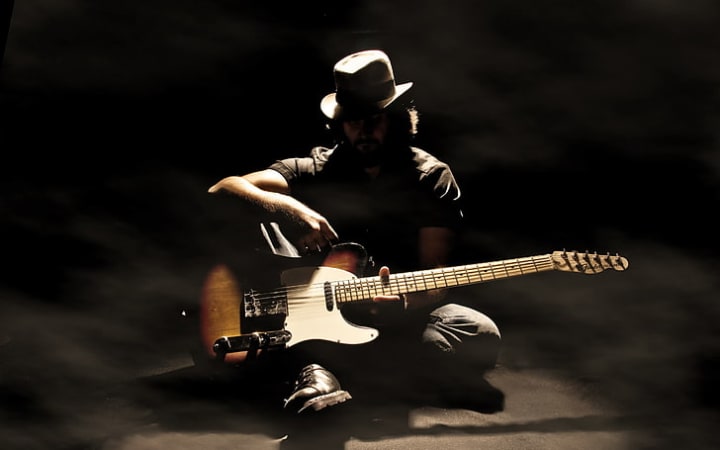
Rock music isn’t just about playing notes — it’s an art form where emotion meets precision. Throughout the 1960s, 70s, and beyond, guitarists have innovated techniques that transcended traditional playing. Many of these methods were closely guarded secrets, passed down through private lessons or live performance observations. The idea that these secrets are “hidden” only adds to their allure, inviting enthusiasts to unravel the mysteries behind explosive solos and intricate riffs.
A Legacy of Innovation
Rock legends such as Jimi Hendrix, Eddie Van Halen, and Jimmy Page were not content with simply following conventional methods. Instead, they pushed the boundaries of what was possible on the guitar. They introduced techniques that redefined sound and performance — techniques that were once considered too radical for mainstream acceptance. Over time, these techniques have evolved, mixing with modern technology and new approaches, giving birth to an ever-expanding vocabulary of guitar mastery.
Breaking Down the Techniques
In this section, we’ll explore a variety of guitar techniques that have become the cornerstone of rock playing. These aren’t just theoretical ideas; they’re practical tools that you can incorporate into your practice sessions.
1. Legato Mastery
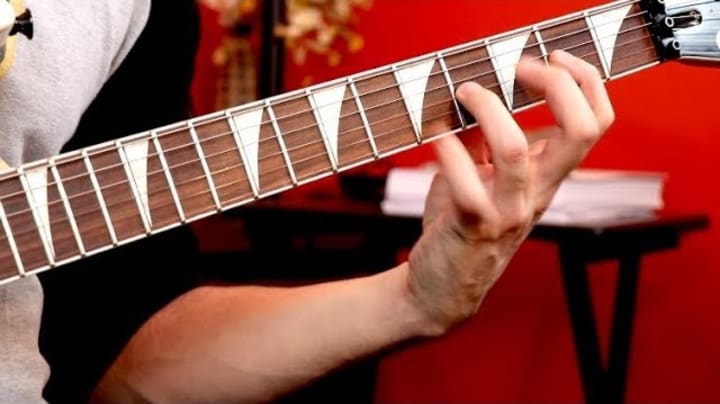
Legato playing is the smooth, flowing technique where notes blend together seamlessly. Instead of plucking every note individually, legato relies on hammer-ons and pull-offs to create a fluid sound. This approach is essential for creating rapid-fire guitar solos that sound as if they were being played by a machine.
Hammer-Ons and Pull-Offs: These techniques allow you to play multiple notes with minimal picking. Hammer-ons involve slamming your finger down on the fretboard to sound a note, while pull-offs involve pulling your finger off to let another note ring out.
The Modern Twist: Today, many guitarists are integrating legato with digital effects. Delay pedals and reverb can add a haunting atmosphere to legato lines, making even simple patterns sound mesmerizing.
2. Two-Handed Tapping
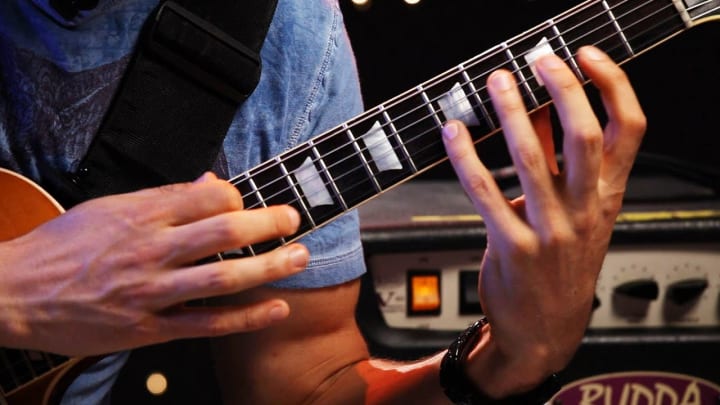
Popularized by Eddie Van Halen in the late 1970s, two-handed tapping revolutionized rock solos. This technique involves using both hands on the fretboard, effectively turning it into a piano-like instrument. The result is a barrage of notes that can span multiple octaves in a matter of seconds.
Technique Breakdown: Tapping requires you to “hammer” notes onto the fretboard with your picking hand, while your fretting hand continues to pick out additional notes.
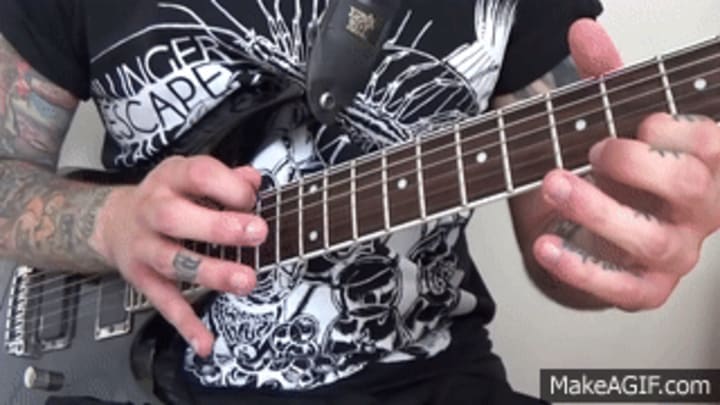
Contemporary Updates: Modern guitarists are exploring multi-finger tapping and even integrating percussive elements. Some players use tapping not just for speed, but to create intricate chordal textures that were once unheard of.
3. Sweep Picking and Economy Picking
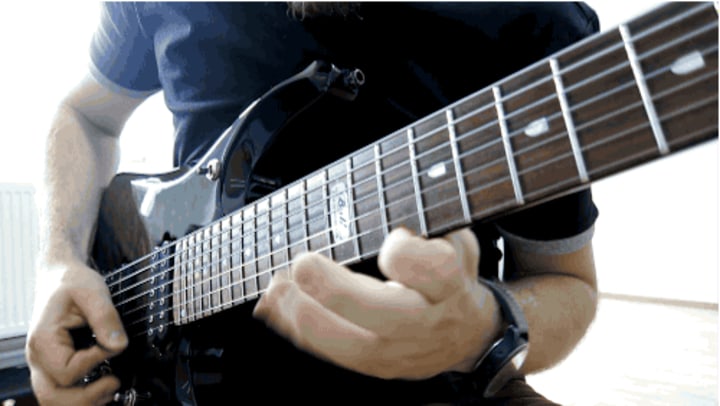
Sweep picking is a technique that allows guitarists to play arpeggios with remarkable speed and fluidity. It involves a smooth, continuous motion of the pick, “sweeping” across the strings. Economy picking, on the other hand, is a more efficient form of alternate picking, minimizing motion to improve speed and accuracy.
How It Works: With sweep picking, the pick moves in one fluid motion across the strings, while economy picking focuses on reducing unnecessary movements. Both techniques require rigorous practice and impeccable timing.
Modern Applications: Today, these techniques are frequently combined with legato runs and tapped notes, offering a multi-layered approach to soloing that is both technically challenging and aurally captivating.
4. Pinch and Artificial Harmonics
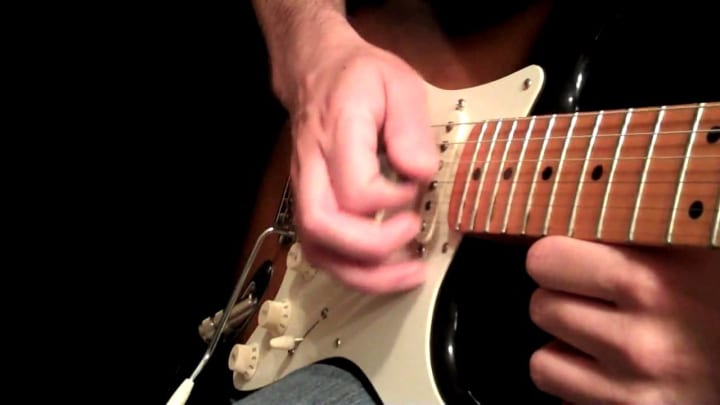
Pinch harmonics are one of the most signature sounds in rock. When executed correctly, they produce a squealing, almost otherworldly tone that has become synonymous with rock guitar solos.
The Technique: To achieve a pinch harmonic, you lightly graze the string with your thumb immediately after picking it. The result is a high-pitched harmonic that cuts through the mix.
Artificial Harmonics: Building on the idea of natural harmonics, artificial harmonics involve techniques like tapping on specific fretboard points to create bell-like tones.
Recent Innovations: With the advent of digital signal processing, some modern pedals now offer adjustable harmonic generators. These devices can mimic the pinch harmonic effect or even generate entirely new textures, giving you unprecedented control over your sound.
5. The Magic of the Whammy Bar
The whammy bar, or tremolo arm, is more than just a novelty; it’s a powerful tool for adding expression and emotion to your playing. It allows for pitch bending effects that can make your guitar “sing.”
Diving into Effects: By manipulating the whammy bar, you can perform dive bombs, subtle vibratos, or even emulate a slide guitar sound.
Technology Meets Tradition: Modern guitars often come equipped with more advanced tremolo systems. These allow for fine-tuned adjustments, making it easier to maintain tuning stability while still unleashing a wild array of pitch modulations.
6. Hybrid and Alternate Picking
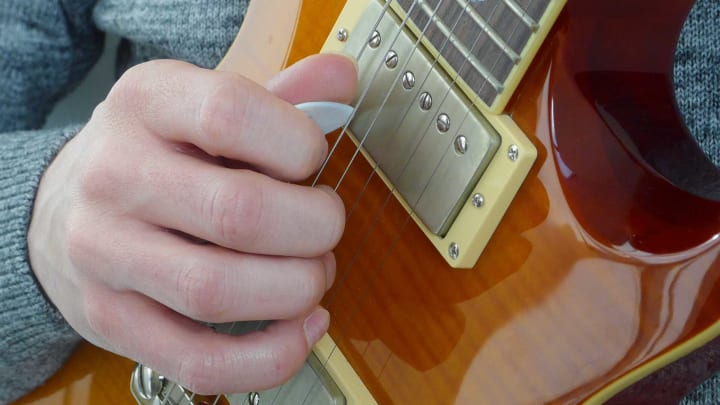
Hybrid picking blends the use of a pick and the fingers of your picking hand, enabling a unique mix of precision and fluidity. Alternate picking, a staple for many rock solos, involves using a strict up-and-down motion with the pick, which can be evolved into more complex patterns with hybrid techniques.
Precision Meets Versatility: Hybrid picking is especially useful for playing complex patterns that involve both strummed chords and intricate single-note lines.
Evolving Techniques: In recent years, many guitarists have adopted hybrid picking to incorporate rapid-fire note sequences while simultaneously strumming, creating a layered sound that adds depth to solos and rhythm parts alike.
7. Feedback Manipulation and Controlled Distortion
Feedback has long been a tool in the rock guitarist’s arsenal. When controlled correctly, it transforms your guitar’s sound into a swirling vortex of sustain and overtones. Controlled distortion further refines this effect, allowing you to create sounds that are both chaotic and musical.
The Art of Feedback: By positioning your guitar at just the right distance from an amplifier, you can coax out a cascade of overtones. This requires a delicate balance of gain, volume, and positioning.
Digital Enhancements: Modern effects pedals and software plugins now offer tools to simulate and control feedback, making it accessible even for players in smaller practice settings.
8. Alternative Tunings and Chord Voicings
While technique is crucial, the way your guitar is set up can drastically influence the sounds you produce. Alternative tunings like DADGAD, open G, or drop D can unlock new chord voicings and sonic textures that standard tuning simply cannot match.
Read full article here- Revealed: The Secret Guitar Techniques Rock Legends Don’t Want You to Know
About the Creator
Guitarmetrics | Your One-Stop Hub for Guitar Lessons & Accessories
Welcome to Guitarmetrics, where the world of guitars comes to life! Our platform is more than just a destination for unique and innovative guitar accessories—it’s a thriving blog and community for guitar enthusiasts around the globe.
Keep reading
More stories from Guitarmetrics | Your One-Stop Hub for Guitar Lessons & Accessories and writers in Beat and other communities.
10 Insanely Easy Guitar Hacks That Will Transform Your Sound Overnight
Guitar playing is as much about creativity and personal expression as it is about technique and equipment. Whether you’re a beginner or a seasoned guitarist, finding fresh ways to evolve your sound can reignite your passion and expand your musical palette. In this article, we’re going to explore 10 insanely easy guitar hacks that can transform your tone and technique overnight. These hacks not only offer practical improvements to your playing but also inject creativity into your practice sessions. Read on to discover innovative ideas that blend simple adjustments with inventive thinking to take your guitar game to the next level.
By Guitarmetrics | Your One-Stop Hub for Guitar Lessons & Accessories10 months ago in Beat
Ludacris and Nelly draw backlash over bookings at MAGA-coded music festival
Ludacris and Nelly headlining a mostly right-wing event is good for them. It’s also great for the genre of hip hop. The two rap veterans have showcased their talents on other stages. Why can’t they perform for mostly MAGA folks and grab that bag?
By Skyler Saunders4 days ago in Beat
Top Underground Rappers in 2026 You Need to Know
The definition of “underground rapper” has changed. In 2026, the underground is no longer a place artists sit while waiting to be discovered. It’s where many of the most effective careers are being built—intentionally. These artists aren’t invisible. They’re independent, data-aware, and often outperforming signed acts in engagement, consistency, and long-term value.
By RapRadarDigest7 days ago in Beat
Wild Card Weekend Recap: What Happens Now?
I think I figured out why I love Wild Card Weekend so much. It's because it's the first playoff anything of the calendar year. The NFL season starts in the fall, and once upon a time, the champion was crowned either on or slightly before New Year's. The evolution of the NFL schedule has resulted in the playoffs starting just into the New Year, and currently, the final week of the season falls on the first weekend of the New Year, with Wild Card Weekend coming a week after that. So yes, chronologically, the NFL's Wild Card Weekend serves as the first playoff anything of the calendar year.
By Clyde E. Dawkins6 days ago in Unbalanced




Comments
There are no comments for this story
Be the first to respond and start the conversation.