
One of a Kind
A Paean to the Late, Great Johnnie Walker and the Art of Good Radio

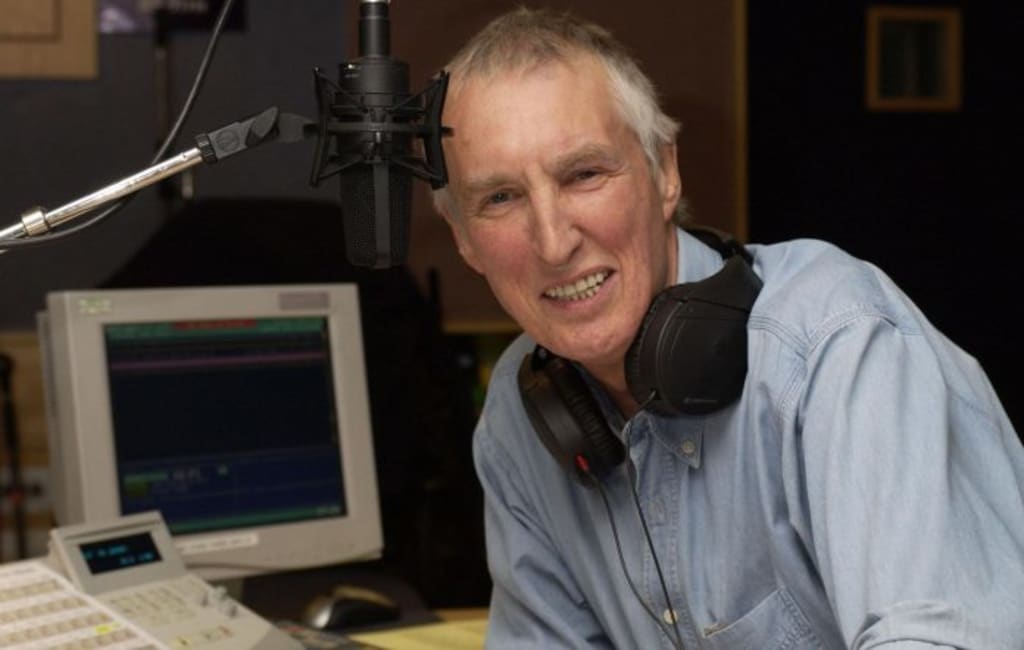
First of all, happy new year, as this is the first time I’ve updated my blog since 2024, and, truth be told, the first time I’ve updated it in a while. Unfortunately, however, my new year began with some fairly sad news when I read, whilst sat in a pub on New Year’s Eve, about the passing of Radio DJ, Johnnie Walker. Although we all knew it had been coming as he had been ill for a while, and had recently hung up his headphones for good, I remarked that I don’t think I’d ever been quite so gutted about the passing of someone I’d never met.
And that, I think, can only be called a testament to the craft of great radio. I listen to a lot of radio these days, in the car, in the kitchen, and at work, but there are always certain shows that I particularly look forward to every week. Johnnie’s ‘Sounds of the Seventies’ on a Sunday afternoon was certainly one of them, and had been ever since he began presenting it back in 2009. Although I wasn’t born until the 90s, I always had a love for the music of the era through my parents, and count Dire Straits and the Eagles among my favourite artists. What Johnnie Walker provided, however, week on week, was a gateway to new content, facilitated by his lifelong passion for music, which began way back in the 1960s on pirate radio.
Pirate radio is something else that pre-dates my birth, and I’ll be honest the Richard Curtis film ‘The Boat that Rocked’ (for which he was a consultant) is my main point of reference for it. It was, essentially, a loophole for radio stations to broadcast pop and rock music deemed unacceptable by the BBC at the time, as they were technically broadcasting (on ships!) from international waters. The very nature of pirate radio only goes to show, therefore, that the DJs who made their name there were dedicated to providing great music for their audiences.

For Johnnie Walker, this extended well beyond the government’s pirate radio ban in 1967, and he didn’t join the newly-conceived Radio 1 (the BBC’s answer to being defeated by pirate radio’s popularity) until 1969, two years after its formation. Everything I’ve read about him in recent weeks has only exemplified that for him, it was all about the music. This caused later disputes with the BBC and, if I’m correct, a brief move across the Atlantic. But what I can also gather about him, over the course of his whole career, was that his style was also what made him popular. He never followed a script, he just sat down with the music and a microphone and made it sound so easy. I was interested to hear his wife Tiggy say recently that he was actually an introvert, and radio was his place to become an extrovert. But I suppose that makes sense. The Johnnie Walker I got to know, through the radio on Sunday afternoons, with his warm, conversational tone, presented the image of someone you really felt at home with, as though you actually had invited an old friend into your kitchen. Perhaps that’s why, although BBC Sounds is a great thing to have in this day and age, and towards the end I do think his shows were pre-recorded, I did always like to listen to them when they went out live.
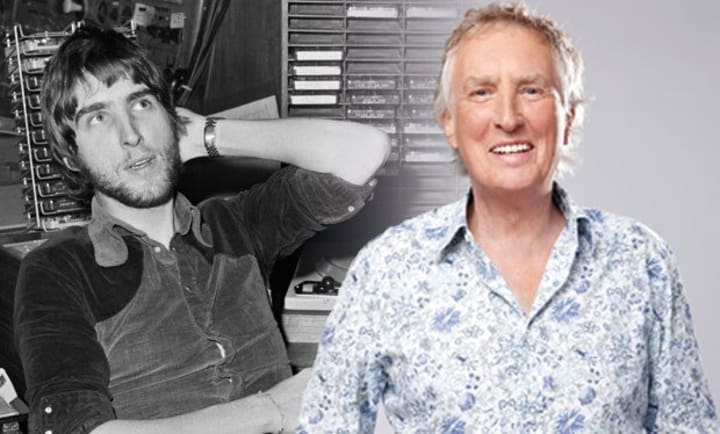
Because good radio really does do that, it provides company for people, and there are many very lonely people out there I’m sure who couldn’t live without it. For me, Johnnie Walker was a key part of my life every week for a long time, and I guess it makes sense that I was so sad to read that he had passed.
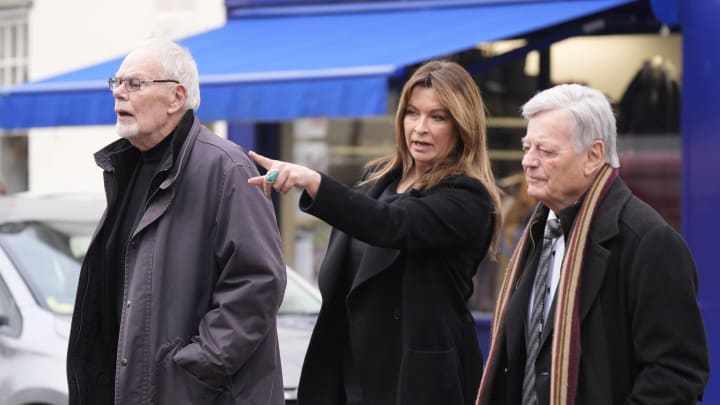
It is worth noting that, by the time I got round to listening to him, he had returned to the BBC - BBC Radio 2 in fact – which was originally established to target everyone who didn’t listen to pirate radio - I bet he might’ve been surprised had you told him that in 1969! But, as it happens, Walker was joined on Radio 2 in recent years by his former pirate radio colleague Tony Blackburn, and fellow veteran DJ Bob Harris (of whom I’m also a huge admirer and a worthy successor to him on ‘Sounds of the Seventies’), showing, I guess, that times change as the world changes. I sometimes think that the BBC maybe gets a bit too much stick whenever its schedules change, and of course big stars like Ken Bruce and Simon Mayo have recently left, not to mention the recent sad passing of other popular presenters, such as Steve Wright and Paul O’Grady. Maybe some of this is deserved (and only highlights the emotional attachment people have to good radio) but, as demonstrated by Walker’s career, the Radio 1 presenters of today are often the Radio 2 presenters of tomorrow. Regardless of what you think, there is sometimes too much rage in this internet age, and good radio, as it happens, remains as accessible as ever these days. That is where we should focus our energy, and I was reminded of that when I saw some of the talented faces who attended Walker’s funeral last week.
For Johnnie, who did it better than anyone, the only thing that never changed was a dedication to his craft. And his legacy will live on in an extensive archive, which I am grateful for. Although it makes me sad to think I’ll never hear his voice again, knowing that he’s there in his studio doing what he loves best, I’d like to think this incredible legacy means he’ll always be doing just that. RIP x
About the Creator
Matty Long
Jack of all trades, master of … Vocal? Especially fond of movies, travelling, watching football, country music, beer, and pizza.
X: @eardstapa_
Keep reading
More stories from Matty Long and writers in Beat and other communities.
The Best Bob Dylan Covers
I recently went to see the brilliant musical ‘Girl from the North Country.’ I love Bob Dylan’s music but the story itself is also excellent and I can’t recommend it enough. Another great aspect of the show is the way his songs are interpreted. And this is a common occurrence with Dylan’s work. There are so many songs you may not realise he wrote, because others made them their own. He is probably the greatest songwriter (and one of the greatest writers in general) of all time. But it’s fascinating to see how others interpret this genius. And with such a prolific writer, there are so many instances of this in music history. I would be here all day if I was counting down my favourite Dylan songs (I’m always discovering more), but when it comes to covers, I’ve cut it down to my top 5. There aren’t any versions from ‘Girl from the North Country’ mentioned, because if you’ve got this far, go see it!
By Matty Long3 years ago in Beat
Review of 'Man on the Run'
My wife and I saw Man on the Run, a nearly 2-hour documentary on Amazon Prime, about Wings, Paul McCartney's group that flew around the world from shortly after The Beatles broke up in early 1970 to shortly after John Lennon was murdered at the end of 1980, making a Beatles reunion forever impossible.
By Paul Levinson12 days ago in Beat
Worth the Wait: Puerto Viejo, Costa Rica
Beach bumming in a small Caribbean beach town sounded like a perfect way to end our 6-month trip through Mexico and Central America. Or so we thought. The foul, fishy stench of rotten seaweed hit our nostrils as we stepped from the cramped bus and looked out at a rather depressing, empty, and underwhelming black sand beach. It was pouring with rain, and we had to quickly fish out our ponchos. We thought, this couldn’t be it, could it?
By Sh*t Happens - Lost Girl Travel6 days ago in Wander



Comments (1)
This is a very fitting tribute to the much missed, always memorable radio presenter Johnnie Walker whose warmth, knowledge and wit made him stand out as one of the best presenters to have ever graced the radio airwaves. Here's a compilation from some of Johnnie's 1968 Radio Caroline shows: https://www.youtube.com/watch?v=_Y5QNkjKvyc