
Not Like Us: Breaking Down the Lyrics and Meaning
An In-Depth Analysis of Kendrick Lamar’s Provocative Message in "Not Like Us" and Its Impact on Hip-Hop Culture

In the ever-evolving world of hip-hop, Kendrick Lamar stands as one of the genre’s most impactful and complex artists. Known for his raw lyricism, political commentary, and boundary-pushing music, Kendrick consistently delivers thought-provoking tracks that resonate deeply with listeners. One such track that ignited conversation and controversy in the hip-hop community is his explosive diss track, “Not Like Us.” The song offers a sharp critique not just of his contemporaries but also of the state of modern rap itself. In this article, we will break down the lyrics and explore the deeper meanings behind “Not Like Us,” delving into Kendrick's motivations and examining the implications for the rap game.
The Context of “Not Like Us”
Before diving into the song's lyrics, it’s essential to understand the context in which Kendrick Lamar released “Not Like Us.” At the time, Kendrick had already established himself as a lyricist with a message, but this diss track put him in the spotlight for his unflinching criticism of both the rap industry and certain individuals in it. Diss tracks have long been a staple of hip-hop, used as a way to assert dominance, challenge rivals, and expose perceived flaws in the competition. Kendrick, however, doesn’t just diss individuals—he critiques an entire culture, challenging what hip-hop has become.
The song came after several years of Kendrick asserting his place as one of the most prominent voices in hip-hop. Tracks like “Control” had already signaled Kendrick’s willingness to call out other rappers, but “Not Like Us” took that challenge to a new level. It was clear that Kendrick’s message was not merely about throwing barbs at specific artists but was more about the genre's overall direction.
The Lyrics: A Close Reading
“Not Like Us” begins with a powerful, almost venomous tone. From the first few lines, Kendrick asserts his superiority, setting himself apart from the mainstream rap scene. He doesn’t just claim to be a better artist—he claims to be on a completely different level. This sense of distinction is central to the track and becomes clearer as the song progresses.
In the opening verse, Kendrick raps about the industry’s superficiality and the ways in which many rappers are more concerned with image and materialism than with substance and skill. He criticizes the “fake” culture of modern rap, where artists are often more focused on their social media presence and commercial success than on their craft. This is evident when he raps, “They’re not real, it’s all about the drill / Their chains, their grills, none of that’s real.” Here, Kendrick underscores the disconnect between the authentic artistry he champions and the image-driven, surface-level persona that he believes many rappers have adopted.
As the song continues, Kendrick’s tone becomes more direct and confrontational. He calls out rappers who use ghostwriters or rely on gimmicks instead of honing their own unique voices. The mention of ghostwriters in rap music has long been a point of contention, and Kendrick uses this to further his point about authenticity in hip-hop. “No pen, no paper, just the sound of the trigger,” he spits, referencing both the literal violence in the streets and the metaphorical violence of the music industry’s demand for hype over originality.
Social and Cultural Critique
While much of “Not Like Us” can be read as a personal attack on certain rappers, the song also functions as a critique of the rap industry’s broader culture. Kendrick uses his platform to comment on how capitalism has shaped the evolution of hip-hop, transforming it from a voice for the marginalized into a lucrative business. This transformation is evident in the way hip-hop artists are marketed and consumed, often sacrificing their artistry for the sake of mass appeal.
Kendrick’s references to “chains” and “grills” are not just symbols of wealth but also representations of hip-hop’s commercial side, which he sees as undermining the genre's original ethos. He points out how these symbols have been commodified, and instead of using rap to challenge societal norms, many have fallen in line with the status quo. For Kendrick, the very things that make a rapper successful today—wealth, appearance, and popularity—are exactly what make them “not like us.” These are the things Kendrick believes have caused the disconnect between the old guard of hip-hop and the current mainstream.
Another significant element of “Not Like Us” is Kendrick’s exploration of race and identity. Hip-hop has historically been a space for Black voices to express their struggles, triumphs, and perspectives on systemic oppression. Kendrick taps into this tradition by juxtaposing his complex identity against the hollow personas of his competitors. His lyricism, which blends references to Black culture, historical struggles, and personal experience, positions Kendrick as both an artist and a storyteller—a far cry from the shallow, materialistic representations of Black life that are often showcased in mainstream rap.
Kendrick’s Place in the Rap Game
In “Not Like Us,” Kendrick also examines his role within the rap game. He positions himself as a leader, one who is not content with conforming to industry expectations. Unlike many other rappers, Kendrick is not driven by the desire for fame or fortune but by a deeper artistic mission. He raps with purpose and challenges the industry’s definition of success.
Kendrick’s assertion of “I’m not like them” speaks to his belief that his artistry transcends the superficial markers of success that are often associated with mainstream rap. In doing so, he reclaims his position as an artist who refuses to be limited by the commercial demands of the industry. His music, especially on “Not Like Us,” represents a break from the norm, as he pushes the boundaries of what rap can be—both sonically and thematically.
The Impact of "Not Like Us"
“Not Like Us” created a ripple effect throughout the hip-hop community. Kendrick’s willingness to challenge both his peers and the broader industry sparked conversations about authenticity, artistry, and the commercialization of rap music. Some artists reacted by defending the “mainstream” approach, while others took Kendrick’s critique to heart, using it as a call to return to the roots of hip-hop.
But perhaps the most significant impact of “Not Like Us” is how it solidified Kendrick’s position as not only one of the best lyricists in the game but also one of its most important cultural commentators. He has consistently used his platform to push the genre forward, urging his listeners to think critically about the music they consume and the messages it conve
Conclusion
“Not Like Us” is not just a diss track—it's an exploration of identity, authenticity, and the evolution of hip-hop. Through his biting lyrics and socially conscious commentary, Kendrick Lamar redefines what it means to be a successful rapper in today’s climate. By challenging the norms and calling out the industry's flaws, he invites us all to think more deeply about what hip-hop can—and should—be. In doing so, Kendrick proves that his music is not just a reflection of the present but a vision for the future, one where authenticity and artistry triumph over fame and commercial success.
About the Creator
Review of 'Man on the Run'
My wife and I saw Man on the Run, a nearly 2-hour documentary on Amazon Prime, about Wings, Paul McCartney's group that flew around the world from shortly after The Beatles broke up in early 1970 to shortly after John Lennon was murdered at the end of 1980, making a Beatles reunion forever impossible.
By Paul Levinson2 days ago in Beat
Drake Continues To Dominate Spotify With New Hip-Hop Streaming Milestone
Drake continues his victory lap regardless of the fact he hasn’t dropped a solo album in almost three years. He doesn’t have to. He surpassed three billion views and has the Hova Effect. What is the Hova Effect? It means he will not lose. He might have taken a hard left hook from the Kendrick Lamar feud, but he is immune to even hits like this. Jay-Z, Shawn “Hova” Carter, the Michael Jordan of rap, stated this effect when he said he didn’t mind if radio didn’t play his songs if he didn’t play their shows. This is the inverse in a sense, though. Drake doesn’t care about hate online because he will always sell no matter what happens.
By Skyler Saundersabout 23 hours ago in Beat
A Historic Declaration
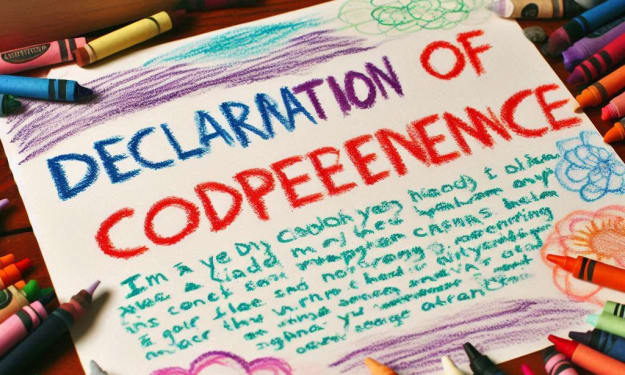
We the People of the Husbands of the United States of America, in Order to form a more perfect Union, and I mean you...with me...establish Justice, insure domestic Tranquility, provide for the common defence, promote the general Welfare, and secure the Blessings of Liberty to ourselves, after Puberty, do ordain and establish this Declaration of Co-Dependence.
By Gerard DiLeo5 days ago in Humans


Comments (2)