
My process for writing music.
From the perspective of a film and orchestral composer.
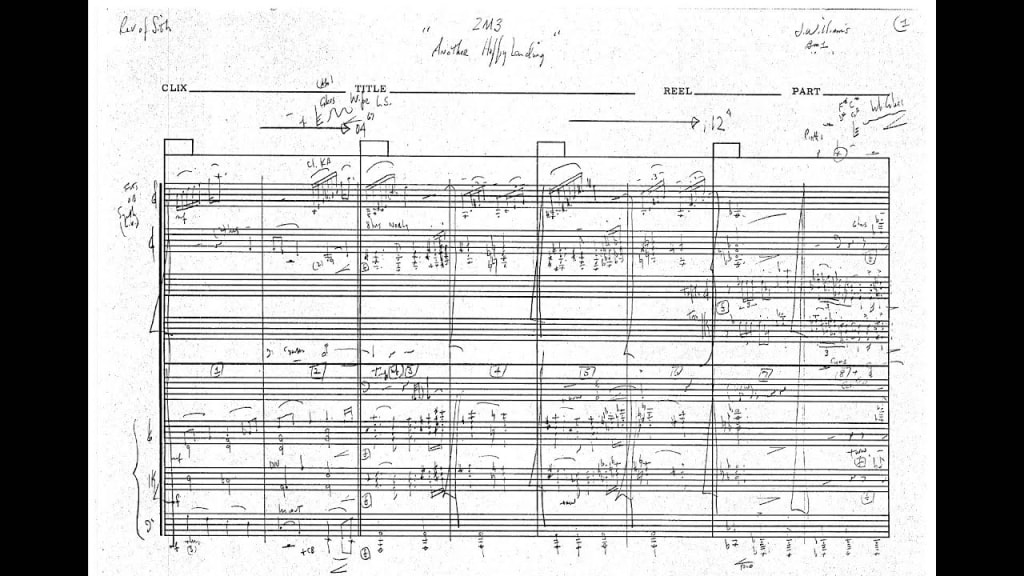
When I write music for a short film, a movie or an orchestra, I usually take one of two aproaches. The first being the approach of gathering materials and doing reserch on the project, weather its a film or a story needing to be conveyed through the music. The idea is essentially to just gather as much information as possible. Talking to the director (film or musical) about their vision and how my work is suposed to fit into the larger picture. These conversations take the form of lots of meetings and cups of coffee. The second apporach I take is, and quite frankly I literally mean this, to "wing it". As rediculous and obscure as that sounds, music is based on inspiration, well informed and reaserched inspiration or wotherwise. Occationally, things will just come to you. And it is under these circumstanses that I will dive into a project head on. Of course there are things you can do to aid in spontanious inspiration.
To start off any piece you need an idea. That, as mentioned before, can come from anywehre. What matters is that you are writing for somthing, for some idea, reason and project, not just for the sake of writing.
From my long list of tips and tricks to inspire yourself in my article "How to get inspired and beat writers block", the best ways I go idea fishing are as follows. Take long walks with a notebook Beethoven style, stay up late and let my mind wander, read lots and lots of scores, be open to any idea no matter how awful it seems at first and subconciously always be processing music weather it's an original idea or an afterthought of a piece you heard earlier.
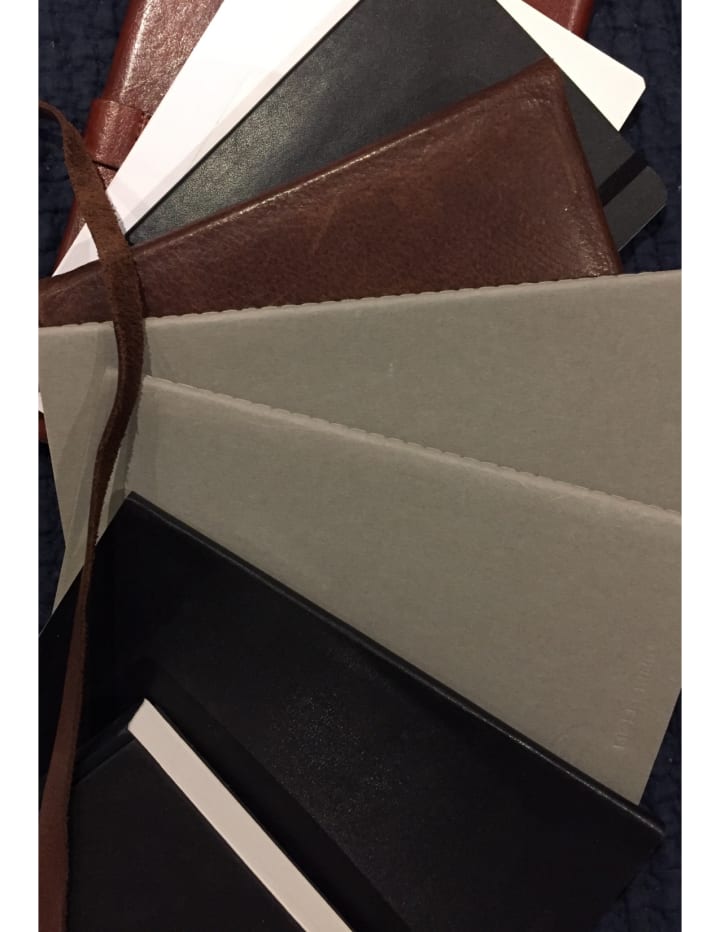
Once I have a reason and an idea to base my new project off of, it's off to the piano. I find the most important thing early on, is having the most thematic material to work with early on in the writing process. You can always take things away and save them for somthing else. However adding to an already vast interconnected web of themes and motivs that you have just created is like trying to add puzzle pieces to an already completed puzzle. Therefore I will sit at the piano for days, not literally, and noodle. Just play around, mess around, use my average keyboard skills and knowledge of harmony and theroy to develope ideas and themes.
With thematic material crudely written down on paper, I firm up the big picture. If it's a film, I will make the timestamps that need music or need silence (as silence is just as important as the music). This is the boring part where you figure out how long every cue is and the overall arch of the story. If it's not for multi media purposes, it's a little easier. Instead I simply map out the overall shape I want the music to have. Mark climaxes and tempo changes. Either way, this step is done without writing a sinlge musical note. All it is, is writing, in plain words, what the project demands from the music and every point of the film or piece.
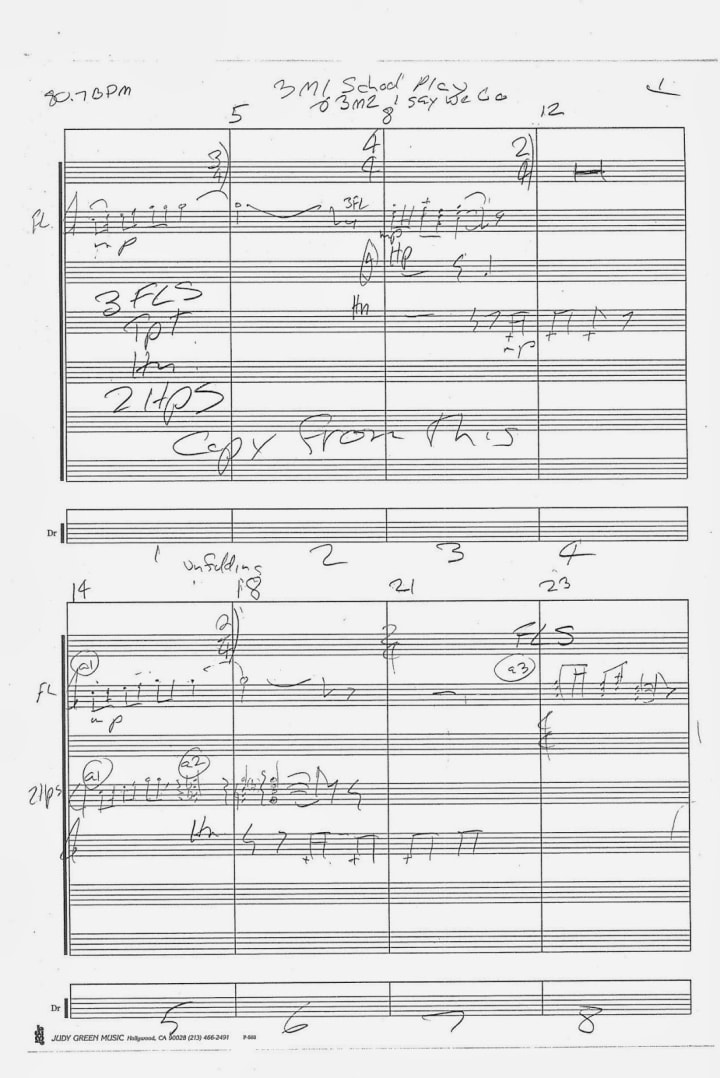
With the bigger picture in mind, it's off to sketching. The first round of sketching is simply fill in the blanks. Put all the thematic material at the apropreate part of the piece, or in the coresponding cue. Pretty simple. The second round of sketching goes into more depth. I start linking sections together and variating the themes and orchestration to make everything feel less repetitive. Then I creat a draft.
With all the information in my hand written sketches, I start drafting the piece or cue. Starting with a blank template on my composition softwear, I begin to fill it in. This is the first time I mess with, orhchestration, tempo, feel, dynamics, articulations and final sound in depth. I go beginning to end, or wherever I feel like starting, and use my sketches as a guidline to shape the final piece. When this step is over, I have a score and my first look at the piece or cue in it's full capacity. That is to say, it should be about the rigth lenth of time it needs to be, with all the correct instruments and a fair amount of the extra markings I deem nessicary.
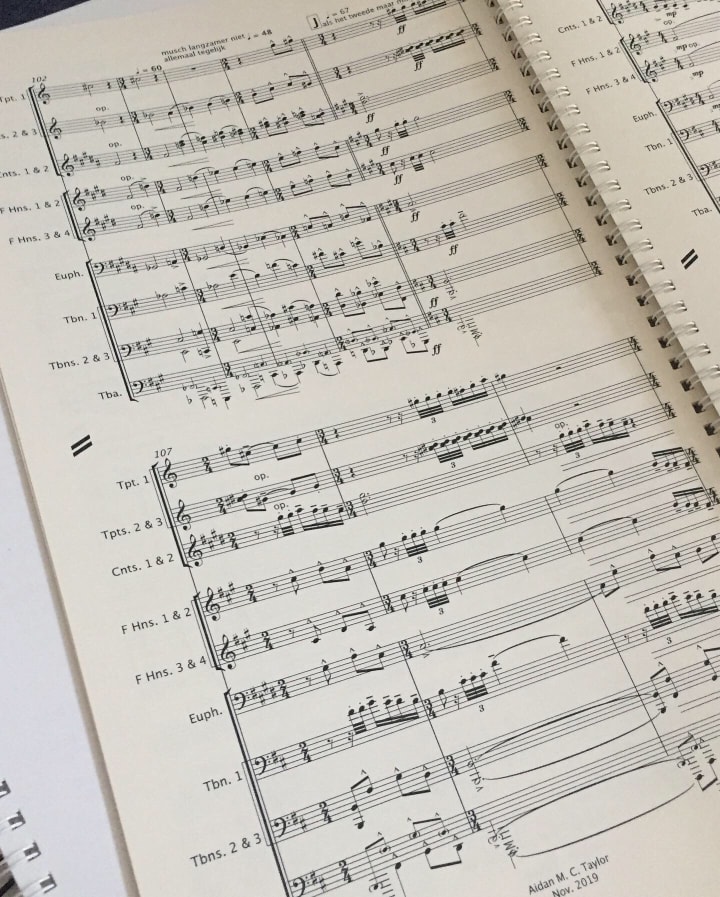
So you may think it is done then. Well not exactly. If you were to hear a apiece of my music in this stage, it would sound very boring and very average. Sure it will have dynamics and feel, but at this stage the only elements are melody, accompanyment, harmony, bass and counter melody. The orchestration would feel and sound bare and bland.
To combat this I go back to my big picture sketch and mark the corrisponding information in my draft of the score. Simply to make sure I didn't get carried away and stray from the original project. With a refreshed mind regarding the big picture, I reexamine how that corisponds to the score. Does it follow the arch it needs to? Are the sections coheasive? and so on. I have an entire checklist of things I go through to ensure the piece is adequate enough for the final step.
The final step as I call it is "making it good". To me this just means I sit down with the score and my softwear and mess with all the small details. This can literally be anything. At this point all thats left is to make the music the best possible version it can be. It's like a statue with the stone still rough, not yet smoothed and polished, but you can tell exactly what the shape is. All the sculpter has to do is clean up the lines, and smooth off the surfaces to polish it up. In essence that is exactly what I do in this step. I already know how it's going to sound, I simply do whatever I need to to get it there. This is anything from doubbling intruments to changing tempos or altering themes or time signatures slighty. Just to keep the music more interesting.
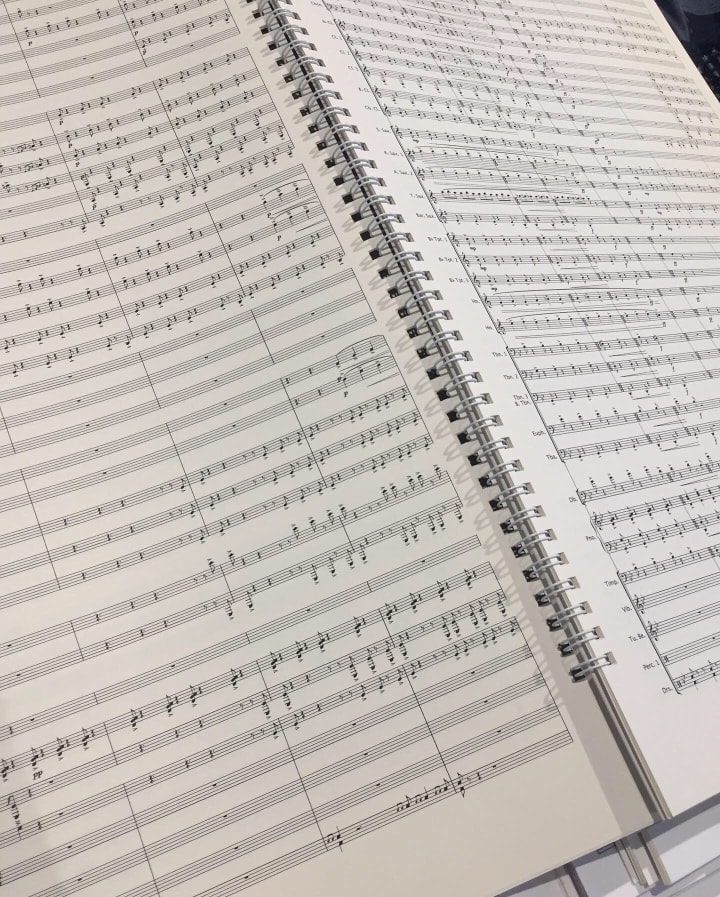
I have a rule that I follow to tell me weather a piece is done. It's a two part rule. The first part is, I ask myself, Do I like it? If the answer is no, I keep working on the piece until I do like it. The secon part is I have to be able to start the piece from any part of it and listen for minuetes without getting bored. If I can ensure that no part of the piece is too boring or repetitive then it must mean the piece is entierly interesting. And with that I am happy for it to be done. Of course revisions can always be made later, but for all intensive purposes, if the piece follows the bigger picture its suposed to, if I like it and it's completly interesting then the piece goes to the printers for publishing and my job is done.
For more specific questions, contact me at my website:
https://www.aidanmtaylor.com
About the Creator
Aidan Taylor
Professional musician based in Toronto, Canada.
I play in symphony/philharmonic orchestras and theatre pit orchestras for a living. I also write classical music for orchestra and music for film and media.
Web aidanmtaylor.com
IG aidanmctaylor
Keep reading
More stories from Aidan Taylor and writers in Beat and other communities.
How to write music.
The first thing I usually get asked as a composer is, where do you start when you write a new piece? Unfortunately there is no definitive answer to that question as each piece is uniquely different. In my second ballet, La Feuille Qui Tombe, I started writing 3 minuets into the overture specifically for bassoon, clarinet and cello, but for my massive tone poem Levensverhaal I started halfway through the second of two parts with a solo organ. Needless to say there is no set way to write a piece of music. This however doesn't mean I can't walk you through the necessary steps.
By Aidan Taylor6 years ago in Beat
Review of 'Man on the Run'
My wife and I saw Man on the Run, a nearly 2-hour documentary on Amazon Prime, about Wings, Paul McCartney's group that flew around the world from shortly after The Beatles broke up in early 1970 to shortly after John Lennon was murdered at the end of 1980, making a Beatles reunion forever impossible.
By Paul Levinson3 days ago in Beat
Top Rappers in Dallas, TX (2026 Update)
Dallas doesn’t always scream the loudest in hip-hop conversations—but it builds quietly and consistently. While Houston often dominates Texas headlines, Dallas has carved out its own identity: melodic street records, independent grind culture, and a fast-growing streaming presence.
By RapRadarDigestabout 3 hours ago in Beat




Comments
There are no comments for this story
Be the first to respond and start the conversation.