
Mifarma’s Self-Titled Album Glows with Raw Transformation
On her self-titled English-language album, Danielle Alma Ravitzki sheds past identities and builds something startlingly intimate, balancing fragility and fearlessness in equal measure

Danielle Alma Ravitzki has long been an artist who blurs the line between the cerebral and the spiritual. In her earlier Hebrew-language work, she turned the words of poets into lush, classically inflected art songs that hinted at vast inner landscapes. But on Mifarma, her English-language debut under her new moniker, she steps into something far riskier: the open terrain of unfiltered self-expression.
The album doesn’t sound like a beginning—it feels like a reckoning. Over the course of eight tracks, Ravitzki turns private moments into widescreen vignettes, her voice drifting between confession and invocation. It’s an album about living inside change, about rebuilding identity from the ground up, and about finding stillness inside emotional turbulence.
From the very first notes of “I Left the Room Without My Hair,” there’s a sense of quiet defiance. Co-written with her longtime mentor Shara Nova, the song sets the tone for everything that follows: delicate yet unflinching, sparse yet uncontainably alive. Ravitzki’s voice floats in the space between exhaustion and transcendence, as if the act of singing is itself a form of survival. The track’s restraint—its empty air, its hovering harmonies—feels deliberate, a way of transforming vulnerability into structure.
Mifarma’s writing throughout the record is direct, stripped of the mythic veils that once defined her earlier work. These songs are written from the inside out. “Fix Me Up” leans into imperfection as truth, while “Five Stages of Grief” unfolds in circular patterns that mirror the mind’s refusal to let go. “I Am Soil” finds beauty in decay, her voice moving delicately over minimalist piano and percussion like a seedling pushing through ash.
The album’s evolution owes much to its collaborators, who never overshadow the music’s emotional pulse. Shara Nova’s ethereal harmonies and Earl Harvin’s subtle, tactile drumming lend the record texture without clutter. Piers Faccini and Melissa Lingo bring warmth and contour to the arrangements. But the album’s sonic coherence can be traced to producer Carmen Rizzo, whose deft touch anchors the project. Known for sculpting soundscapes that bridge the organic and the electronic, Rizzo gives Mifarma a spaciousness that mirrors its emotional reach. His choices—muted beats, cinematic swells, and silence that feels intentional—frame Ravitzki’s voice like light through glass.
Ravitzki’s shift to English feels both natural and revelatory. The language gives her lyrics a raw immediacy; the imagery lands without artifice. Gone is the protective layering of her early compositions. What remains is the artist herself—unguarded, human, and wholly present.
Mifarma resists easy classification. It’s not quite pop, not quite ambient, not quite folk, but something that grazes all three. There’s a sense of lineage here—echoes of Agnes Obel’s crystalline melancholy, of Björk’s restrained mysticism—but the record never feels derivative. Ravitzki’s melodic sensibility is unmistakably her own, defined by patience, clarity, and emotional precision.
Visually and sonically, she positions herself as a global citizen of feeling. Her online presence hints at a life in constant motion—glimpses of rooftops, hotel rooms, and railway platforms. That nomadic rhythm seeps into the record’s DNA. Every song feels like a postcard from an interior journey, from someone trying to map the border between displacement and belonging.
Even when the subject matter turns dark—loss, trauma, rejection—Mifarma never collapses into despair. Instead, it circles around resilience. The album suggests that acknowledging pain is a form of power, that healing isn’t a moment but a process that loops and bends.
By its final track, Mifarma achieves a quiet kind of transcendence. It doesn’t end so much as dissolve, leaving the listener suspended in a tender, unresolved glow. Ravitzki doesn’t need to declare rebirth; she enacts it through sound.
Mifarma is the work of an artist in full command of her fragility, turning it into architecture—something intricate, enduring, and profoundly alive. It’s an album that whispers rather than shouts, but its echoes linger long after silence returns.
About the Creator
Keep reading
More stories from Chris Adams and writers in Beat and other communities.
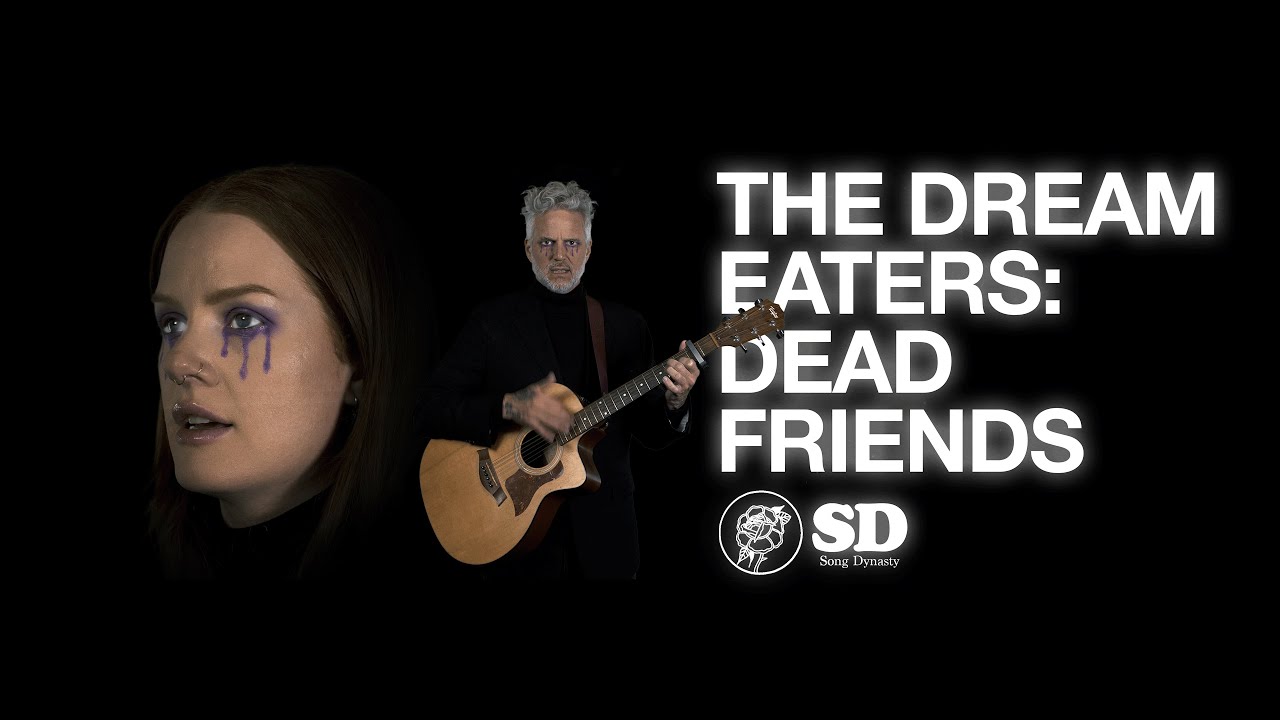
The Dream Eaters Turn Grief into Dark Humor on “Dead Friends”
Brooklyn, NY/Toronto, ON-based indie rock/pop duo The Dream Eaters return with their delightfully macabre and oddly uplifting new single, “Dead Friends.” At once darkly funny and deeply moving, the song transforms loneliness and grief into a surreal celebration — the kind that takes place around a dinner table set for the living and the dead alike.
By Chris Adams5 months ago in Beat
Review of 'Man on the Run'
My wife and I saw Man on the Run, a nearly 2-hour documentary on Amazon Prime, about Wings, Paul McCartney's group that flew around the world from shortly after The Beatles broke up in early 1970 to shortly after John Lennon was murdered at the end of 1980, making a Beatles reunion forever impossible.
By Paul Levinson11 days ago in Beat
Awakening Financial Confidence: Dr. Letitia Scott Jackson’s New Book Inspires Readers to Reimagine Wealth and Personal Power
A new book arriving this month encourages readers to rethink their relationship with money, credit, and personal financial power. Financial educator and author Dr. Letitia Scott Jackson is preparing to release her latest book, The Millionaire In You: Can You See Her Yet? Manifesting and Mastering Your Money and Credit, on March 15. The project blends financial education with personal insight, offering readers a thoughtful guide to understanding how mindset, knowledge, and consistency can influence long-term financial success.
By Tammy Reeseabout 20 hours ago in Beat


Comments
There are no comments for this story
Be the first to respond and start the conversation.