
Michael Jackson: The King Who Danced with the World
From the streets of Gary, Indiana to the stages of Tokyo and beyond—how Michael Jackson moonwalked into music history

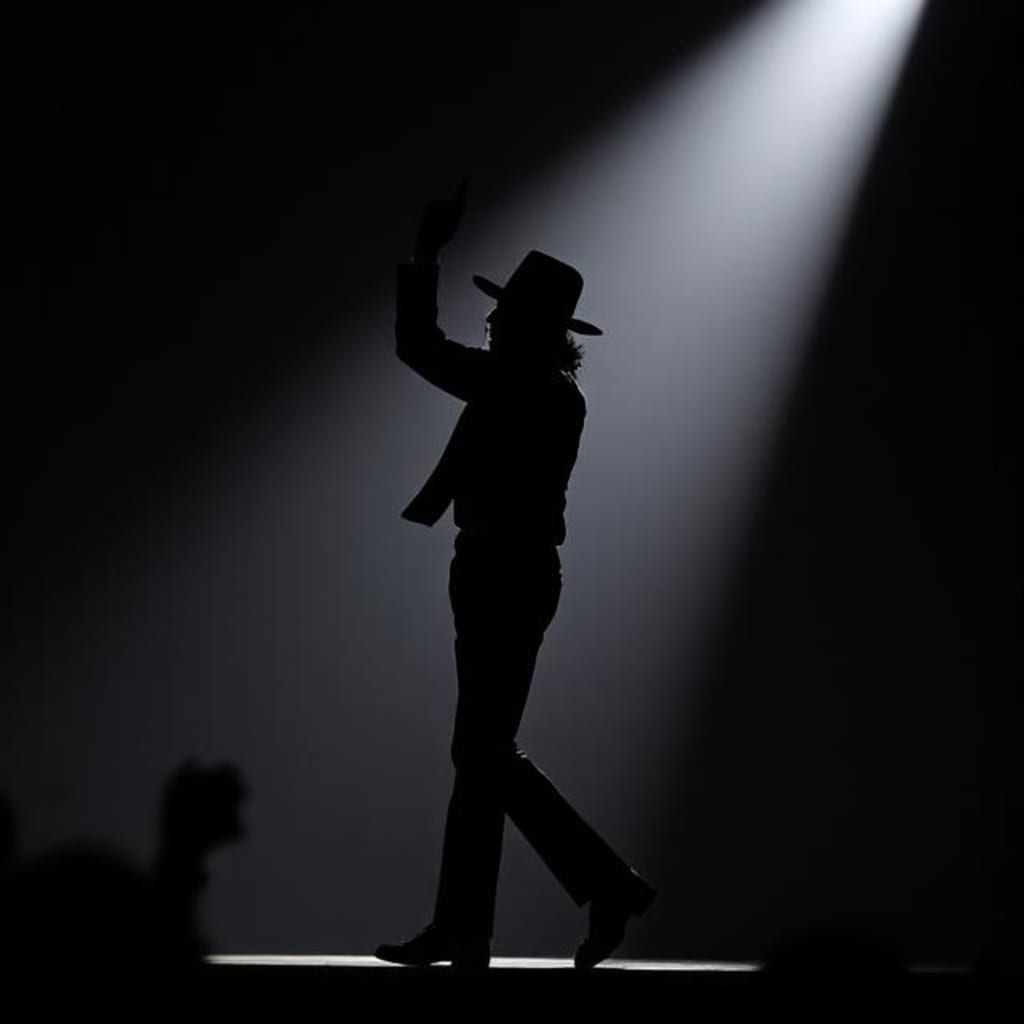
On a cold day in Gary, Indiana, August 29, 1958, a boy was born into a modest house filled with noise, music, and dreams. His name was Michael Joseph Jackson, and no one in the world—not even he—knew that this little boy would become the most famous entertainer the planet had ever seen.
Michael was the seventh child in the Jackson family. Their father, Joseph Jackson, was a strict and determined man. He worked long hours at a steel mill, but his true ambition was to turn his children into stars. He saw talent in them—and discipline was his tool to shape it. The Jackson house echoed with rehearsals, missed notes, and second chances. And at the center of it all, even as the youngest, was Michael—small in size, but massive in talent.
By age five, Michael had joined his older brothers—Jackie, Tito, Jermaine, and Marlon—to form The Jackson 5. With bright smiles and synchronized dance moves, the group quickly became popular in local talent shows. It was obvious that Michael was not just part of the group—he was the group. His voice had emotion far beyond his years, and his stage presence was magnetic.
In 1969, Motown Records signed The Jackson 5, and the world changed overnight. Their first four singles—"I Want You Back," "ABC," "The Love You Save," and "I'll Be There"—all shot to No. 1 on the Billboard Hot 100. It was a historic feat. Audiences across America fell in love with the Afro-haired boy with a soulful voice and moon-sized dreams.
But Michael wasn’t satisfied with just being part of a band. Even at a young age, he had a vision. He wanted to create magic, not just music. As he grew, he started writing songs, studying choreography, and learning how to tell stories through rhythm.
His solo career started blooming in the late 1970s. His fifth solo album, "Off the Wall" (1979), produced hits like “Don’t Stop ’Til You Get Enough” and “Rock with You.” It was funky, fresh, and energetic—a glimpse of the genius to come. But Michael wanted more. He didn’t just want to be a success. He wanted to be the greatest.
Then came 1982.
Michael released "Thriller", an album that didn’t just break records—it shattered them. With seven Top 10 hits, including "Billie Jean," "Beat It," and "Thriller," the album became the best-selling record of all time, with over 70 million copies sold worldwide.
The music video for “Thriller” was revolutionary. It wasn't just a video—it was a short film. Zombies danced in sync, Michael transformed into a werewolf, and the world watched in awe. MTV played it non-stop. It set a new standard for how music videos could be used as an art form.
In 1983, during a performance of “Billie Jean” on the TV special Motown 25: Yesterday, Today, Forever, Michael debuted a dance move that would become his signature—the moonwalk. With a sparkle-gloved hand and a glittering black jacket, he glided backwards in a way that made time stand still.
That was the moment Michael Jackson became the King of Pop.
But success came with shadows.
Michael's fame was unlike anything the world had seen. Wherever he went, crowds gathered. People fainted just seeing him. His concerts sold out within minutes. In Japan, Germany, Brazil, and across the globe, he wasn’t just a pop star—he was a phenomenon.
Yet behind the dazzling lights, Michael was lonely. He had spent his entire childhood working, rehearsing, and performing. He never had a normal life. He built Neverland Ranch, a home with a zoo and amusement park, trying to recreate the childhood he never got to live. He surrounded himself with animals, paintings, and children, but often felt misunderstood.
His appearance began to change, sparking wild rumors and criticism. Michael had a rare skin disease called vitiligo, which caused his skin to lose pigmentation. But the world judged him without compassion. The media mocked his surgeries, nicknamed him “Wacko Jacko,” and painted him as an eccentric recluse.
Despite the pressure, Michael continued to create.
He released "Bad" (1987), "Dangerous" (1991), and "HIStory" (1995)—albums that pushed boundaries. Songs like “Smooth Criminal,” “Black or White,” and “Earth Song” showed his versatility—not just as a performer, but as a storyteller and activist. He sang about racial unity, the planet, poverty, and peace. He used his platform to shine a light on the world’s pain.
But the 1990s also brought legal challenges and false allegations. Michael was accused of misconduct—charges he denied until his last breath. Though never convicted, the damage was done. The world’s most beloved entertainer became a target.
Despite everything, his fanbase remained loyal. They remembered the boy who sang with his heart, who danced like gravity didn’t exist, who gave millions to charities, and who once said, “I’m starting with the man in the mirror.”
In 2009, as he prepared for his comeback concert series titled “This Is It,” tragedy struck. On June 25, Michael Jackson died from cardiac arrest caused by an overdose of prescription drugs. He was only 50 years old.
The world froze.
From New York to Paris, from Rio to Cairo, people cried, danced, and lit candles. News anchors couldn’t hold back tears. Children who weren’t even born when "Thriller" was released mourned him as if they’d known him personally. Michael Jackson wasn’t just a man. He was a movement.
Even in death, his legacy lives on.
His music continues to break records. Young dancers copy his moves. His videos have billions of views on YouTube. His influence can be seen in artists like Beyoncé, Bruno Mars, The Weeknd, and Justin Timberlake. Michael Jackson made it okay for pop music to be art. He didn’t just entertain—he inspired.
His message, like in the lyrics of “Heal the World,” still echoes:
> “Heal the world
Make it a better place
For you and for me
And the entire human race”
Michael Jackson once said, “If you want to make the world a better place, take a look at yourself and make a change.”
And he did.
From a poor boy in Indiana to the King of Pop, Michael Jackson didn’t just moonwalk across a stage—he moonwalked across hearts, across countries, across generations.
He’s gone.
But he’ll never be forgotten.
---
About the Creator
Muhammad Riaz
- Writer. Thinker. Storyteller. I’m Muhammad Riaz, sharing honest stories that inspire, reflect, and connect. Writing about life, society, and ideas that matter. Let’s grow through words.
Reader insights
Outstanding
Excellent work. Looking forward to reading more!
Top insights
Compelling and original writing
Creative use of language & vocab
Easy to read and follow
Well-structured & engaging content
Excellent storytelling
Original narrative & well developed characters
Expert insights and opinions
Arguments were carefully researched and presented
Eye opening
Niche topic & fresh perspectives
Heartfelt and relatable
The story invoked strong personal emotions
Masterful proofreading
Zero grammar & spelling mistakes
On-point and relevant
Writing reflected the title & theme
Keep reading
More stories from Muhammad Riaz and writers in Beat and other communities.
Unveiling the Enigma: The Hidden Secrets Behind Michael Jackson’s Thriller Phenomenon
Start writing... When Thriller Turned Music Into Mystery When Michael Jackson’s Thriller premiered on December 2, 1983, it didn’t just captivate the world—it shrouded it in mystery. The moonwalk, the iconic red leather jacket, and the unforgettable zombie dance became pop culture landmarks. But behind the spectacle lies a web of secrets, strange coincidences, and unexplained forces that transformed a single album into a phenomenon that still feels alive four decades later.
By Muhammad Riaz6 months ago in Beat
Review of 'Man on the Run'
My wife and I saw Man on the Run, a nearly 2-hour documentary on Amazon Prime, about Wings, Paul McCartney's group that flew around the world from shortly after The Beatles broke up in early 1970 to shortly after John Lennon was murdered at the end of 1980, making a Beatles reunion forever impossible.
By Paul Levinson4 days ago in Beat
Top Rappers in New York City (2026 Update)
New York City is rap’s original laboratory. The birthplace of hip-hop still carries a certain gravity. Trends may explode elsewhere, but when New York co-signs something, it echoes differently. In 2026, the city blends legacy dominance with a new generation that understands both bars and bandwidth.
By RapRadarDigesta day ago in Beat
Unofficial Challenge: Black History Celebration
Forward: February 28th, 10:53 PM, EST... The final hour of Black History Month, 2026. Hello fellow writers. I've had this challenge waiting in my drafts for most of the month. But I held off on publishing it, until now.
By Sam Spinelli4 days ago in Writers



Comments (3)
Michael Jackson was awesome! I did not believe the accusations! People get jealous and think of ways to manipulate money out of him.
good
nice bro