
Maragha’i in Herat: A Manifestation of the Timurid Musical Renaissance in Afghanistan
English: This article examines the role of Maragha’i in Herat as a symbol of the Timurid musical revival in Afghanistan.

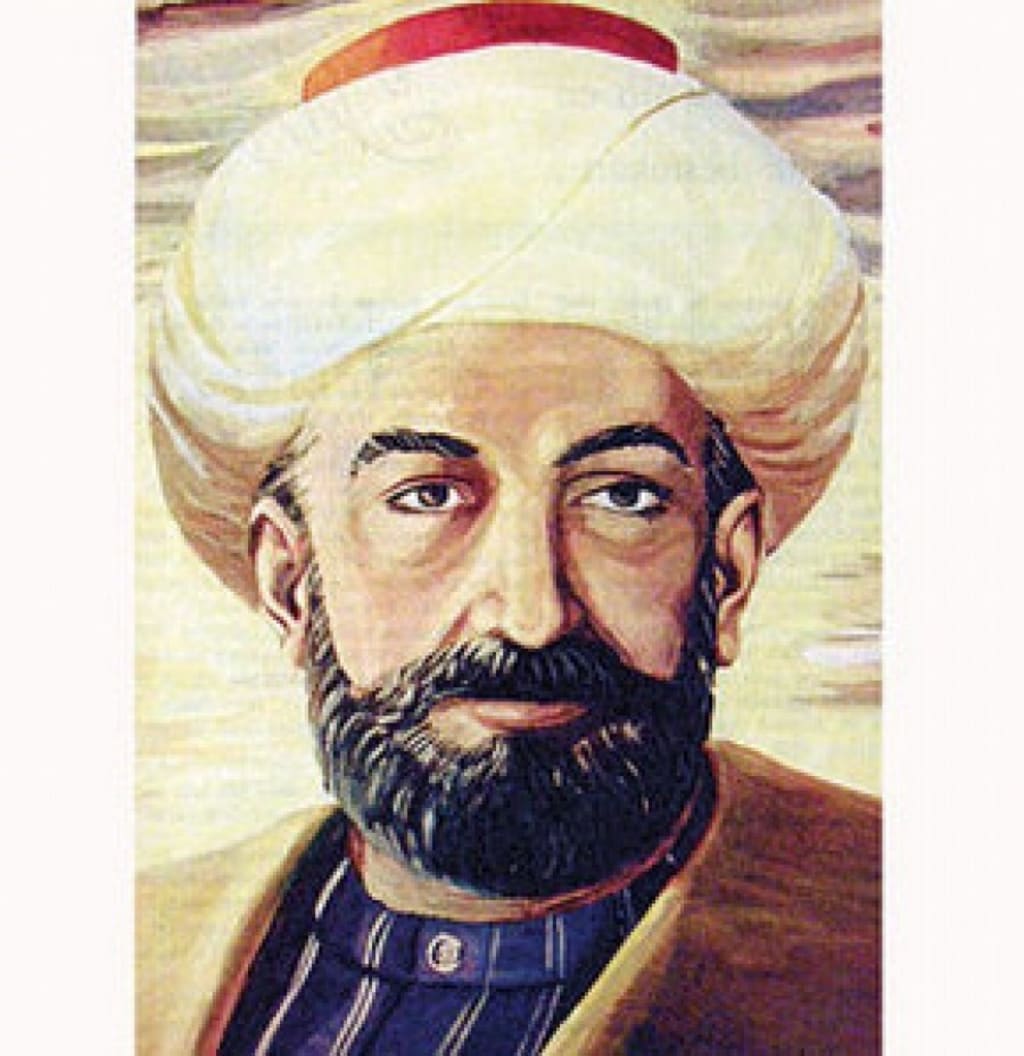
Maragha’i in Herat: A Manifestation of the Timurid Musical Renaissance in Afghanistan
Author: Islamuddin Feroz, Former Professor, Department of Music, Faculty of Fine Arts, Kabul University
Abstract
Abd al-Qadir Maragha’i is one of the greatest musicians, theorists, and composers of the 8th and 9th centuries AH, who played a fundamental role in the history of music in the Islamic East. He was born in the city of Maragha in Azerbaijan, but he spent an important part of his life and works in Herat — the cultural capital of the Timurid state. This article examines his life, musical education, migration to Herat, position at the Timurid court, and the profound influence of Khorasani culture and music on his thought and works. It also demonstrates that although Maragha’i originated from Azerbaijan, due to his long residence and artistic activity in Herat and the creation of his most distinguished works in this city, he should be regarded as part of the musical history of Afghanistan and the cultural heritage of Greater Khorasan.
Keywords: Abd al-Qadir Maragha’i, Khorasani Music, Timurids, Herat, Shahrukh Timurid, Afghan Music
Introduction
Abd al-Qadir ibn Ghaybi Maragha’i (1360–1435 CE) is considered one of the most prominent theorists and musicians of the Islamic world in the Middle Ages. He lived in a period when the fine arts — particularly music, poetry, and calligraphy — were deeply intertwined with courtly institutions and the cultural structures of Islamic societies. Maragha’i, born in the city of Maragha in Azerbaijan, embarked on an intellectual and artistic journey from Maragha to Baghdad and then to Herat — a journey that not only shaped and expanded his musical thought but also played a significant role in the convergence and transmission of the musical traditions of Persia (modern Iran), Khorasan, and the Ottoman state (Arslanbenzer, 2017).
The life of Maragha’i coincided with the cultural and artistic flourishing of the Timurid era in Khorasan — a time when the city of Herat was recognized as one of the most important centers of science, literature, and art in the Islamic world. The extensive patronage of Shahrukh Timurid toward artists and scholars created a favorable environment for scientific and artistic activity and paved the way for the creation of Maragha’i’s enduring works in both the theoretical and practical domains of music. His writings, especially his theoretical treatises, remain fundamental sources for understanding the structure and principles of Eastern music. In addition to his distinguished position as a music theorist, Maragha’i possessed remarkable skill in performance, calligraphy, and miniature painting. This comprehensiveness and multidimensionality made him a quintessential example of the complete artist in the cultural and artistic tradition of the Islamic world.
This article, focusing on the life, works, and musical ideas of Abd al-Qadir Maragha’i, explores his place and influence in the history of Afghan music. The aim is to elucidate, through an analysis of the cultural and artistic connections among Khorasan, Herat, and the Timurid courts, Maragha’i’s role in shaping and transforming the music of this region. It also seeks, based on historical sources and musical treatises, to evaluate his intellectual and practical position in the continuation of the Khorasani musical tradition and its influence on the musical heritage of modern Afghanistan.
Life and Early Artistic Path
Abd al-Qadir Maragha’i was born around the latter half of the 8th century AH in the city of Maragha. His family was steeped in literature and art, and from an early age he became acquainted with music and calligraphy. His passion for sound and melody led him in youth to pursue the study of music and the theories of tone and rhythm. At first, he studied under local masters and gradually gained access to the courts of the Ilkhanids and later the Jalayirids in Baghdad (Arslanbenzer, 2017).
Maragha’i first served at the court of Sultan Shaykh Uvays Jalayiri, and later at the court of his son, Jalal al-Din Husayn, in Tabriz. After Shaykh Uvays’s death, he went to Baghdad, where he spent nearly ten years as a distinguished musician and minstrel at the court of Sultan Ahmad Bahadur Jalayiri. During this period, he composed some of his important works, including Nubat al-Maratib, and created a new rhythm called Darb al-Fath (“Beat of Victory”) in honor of Sultan Ali, one of his contemporaries.
In 1398 CE (799 AH), five years after the conquest of Baghdad by Timur, Maragha’i was transferred to Samarkand, where he resided among Timur’s close associates as a musician and composer in his court. A year later, in 1399 CE, he returned to Tabriz and entered the service of one of Timur’s sons, Miran Shah. Following Timur’s dissatisfaction with Miran Shah’s behavior — which resulted in the disfavor of his companions, including Maragha’i he fled from Tabriz and sought refuge in Baghdad, where Sultan Ahmad Jalayiri had briefly restored his rule.
After Timur’s death in 1405 CE (808 AH), Maragha’i joined the court of Shahrukh Timurid (r. 1405–1447 CE) in Herat. During this period, he wrote one of his greatest theoretical works, Maqasid al-Alhan, between 1418 and 1421 CE, and dedicated it to Sultan Murad II of the Ottoman Empire. His arrival in Herat occurred in the early 9th century AH, when the city, under the rule of Shahrukh and his learned and art-loving wife, Gawhar Shad Begum, had reached the pinnacle of its cultural and artistic glory and was rightly considered one of the brightest centers of Islamic civilization in the East (Chandrakausika, 2013, Vol. 03).
In the 9th century AH, Herat was rightly called “the cultural heart of Greater Khorasan.” The Timurid court was a refuge for poets, scholars, calligraphers, and musicians from across the Islamic world. Artists such as Jami, Baysunghur Mirza, and the great painter Behzad lived in this city. In such an environment, music held a special status; the Timurid rulers, unlike some previous dynasties, viewed it not as sin but as an embodiment of art and beauty. During this era, the performance skills of singers, instrumentalists, and dancers reached their zenith, and the cultural atmosphere of Herat was filled with innovation and artistic taste. In fact, it can be said that during the Timurid period, all aspects of music — from composition and performance to pedagogy and theoretical inquiry — attained their highest level of historical development (Soysal, 2024, 87–91).
This period, rightly called the “Eastern Renaissance,” emerged simultaneously with the European Renaissance in the West and reflected the scientific, artistic, and cultural flourishing of the Islamic lands, particularly in Khorasan and Transoxiana. According to Salimovna (2023), the beginning of this intellectual and cultural movement in the East was closely tied to the reign of Shahrukh Mirza, the son of Amir Timur, and his learned and art-patronizing wife, Gawhar Shad Begum. Their patronage of the arts and sciences fostered the emergence of a generation of prominent scholars, artists, and musicians whose works left a profound impact on Islamic civilization. The reign of Shahrukh in Herat, alongside the scientific and astronomical pursuits of Mirza Ulugh Beg — the astronomer, mathematician, and enlightened ruler of Samarkand — represents one of the brightest chapters of the “Timurid Renaissance.” During this time, Herat became one of the greatest centers of science and culture in the Islamic world — a city in which philosophy, calligraphy, architecture, poetry, and music reached their peaks and gave rise to a new civilizational model in the Islamic East (Salimovna, 2023, 89).
The Timurids, especially in Herat, were among the great lovers and patrons of art and music. Their court served as a gathering place for distinguished poets, painters, calligraphers, and musicians. Music held a central place in royal ceremonies, celebrations, and cultural gatherings. Official ensembles of singers and instrumentalists served the royal household, and music was performed not merely for entertainment but as an expression of culture and the majesty of the Timurid court.
In this splendid and art-loving atmosphere, Abd al-Qadir Maragha’i became one of the leading musical figures at the Timurid court. Shahrukh Mirza held him in high esteem and benefitted from his knowledge and skill in organizing melodies and teaching court music. Maragha’i, not only as a musician and composer but also as a theorist, researcher, and master teacher, attained an exalted position in the cultural history of the Timurids.
He found in Herat the opportunity to become closely acquainted with the music of Khorasan and Transoxiana, which at that time had reached its peak of flourishing. Khorasani music, with its system of maqams, complex rhythms, and mystical melodies, had a profound influence on his thought and works. For Maragha’i, Herat was not merely a refuge, but a great academy where he could exchange ideas with musicians from across Iran, Transoxiana, India, and the Arab world (Shokirovich, 2024, p.19).
Works and Musical Achievements
Abd al-Qadir Maragha’i is not only regarded as one of the most distinguished music theorists in the Islamic tradition—alongside figures such as al-Farabi and Ibn Sina—but was also a highly skilled composer who created numerous vocal and instrumental works. His fame spread throughout the Islamic world—from Baghdad and Tabriz to Bursa, Samarkand, and Cairo—and his ideas played a decisive role in shaping the theoretical foundations of Eastern music. The history of classical Eastern music, particularly in defining fundamental concepts such as musiqi (music), maqam (melodic system), and usul (style and performance structure), regards Abd al-Qadir Maragha’i as one of the brightest stars in the sky of music theory. Moreover, his musical compositions were widely renowned (Arslanbenzer, 2017).
His compositions, thanks to the precise and systematic notation found in his treatises, can still be performed today. One of his most famous works is the delightful song Amad Nasim-e Sobh-Dam (“The Morning Breeze Has Arrived”), which holds a special place in the musical traditions of Iran and Turkey.
Throughout his prolific life, Maragha’i produced several valuable theoretical works that became the foundation upon which the theory of music in Islamic civilization and the Eastern world was built. Among his numerous writings, three important Persian treatises — Jami‘ al-Alhan, Maqasid al-Alhan, and Sharh al-Adwar — have survived, each contributing significantly to the development of theoretical principles, the maqam system, and performance methods of medieval music:
1. Maqasid al-Alhan – A fundamental work analyzing melodies, maqams, iqā‘āt (rhythms), and the principles of composition.
2. Jami‘ al-Alhan – A comprehensive book on musical intervals, melodic structures, and the theory of sound.
3. Sharh al-Adwar of Safi al-Din al-Urmawi – An interpretation and expansion of the ideas of the great 13th-century music master.
Another valuable work by Abd al-Qadir Maragha’i is Kanz al-Alhan (“The Treasure of Melodies”). This collection of musical compositions and songs includes pieces that were likely composed by Maragha’i himself. These works form a bridge between the Persian (modern Iranian), Khorasani, Arabic, and Turkish musical traditions and connect the theoretical systems of Urmawi to those of later centuries. Most of these works were written during Maragha’i’s residence in Herat. The scholarly and artistic environment of Herat, Shahrukh’s patronage, and the presence of distinguished musicians provided the conditions necessary for the creation of these works. It is said that he wrote a copy of Jami‘ al-Alhan in the name of Shahrukh Timurid and dedicated it to him (Chandrakausika, 2013, Vol. 03).
The Influence of Khorasani Music on Maragha’i
Khorasani music in the 9th century AH, especially in the city of Herat, had reached the height of its development. This music, which stemmed from the ancient melodic traditions of Greater Khorasan and Central Asia, was based on a precise system of maqams, melodies, iqā‘āt (rhythmic cycles), and methods of improvisation, and was deeply connected with Persian poetry, mysticism, and Sufi literature. At that time, Herat was not only the capital of the Timurid Empire but also the cultural capital of the Islamic world — a gathering place for artists, poets, and musicians who came to this city from across the Islamic realm (Shokirovich, 2024, p.19). In such an environment, the Khorasani melodies — with their intricate and spiritual structures — deeply influenced the mind and taste of Abd al-Qadir Maragha’i. His presence among Herati musicians, his acquaintance with native Khorasani instruments and melodies such as the tunes of the tanbur, rabab-e Khorasani, dotar, ghijak, ney, and local drums, as well as his exposure to Sufi chants and mystical melodies of khanqahs (Sufi lodges), all transformed his perception of the concept of music.
Maragha’i, who had initially been influenced by the Azerbaijani and Iraqi traditions, encountered in Herat an entirely new dimension of music — one not only based on scientific foundations and tonal intervals but also imbued with spiritual and philosophical messages. In his treatises, especially Jami‘ al-Alhan and Maqasid al-Alhan, he sought to express this fusion of intellect and emotion in the scientific language of music (Chandrakausika, 2013, Vol. 03). The diverse rhythms of Khorasani music, rooted in local rituals and dances, played a significant role in Maragha’i’s theories of iqā‘ and temporal divisions. Moreover, Khorasani maqams such as Nawa, ‘Iraq, Rast, Husayni, and Zirafkand inspired his analyses of intervals and musical modes. Accordingly, some of the surviving melodies and compositions attributed to him display structures similar to Khorasani tunes, indicating that his works were directly influenced by the musical environment of Herat.
Furthermore, the mystical and illuminative spirit of Khorasani music — derived from the teachings of great Sufi masters such as Sana’i, Attar, and Rumi — is also reflected in Maragha’i’s thought. He regarded music not merely as a tool for entertainment, but as a means of attaining truth and experiencing unity (Shokirovich, 2024, p.20). As a result, Herat was not merely a place of residence for Abd al-Qadir Maragha’i, but a school in which knowledge, aesthetic taste, and musical mysticism were intertwined. It can be said that most of his theoretical and practical works — in terms of rhythm, melody, organology, and sound aesthetics — were directly or indirectly shaped by the musical atmosphere of Khorasan and the ancient melodies of Herat. For this reason, modern scholars regard him not only as one of the greatest musicians of Azerbaijan but as a Khorasani figure in the essence of his thought and art — an artist who, under the radiance of Herat’s melodies, elevated Eastern music beyond the boundaries of regions and united it with the common language of Islamic culture.
The Place of Abd al-Qadir Maragha’i in the History of Afghan Music
Although Maragha’i was born in Azerbaijan, he spent the greater part of his life in Herat — within the historical geography of present-day Afghanistan. He composed his greatest works in this city and matured within the cultural and musical milieu of Greater Khorasan. For this reason, in the history of Afghan music, Abd al-Qadir Maragha’i is recognized not merely as a guest, but as one of the prominent figures of this land’s musical heritage. Afghan musicians consider him one of the founders of the theoretical tradition of music in the region. The connection between Khorasani music and Maragha’i’s works represents a shared heritage for all peoples of the Khorasan cultural sphere. Maragha’i passed away around 838 AH (1435 CE) in Herat. Although his birthplace was Maragha in Azerbaijan, his final abode and eternal resting place were in Greater Khorasan (modern Afghanistan) — the land that inspired the flourishing of his ideas and his immortal works in the history of Eastern music (Shokirovich, 2024, p.19).
Conclusion
Abd al-Qadir Maragha’i is an exceptional figure in the history of Eastern Islamic music—an artist who transcended the boundaries between science and art, reason and emotion, tradition and innovation, and through this synthesis, created an intellectual and artistic system that continues to inspire musicians and scholars to this day. His journey from Maragha to Herat was not merely a geographical passage, but a symbolic movement from the Turkic and Persian (modern Iranian) regions toward the heart of Islamic civilization—Khorasan—a land where his thought matured and his works achieved immortality.
Timurid Herat, under the patronage of Shahrukh and Gawhar Shad Begum, provided the fertile ground for the flourishing of Maragha’i’s intellect and artistry, bringing him to the height of intellectual and creative maturity. In this environment, he succeeded in establishing a profound connection among the musical traditions of Iran, Khorasan, and the broader Islamic world, building a bridge between theory and practice, mysticism and science, and the Islamic East and West.
Although his birthplace was Maragha in Azerbaijan, the soul and essence of his works blossomed in Khorasan. Therefore, Abd al-Qadir Maragha’i is not only among the great masters of Iranian music but also one of the pillars of the musical identity of Afghanistan and Greater Khorasan. His works and treatises remain foundational sources for understanding the theory and aesthetics of Eastern music, and the echoes of his thought and melodies can still be heard in the maqams and alhans of Khorasani music—a lasting testament to a legacy that transcended the boundaries of time and became eternal in the history of Islamic culture.
References
Arslanbenzer, Hakan. (2017). Grand master of Turkish classical music Abd al-Qadir Maraghi. Istanbul: https://www.dailysabah.com/portrait/2017/03/25/grand-master-of-turkish-classical-music-abd-al-qadir-maraghi?utm_source=chatgpt.com.
Chandrakausika, Ram. (2013-a). Tag Archives: And al-Qadid al-Maraghi. Oriental Studies on Alpha-numeric Representations of Music Vol 03. https://saxonianfolkways.wordpress.com/tag/abd-al-qadir-al-maraghi.
Chandrakausika, Ram. (2013-b). Tag Archives: And al-Qadid al-Maraghi. Oriental Studies on Alpha-numeric Representations of Music Vol 02. https://saxonianfolkways.wordpress.com/tag/abd-al-qadir-al-maraghi.
Soysal, Derya. (2024). The Perıod of The Temurıd Renaıssance, a Central Asian Renaissance as Prestigious asthe Italian Renaissance. Ataturk University Publication. Araştırma Makalesi Research Article DOI:10.5281/zenodo.14559542. pp. 82-95
Salimovna, S. M. (2023). Renaissance of Timurid Period and Its Place in World Civilization. Galaxy International Interdisciplinary Research Journal, 11(9). pp 89-92.
Shokirovich, Ashurov Bakhtiyor. (2024). Scientific Heritage of Abdulkadyr Maragi (1353–1435). European Journal of Arts 2024, No 4. https://doi.org/10.29013/EJA-24-4 pp 19-21.
About the Creator
Prof. Islamuddin Feroz
Greetings and welcome to all friends and enthusiasts of Afghan culture, arts, and music!
I am Islamuddin Feroz, former Head and Professor of the Department of Music at the Faculty of Fine Arts, University of Kabul.
Keep reading
More stories from Prof. Islamuddin Feroz and writers in Beat and other communities.
Avicenna (980–1037 CE): Musical Thought Bridging Tradition and Innovation
Avicenna (980–1037 CE): Musical Thought Bridging Tradition and Innovation Author: Islamuddin Feroz Former Professor, Department of Music Faculty of Fine Arts, Kabul University, Kabul, Afghanistan
By Prof. Islamuddin Feroz4 months ago in Beat
The Shot That Changed Everything
On the evening of May 25, 2020, a routine police call in the city of Minneapolis unexpectedly turned into a tragic event that would soon dominate global headlines and ignite one of the largest waves of social protest in modern history. A 46-year-old man named George Floyd had been detained by officers from the Minneapolis Police Department after a local store employee reported that a customer had allegedly used a counterfeit twenty-dollar bill. What initially appeared to be a minor investigation rapidly escalated into a deadly confrontation that was captured on video by bystanders standing nearby on the street.
By The Curious Writer2 days ago in Beat



Comments
There are no comments for this story
Be the first to respond and start the conversation.